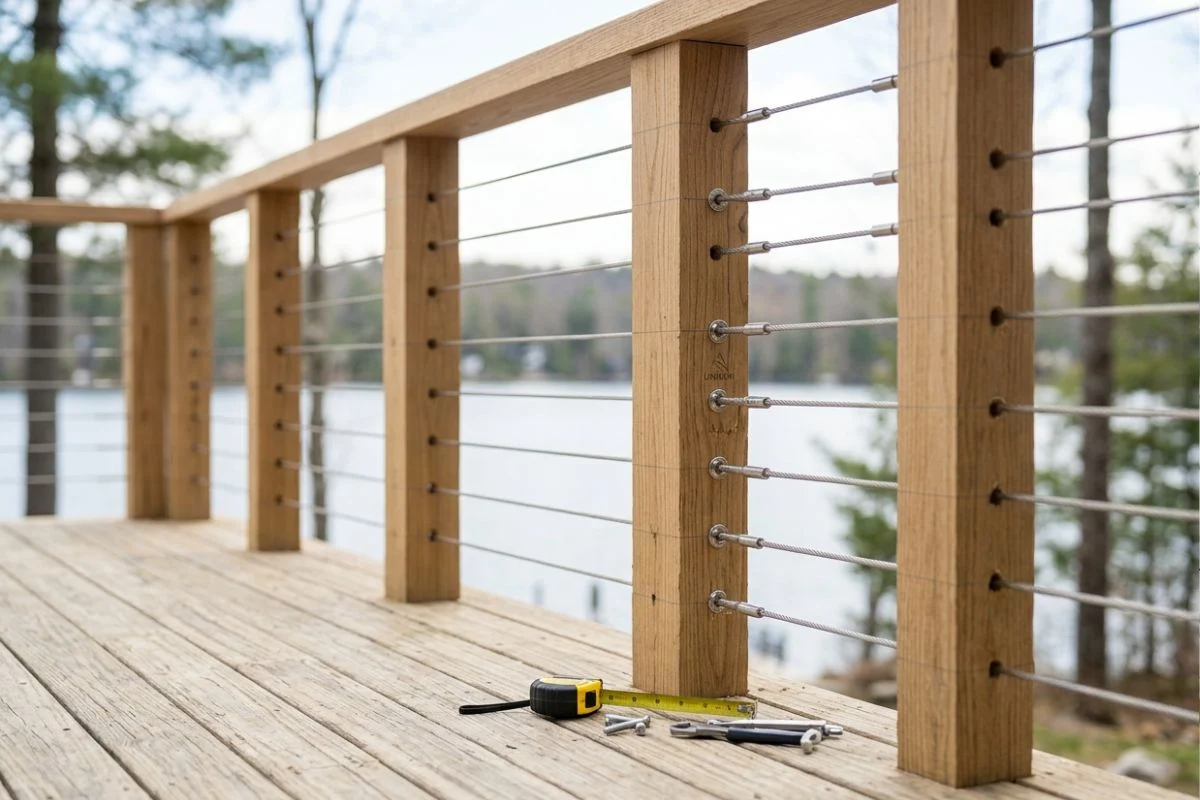
A great railing should do two jobs at once. It should protect the space, and it should make the view feel better. That is why cable railing with wood posts has become such a strong choice for decks, balconies, porches, stairs, and outdoor living areas.
Wood brings warmth. Stainless steel cable brings clean lines. Together, they create a look that feels modern without becoming cold. It works with cabins, lake houses, coastal decks, farmhouse porches, and newer homes with minimalist architecture.
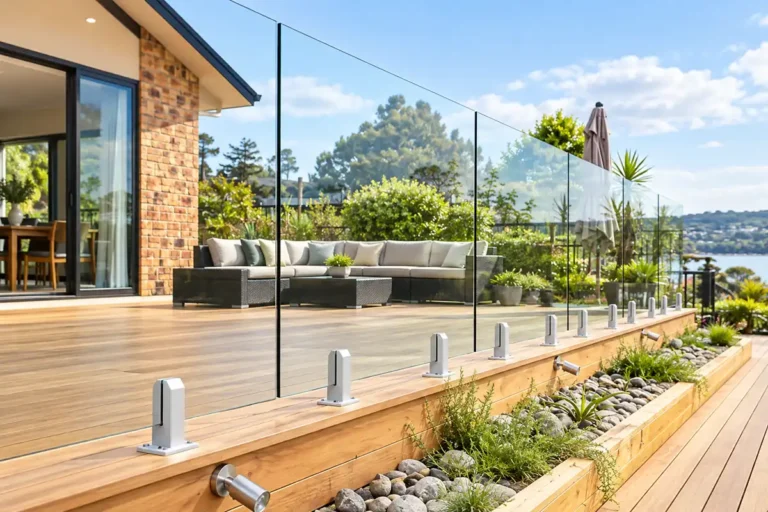
The real advantage is balance. Traditional balusters can block the view. Full glass railing can feel too polished for some rustic homes. Cable railing with wood posts sits between both worlds. It keeps the structure open, but the wood still gives the project character.
This guide explains how to choose wood posts, fittings, post spacing, cable layout, drilling details, and maintenance steps. It also shows where UNIKIM cable railing components can fit into a DIY or professional installation.
Why Cable Railing with Wood Posts Works So Well
Cable railing with wood posts works because it solves a design problem many homeowners face. They want a safer railing system, but they do not want a heavy visual barrier around the deck.
Traditional wood balusters create a familiar look. However, they can interrupt the landscape. A cable system replaces most vertical pieces with slim stainless steel cable. The result feels more open, especially on decks facing gardens, water, mountains, pools, or city views.
There is also a style advantage. Wood post cable railing does not look overly industrial. The posts soften the stainless steel lines. Cedar, redwood, ipe, and pressure-treated wood all create different moods. A cedar post feels warm and relaxed. Ipe feels rich and premium. Painted pressure-treated posts can create a clean modern farmhouse look.
For homeowners comparing railing systems, cable railing wood posts also offer flexibility. You can keep existing wood posts if they are strong, correctly spaced, and in good condition. You can also build a new frame and use stainless steel cable for the infill.
UNIKIM offers cable railing systems that can support different project styles. For projects that need matching components, the brand also provides stainless steel cable and cable end fittings.
Cable Railing with Wood Posts vs Traditional Balusters
A baluster is the vertical support commonly used between a top rail and bottom rail. The term has a long architectural history, and you can read more about it in this overview of balusters as architectural elements.
Cable railing changes that visual rhythm. Instead of many vertical pieces, the design uses horizontal or vertical cable lines. Horizontal cable is especially popular for decks because it gives the railing a wider, cleaner look.
Here is a simple comparison.
| Feature | Wood Balusters | Cable Railing with Wood Posts | Glass Railing |
|---|---|---|---|
| View openness | Medium | High | Very high |
| Rustic warmth | High | High | Low to medium |
| Modern appearance | Medium | High | High |
| Cleaning effort | Low | Medium | High |
| DIY friendliness | High | Medium to high | Medium |
| Hardware precision needed | Low | High | High |
Cable railing with wood posts is often the best middle option.
If your project needs a different look, UNIKIM also supplies glass railing systems and frameless glass railing systems. Those are worth comparing when the main design goal is a nearly invisible barrier.
Best Wood Species for Cable Railing with Wood Posts
The wood species matters. Cable tension adds pressure to the posts, and outdoor exposure adds another challenge. A weak or unstable post can twist, crack, loosen, or reduce cable tension over time.
The USDA Wood Handbook is one of the most useful references for understanding wood properties, moisture movement, fasteners, durability, and finishing. For a homeowner, the practical lesson is simple: choose wood that can handle weather, fasteners, and long-term movement.
Cedar
Cedar is popular because it looks warm, cuts easily, and resists decay better than many common softwoods. It is a good match for rustic decks, cabins, and garden spaces.
The blind spot is strength. Cedar is softer than dense hardwoods. That means fittings need proper pilot holes, correct edge distance, and careful tensioning. Do not over-tighten cable just to remove every tiny wave. Too much tension can stress the post.
Cedar works best when the post size is generous and the finish is maintained.
Redwood
Redwood gives a premium natural look. It has a rich color and strong outdoor appeal. Like cedar, it works well when the design goal is warmth.
The main issue is availability and cost. Redwood can be expensive in some markets. It also needs sealing or staining if you want to preserve the color. Without maintenance, it will weather to gray.
For wood post cable railing, redwood is best for homeowners who want a natural look and accept seasonal maintenance.
Ipe
Ipe is dense, heavy, and highly durable. It is one of the best-looking options for premium decks. It pairs beautifully with stainless steel cable wood systems because the contrast feels sharp and architectural.
However, ipe is not easy to work with. You should pre-drill holes carefully. Standard screws may struggle in dense hardwood. Cutting and drilling take more time.
If your budget allows it, ipe can create an outstanding cable railing with wood posts. It is best handled by experienced DIY installers or professionals.
Pressure-Treated Wood
Pressure-treated wood is practical and budget-friendly. It is widely available and often used for deck framing and posts. It can be stained, painted, or wrapped with a trim detail.
The main drawback is movement. Pressure-treated posts can shrink, check, or twist as they dry. That movement can affect cable tension.
If you use pressure-treated posts, choose straight lumber. Let it dry when possible. Seal cuts and drilled holes. Use quality cable railing fittings wood posts can hold securely.
4×4 vs 6×6 Posts: Which Size Should You Use?
The phrase 4×4 cable railing is common because many residential decks use 4×4 wood posts. However, size alone does not guarantee a safe railing. Post spacing, post attachment, wood species, corner layout, cable tension, and local code all matter.
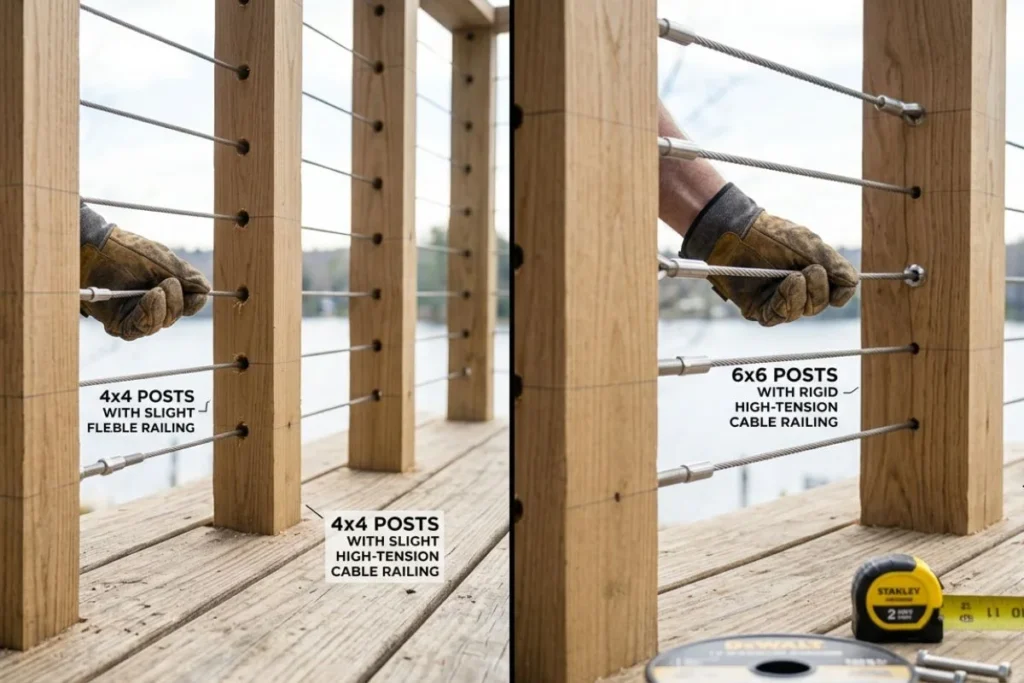
A 4×4 post can work in some cable railing projects, especially short runs or interior applications. A 6×6 post gives more stiffness, more mass, and more room for fittings. That extra stiffness matters because cable systems create tension.
The Simpson Strong-Tie deck connection guide is a useful reminder that railing performance depends on the whole deck connection system, not only the visible post.
| Post Size | Best Use | Advantages | Watch-Outs |
| 4×4 wood post | Short runs, small decks, interior stairs | Lower cost, clean look, easy to find | More flex, less room for fittings |
| 6×6 wood post | Larger decks, corners, end posts, premium projects | More stiffness, stronger visual presence | Higher cost, heavier look |
| Double end post | Long straight cable runs | Handles cable tension better | Needs careful layout |
| Reinforced corner post | Direction changes | Helps cable tension stay stable | Requires accurate hardware planning |
For exterior decks, 6×6 posts are often the safer design choice. They look more substantial and provide better support for end fittings. If you prefer 4×4 cable railing, reduce spacing and avoid long unsupported cable runs.
Post Spacing for Cable Railing with Wood Posts
Post spacing affects both appearance and performance. Wider spacing can save material, but it can allow more cable deflection. If the cable can spread too far, the railing may not meet the required opening rules in your area.
The International Residential Code guard opening rule states that required guards should not have openings that allow a 4-inch sphere to pass through. Local codes can vary, so always check with your building department.
For cable railing with wood posts, many installers use tighter post spacing than they would with solid balusters. A practical range is often 3 to 4 feet between posts. Long runs may need intermediate posts to reduce cable movement.
Cable spacing is also important. A common starting point is 3 inches on center between cable lines. This helps manage deflection, but it is not a universal guarantee. The final system must meet local requirements after installation and tensioning.
Do not treat spacing as decoration only. It is part of safety.
Best Fittings for Wood Posts
Cable railing fittings wood posts use must do more than look clean. They must hold tension, resist corrosion, and fit the post layout.
UNIKIM’s cable end fittings can be used as part of a complete cable railing plan. The right choice depends on whether the cable ends at a wood post, passes through a post, turns a corner, or connects to a metal frame.
Lag Screw Terminal
A lag screw terminal is a popular fitting for wood post cable railing. One side threads into the wood. The other side connects to the cable.
This option is clean because it does not always require through-drilling the full post. It can work well for end posts when the wood is strong enough and the pilot hole is accurate.
Use the manufacturer’s drilling guide. Keep holes straight. Avoid forcing fittings into wet, cracked, or damaged posts.
Through-Post Fittings
Through-post fittings pass through the post and secure from the opposite side. They can offer strong mechanical holding power, especially on end and corner posts.
They also create a visible hardware detail. Some homeowners like that look. Others prefer the cleaner appearance of lag-style terminals.
Through-post fittings can be a smart choice for high-tension runs. They are also useful when the post species is softer or when the project needs a more robust connection.
Swageless Options
Swageless fittings are useful for DIY cable railing wood projects. They let installers attach cable without a hydraulic swaging tool. That can save time and reduce equipment cost.
The tradeoff is precision. You still need clean cable cuts, proper insertion depth, and careful tightening. A swageless fitting is only as reliable as the installation.
For homeowners, this is where planning pays off. Measure twice. Cut once. Keep each run labeled before final tensioning.
Stainless Steel Cable for Wood Posts
Stainless steel cable wood systems need corrosion resistance. Outdoor railings face rain, humidity, dirt, salt air, and seasonal temperature changes.
For most exterior railing projects, stainless steel is the right material family. Type 316 stainless steel is commonly selected for coastal or wet environments because it offers better corrosion resistance than 304 stainless steel in harsher conditions.
Cable diameter also affects the look. Thinner cable feels more minimal. Thicker cable feels stronger visually. Many residential railing projects use 1/8-inch or 3/16-inch cable, depending on the system and local requirements.
UNIKIM’s stainless steel cable category is a natural product link for buyers comparing cable options. Match the cable with compatible fittings, post material, and installation method.
Drilling Guide: Hole Sizes and Cable Spacing
Drilling is where many cable railing projects succeed or fail. A beautiful design can look amateur if holes wander, fittings sit unevenly, or cable lines wave across the posts.
Start with layout. Mark every post before drilling. Use a story pole or drilling template so each cable line stays level. A small error on one post becomes very visible across a long run.
For horizontal cable railing with wood posts, keep cable rows consistent. Many installers plan rows around 3 inches on center. The final height and number of rows depend on the guard height, top rail, bottom rail, and local code.
Use a sharp bit. Drill slowly. Keep the drill square to the post. For through-post holes, drill from one side with care or use a guide block to reduce blowout.
When using a lag screw terminal, follow the exact pilot hole recommendation from the fitting supplier. Do not guess. Wood species changes the result. A dense hardwood needs a different feel than cedar or pressure-treated pine.
After drilling, seal exposed wood inside the holes when the project is outdoors. Moisture enters through end grain and drilled surfaces. A few minutes of sealing can prevent future swelling, staining, and rot.
Step-by-Step Installation Overview
Before starting, inspect the deck structure. Cable railing with wood posts depends on strong post attachment. If a post moves by hand, it is not ready for cable tension.
First, confirm the railing layout. Mark end posts, corner posts, stair posts, gates, and any transitions. Cable runs should stay as straight as possible. Corners need special planning because cable tension changes direction.
Second, choose fittings. Use lag screw terminals for a clean wood-post connection, through-post fittings for extra holding strength, or swageless fittings for DIY installation. Match every fitting to the cable size.
Third, mark cable spacing. Use a template. Avoid measuring each post separately by eye. That creates uneven cable lines.
Fourth, drill holes. Keep every hole level. Clean sawdust from each hole before inserting fittings.
Fifth, install fittings and feed cable. Do not fully tension one cable before the others are installed. Bring the system up gradually.
Sixth, tension from the center outward or follow the manufacturer’s sequence. The goal is even tension, not maximum tension. Over-tensioning can bend posts inward.
Seventh, trim cable ends and add finishing caps where needed. Check every line. Test for movement. Confirm that openings meet local code.
For homeowners who want a broader project workflow, UNIKIM’s DIY railing installation guide for homeowners is a useful internal resource.
Maintenance Tips for Wood and Cable
Cable railing with wood posts is not difficult to maintain, but it should not be ignored.
The wood needs the most care. Clean it once or twice a year. Reseal or restain based on sun exposure, rain, and product instructions. South-facing decks often need more frequent maintenance because sunlight breaks down finishes faster.
Check cracks and checking. Small surface cracks are common in wood. Deep cracks near fittings deserve attention because they can reduce holding strength.
Inspect cable tension each season. New wood can shrink. Pressure-treated posts can move as they dry. If the cables feel loose, adjust them according to the fitting instructions.
Clean stainless steel cable with mild soap and water. Avoid harsh cleaners that can damage the surface. In coastal areas, rinse the cable more often to remove salt deposits.
Also inspect fittings. A lag screw terminal should remain straight and tight. Through-post hardware should not show staining, looseness, or movement.
Design Inspiration Gallery
Cable railing with wood posts can look very different depending on the finish, post size, and surrounding architecture.
A mountain deck can use stained cedar posts, black top rails, and stainless cable for a warm lodge style. This design keeps the landscape open while still feeling grounded.
A coastal deck can use light-toned wood, 316 stainless cable, and simple metal fittings. The result feels relaxed, clean, and durable.
A modern farmhouse porch can use painted white wood posts with stainless steel cable. This creates a softer look than black metal railing, but it still feels current.
A luxury backyard can combine ipe posts, stainless steel cable, and a matching handrail. This is one of the strongest modern-rustic combinations because the materials look premium from every angle.
For homeowners considering other styles, UNIKIM’s frameless glass railing systems and glass clamps and connectors can be used in nearby areas. For example, a deck may use cable railing around the main seating area and glass railing near a pool.
Pool projects can also explore glass railing spigots for pool fencing. If you want to understand glass hardware better, read UNIKIM’s guide on what glass clamp systems are.
UNIKIM Products for Wood Post Cable Railing
UNIKIM manufactures railing systems and components for residential, commercial, and custom projects. The company’s official website presents glass railing, stainless steel railing, cable kits, and related hardware.
For cable railing with wood posts, the main product categories to review are cable railing systems, stainless steel cable, and cable end fittings.
If the project also includes glass or hybrid railing areas, UNIKIM’s glass railing systems supplier page can help compare options. You can also explore removable handrail brackets for glass railing systems when designing mixed-material spaces.
For a darker modern finish, the matte black stainless steel glass handrail cap railing can inspire matching handrail or trim details around cable and glass sections.
Buyers who want to review broader company sourcing information can visit the UNIKIM Made-in-China supplier profile. For visual project references, the UNIKIM YouTube channel is also useful.
When your layout is ready, contact the team through the UNIKIM contact page and share drawings, dimensions, photos, post material, cable direction, and finish preference.
Common Mistakes to Avoid
The first mistake is using weak posts. Cable railing adds tension. If the posts are not solid, the railing will feel loose no matter how good the hardware looks.
The second mistake is spacing posts too far apart. Wide spacing may look clean, but it can increase cable deflection. That can create safety and code problems.
The third mistake is drilling without a template. Uneven holes are easy to notice because cable creates long straight lines.
The fourth mistake is mixing incompatible parts. Cable, fittings, terminals, washers, and tensioners must work together. Do not buy random parts from different systems unless the sizes and specifications match.
The fifth mistake is ignoring wood movement. Wood expands, shrinks, checks, and weathers. Plan for maintenance from the beginning.
Final Summary
Cable railing with wood posts is one of the best ways to combine modern openness with natural warmth. It keeps views clear, works with many home styles, and gives decks a cleaner architectural edge.
The strongest results come from smart planning. Choose stable wood. Use proper post spacing. Select compatible stainless steel cable and fittings. Drill accurately. Maintain both the wood and the metal over time.
For homeowners, builders, and designers, UNIKIM offers cable railing systems, stainless steel cable, and cable end fittings that can support a clean modern-rustic railing project from planning to installation.
FAQs
Is cable railing with wood posts safe?
Yes, cable railing with wood posts can be safe when the posts, fittings, spacing, and tension meet local building code. The key is not only the cable. The wood posts must be strong, securely attached, and spaced correctly.
Can I use 4×4 posts for cable railing with wood posts?
You can use 4×4 posts for cable railing with wood posts in some projects, but 6×6 posts often provide better stiffness. If you use 4×4 posts, keep spans shorter and make sure the post attachment is solid.
What fittings work best for cable railing with wood posts?
The best fittings for cable railing with wood posts include lag screw terminals, through-post fittings, and swageless fittings. Lag screw terminals create a clean look, while through-post fittings can add holding strength.
How far apart should posts be for cable railing with wood posts?
Post spacing for cable railing with wood posts often falls around 3 to 4 feet, but the final spacing depends on code, cable size, post strength, and tension. Always confirm requirements before installation.
Is DIY installation possible for cable railing with wood posts?
Yes, DIY installation is possible for cable railing with wood posts if you can measure accurately, drill straight holes, and follow the fitting instructions. Complex stairs, long runs, and elevated decks may need a professional installer.
What is the best wood for cable railing with wood posts?
The best wood for cable railing with wood posts depends on budget and style. Cedar and redwood offer warmth. Ipe gives premium durability. Pressure-treated wood is cost-effective but needs careful finishing and maintenance.