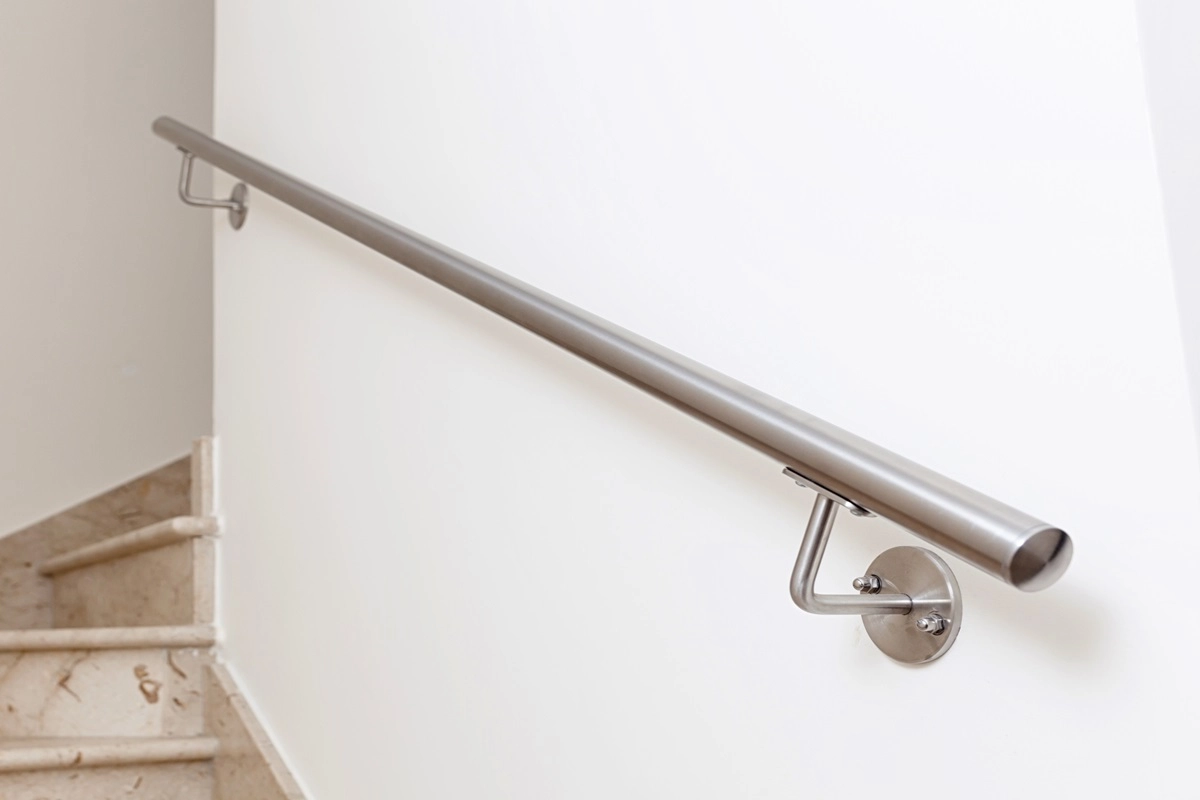
Both problems have the same fix. Removable handrail brackets let you detach and reattach railings in seconds. No tools. No damage. No stress.
These brackets work for homes, offices, warehouses, and public buildings. They provide the same strength as fixed brackets. But they also give you the flexibility to open up a railing section whenever you need to.
In this guide, you’ll learn how removable handrail brackets work. You’ll also see the best types for decks, stairs, and mezzanines. We cover materials, safety codes, installation steps, and the differences between residential and commercial brackets.
Let’s start with the basics.
What Are Removable Handrail Brackets and How Do They Work?
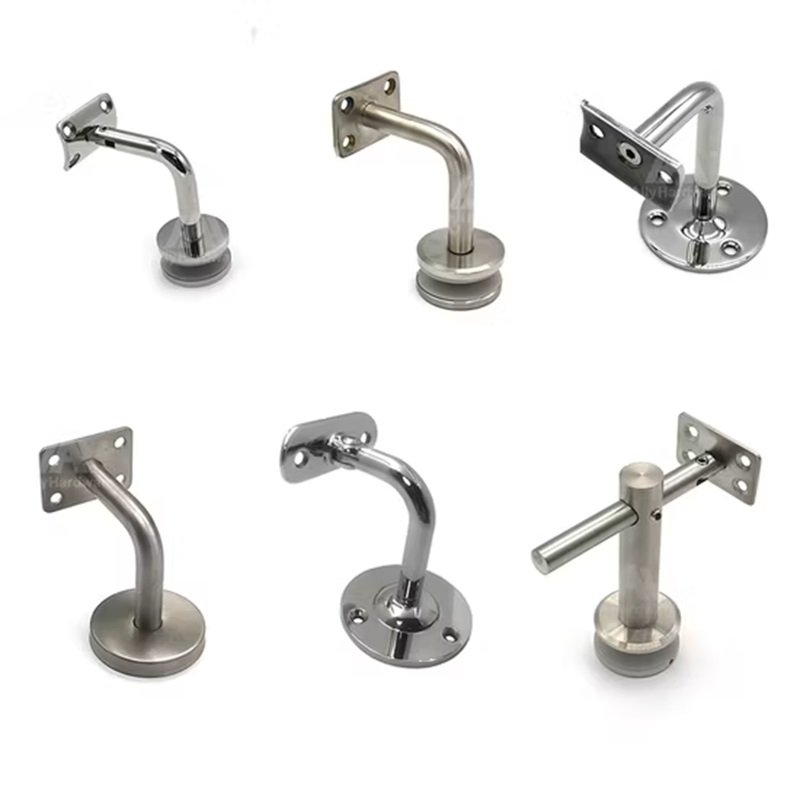
A removable handrail bracket is a piece of hardware that holds a railing against a wall, post, or glass panel. It works just like a fixed bracket in terms of strength. But it also lets you detach the railing quickly when needed.
This is useful in many situations. You might need to move furniture through a narrow staircase. Or you might need to open a deck railing section for a delivery. In commercial settings, workers often need to create temporary access points for equipment.
There are four main types of removable mechanisms:
- Quick-release brackets: A lever or button releases the railing from the base plate. This is the fastest option.
- Detachable flange connections: The railing sits on a flange that bolts to the wall. You remove two or three bolts and the rail lifts off.
- Slide-in/slide-out systems: The railing slides into a channel or sleeve. Pull it out to remove. Push it back to lock.
- Pin-secured locking mechanisms: A locking pin holds the railing in place. Pull the pin and the rail detaches. This type is common in industrial settings.
Here’s how removable and fixed brackets compare:
| Feature | Fixed Brackets | Removable Brackets |
| Flexibility | None — permanent mount | High — detach anytime |
| Installation Time | 30–60 minutes | 15–30 minutes |
| Removal Time | 20+ min with tools | Under 60 seconds |
| Cost | Lower upfront | Slightly higher upfront |
| Maintenance | Harder to clean behind | Easy — lift rail, clean, replace |
| Load Capacity | 200+ lbs | 200+ lbs (same standard) |
As the table shows, removable brackets match fixed brackets in load capacity. The only real difference is flexibility. And that flexibility saves time and money in the long run.
Top Removable Railing Brackets for Decks, Stairs, and Balconies
Secondary Keyword: removable railing brackets
Not all removable railing brackets are the same. The right choice depends on where you’re installing them. A deck bracket faces rain, sun, and temperature changes. A stair bracket deals with constant hand pressure. A balcony bracket needs to look clean and modern.
Here are the four main mounting types:
Wall-Mounted Brackets
These attach directly to a wall surface. They’re the most common type for indoor staircases. The base plate stays on the wall. The railing clips or slides into it. Wall-mounted brackets work well in homes, offices, and hospitals.
Post-Mounted Brackets
Post-mounted brackets connect the handrail to vertical posts. They’re popular for deck railings and balconies. The bracket wraps around or fits inside the post. You can remove the rail section between two posts while the posts stay in place.
Deck-Mounted Brackets
Deck brackets bolt to the floor or the outer rim of the deck. They support both the post and the railing. Many homeowners prefer these because they create a clean sightline without wall attachments.
Glass-Panel-Mounted Brackets
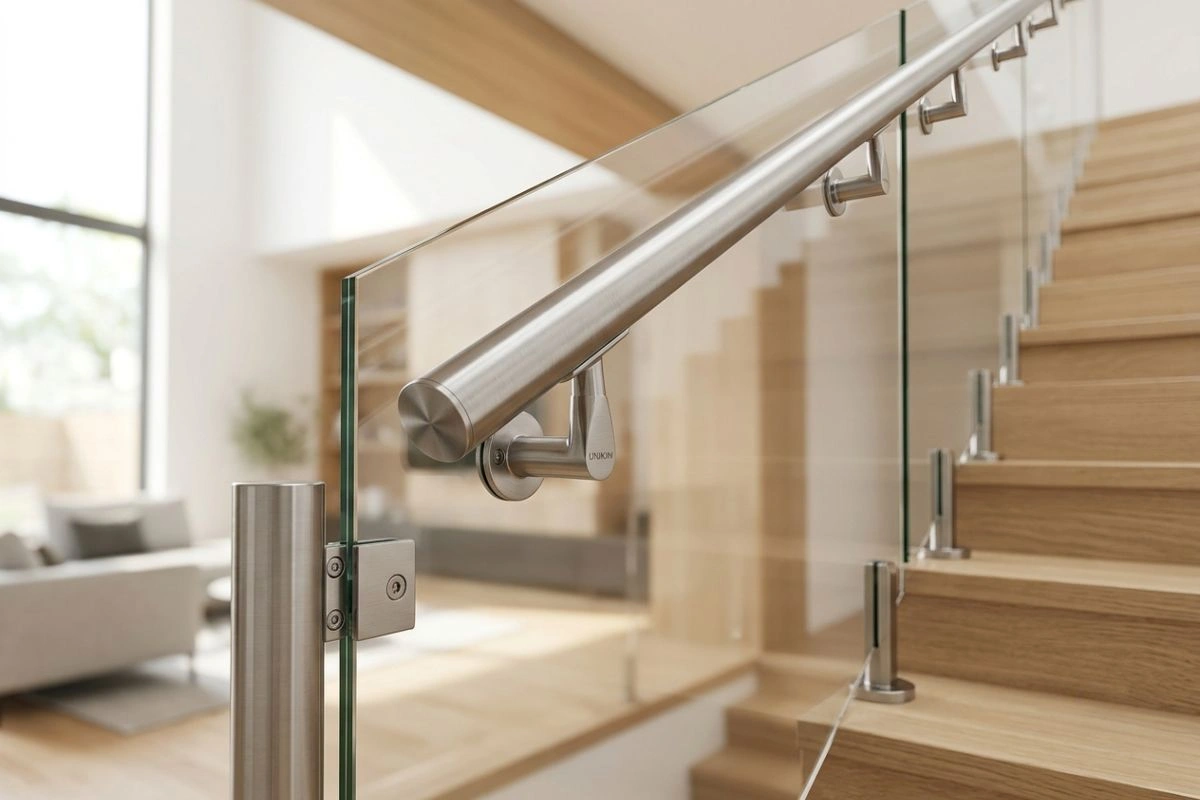
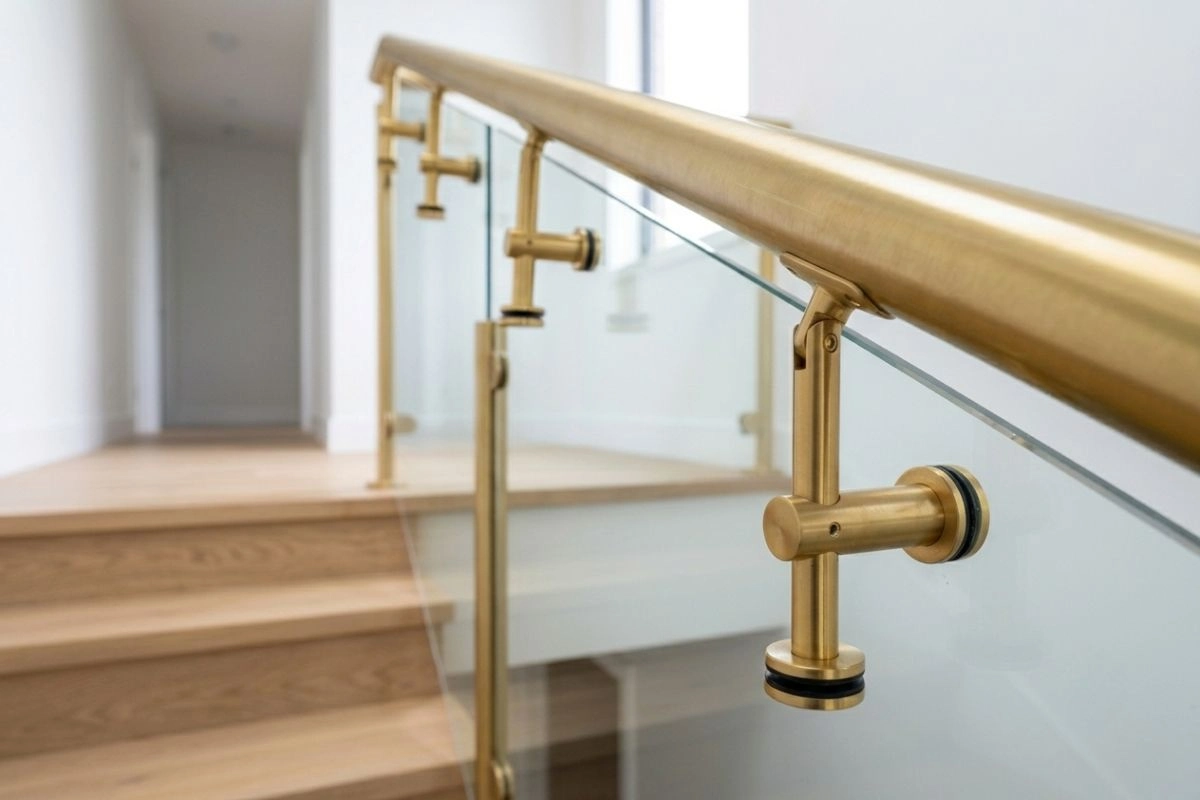
These brackets attach a handrail to the top of a glass panel. They’re used in frameless glass railing systems. The bracket clamps onto the glass using rubber gaskets. Because everything is visible, the finish matters. Brushed or polished stainless steel is the standard.
Which material should you choose?
- 304 stainless steel: Best for indoor use. Strong, durable, and rust-resistant in dry environments. Also more affordable than 316.
- 316 stainless steel: Best for outdoor, coastal, and marine use. Contains molybdenum for extra corrosion resistance. This is the go-to for decks, pools, and commercial buildings near the coast.
- Aluminum: Lightweight and budget-friendly. Good for temporary setups or projects where weight matters. However, it’s not as strong as stainless steel.
Here’s a quick comparison by location:
| Location | Best Bracket Type | Best Material | Load Capacity |
| Indoor stairs | Wall-mounted | 304 stainless steel | 200+ lbs |
| Deck / patio | Post-mounted or deck-mounted | 316 stainless steel | 200+ lbs |
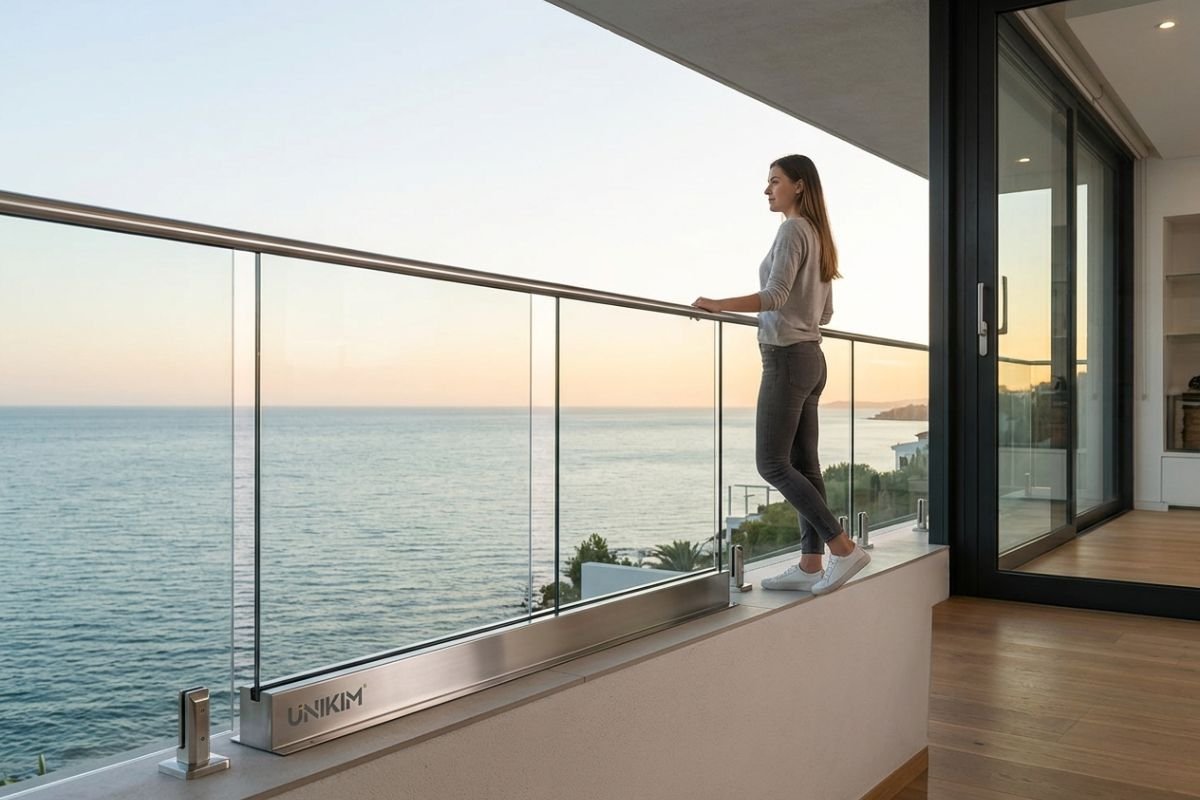
| Balcony | Post-mounted or glass-panel | 316 stainless steel | 200+ lbs |
| Glass railing | Glass-panel-mounted | 316 stainless steel | 200+ lbs |
| Temporary setup | Any type | Aluminum | 150+ lbs |
For most outdoor projects, 316 stainless steel removable railing brackets are the safest bet. They last longer, resist rust, and meet commercial building codes.
Best Removable Handrail Brackets for Residential Homes
Secondary Keyword: removable handrail brackets (residential)
Homeowners don’t always think about railing removal. But once you experience the convenience, you won’t go back to fixed brackets.
Here are the most common reasons homeowners install removable handrail brackets:
- Moving large furniture or appliances up and down staircases
- Opening a deck railing section for parties, cookouts, or deliveries
- Removing pool-area railings for seasonal cleaning or cover installation
- Creating temporary access through attic or basement entries
- Clearing stair railings during painting, wallpapering, or renovation
Deck Railing Brackets That Remove in Seconds
Decks are the most popular spot for removable brackets. Think about it. You want to bring a large grill onto the deck. Or set up tables for a birthday party. A fixed railing makes this hard.
With removable deck railing brackets, you lift out a 4-foot or 6-foot section in seconds. After the event, you slide it back in. The railing locks in place and feels as solid as before.
This also helps with seasonal maintenance. In winter, you might remove a rail section for snow clearing. In spring, you remove it to power-wash the deck boards underneath.
Stair Handrail Brackets for Easy Home Renovation
Painting a stairwell is awkward with a railing in the way. You have to tape around brackets. You have to cut in with a small brush. The result is never clean.
Removable stair handrail brackets fix this. Detach the railing before you start painting. Tape the base plates if needed. Paint the wall freely. Then pop the railing back when the paint dries.
This same approach works for wallpaper installation, drywall repair, and staircase remodeling. The railing stays out of the way until you need it again.
Detachable Stair Railing: When and Why You Need One
Secondary Keyword: detachable stair railing
A detachable stair railing goes beyond a single removable bracket. The entire rail section lifts out of its posts or wall mounts. This creates a full opening in the staircase. It’s not just about removing one bracket. It’s about clearing the whole rail.
There are five common situations where a detachable stair railing makes sense:
- Tight stairwells: Older homes often have narrow stairs. A detachable rail gives you the extra inches needed to move furniture or appliances.
- Accessibility needs: Family members with wheelchairs or walkers sometimes need temporary stair modifications. A detachable rail makes this possible without permanent changes.
- Rental properties: Landlords can reconfigure stair layouts between tenants. This adds flexibility without damaging the property.
- Building inspections: Some inspections require temporary rail removal to test mounting points. Detachable systems speed this up.
- Construction access: During building or renovation, workers need open stairways to carry materials. A detachable rail provides safe, temporary access.
| ❓ Is a Detachable Stair Railing Safe? Yes. A well-made detachable stair railing meets the same load standards as a fixed rail. Building codes require 200 lbs of concentrated force at any point along the rail. Quality detachable systems from trusted manufacturers like URailing use pin-lock or flange mechanisms that pass this test. The key is proper installation into wall studs or structural posts — not just drywall. |
Removable Railing Systems for Commercial and Industrial Spaces
Secondary Keyword: removable railing
Commercial buildings have different railing needs than homes. Traffic is heavier. Code requirements are stricter. And the railing often needs to be removed and replaced daily.
Removable railing is standard in these environments:
- Warehouses: Forklift access points along mezzanine walkways. Workers remove a rail section, load pallets, then replace the rail for OSHA compliance.
- Hospitals: Corridor railings that detach for bed transport or emergency stretcher access.
- Airports: Gate area barriers that reconfigure for boarding zones, wheelchair lanes, and security checkpoints.
- Event centers: Stage and balcony railings that adjust for different seating layouts or production setups.
- Hotels: Pool and terrace railings that open for furniture rearrangement or event staging.
In commercial settings, the brackets must handle higher loads. Building codes typically require 200 lbs of concentrated force at any point. Some industrial standards go higher. The material must also resist daily wear and corrosion from cleaning chemicals.
This is why 316 stainless steel is the standard for commercial removable railing. It resists chlorides, salt, and harsh cleaning agents. It also maintains its appearance after years of heavy use.
Real-World Example: Warehouse Mezzanine Access
A distribution center in Ohio installed removable railing sections along its second-floor mezzanine. Workers remove a 6-foot rail section three times per shift to load pallets from the main floor. The rail uses a pin-lock system. Removal takes 15 seconds. Reinsertion takes another 15. This setup passed OSHA inspection without issues.
Before the switch, workers used swing gates. But the gates wore out quickly from repeated use. The removable rail sections have lasted over two years with zero maintenance.
Removable Railing Solutions for Safety and Flexibility
Secondary Keyword: removable railing (safety angle)
Safety is the number one concern with any railing system. Removable railing must meet the same codes as fixed railing. There are no exceptions.
Here are the key standards that apply:
- IBC (International Building Code): Requires handrails on stairs with 4 or more risers. Rails must be 34–38 inches high and withstand 200 lbs of force.
- IRC (International Residential Code): Similar requirements for homes. Guards must be 36 inches minimum on residential decks and balconies.
- OSHA (Occupational Safety and Health Administration): Requires guardrails on elevated platforms, mezzanines, and walkways above 4 feet. Mid-rails and toe boards are also required in many cases.
A removable bracket must lock securely when the railing is in place. Accidental detachment is not acceptable. Good manufacturers build in multiple safety features to prevent this.
5 Safety Features to Look for in a Removable Railing System:
- Locking pin with retainer clip — prevents the pin from vibrating loose over time
- Spring-loaded latch — auto-locks when the rail is inserted, so workers can’t forget to secure it
- Anti-lift design — the bracket shape prevents upward force from dislodging the rail
- Corrosion-resistant fasteners — stainless steel screws and anchors that won’t weaken over time
- Load-rated certification — documentation proving the bracket meets IBC or OSHA requirements
Removable Mezzanine Railing: Safety Gates for Elevated Platforms
Secondary Keyword: removable mezzanine railing
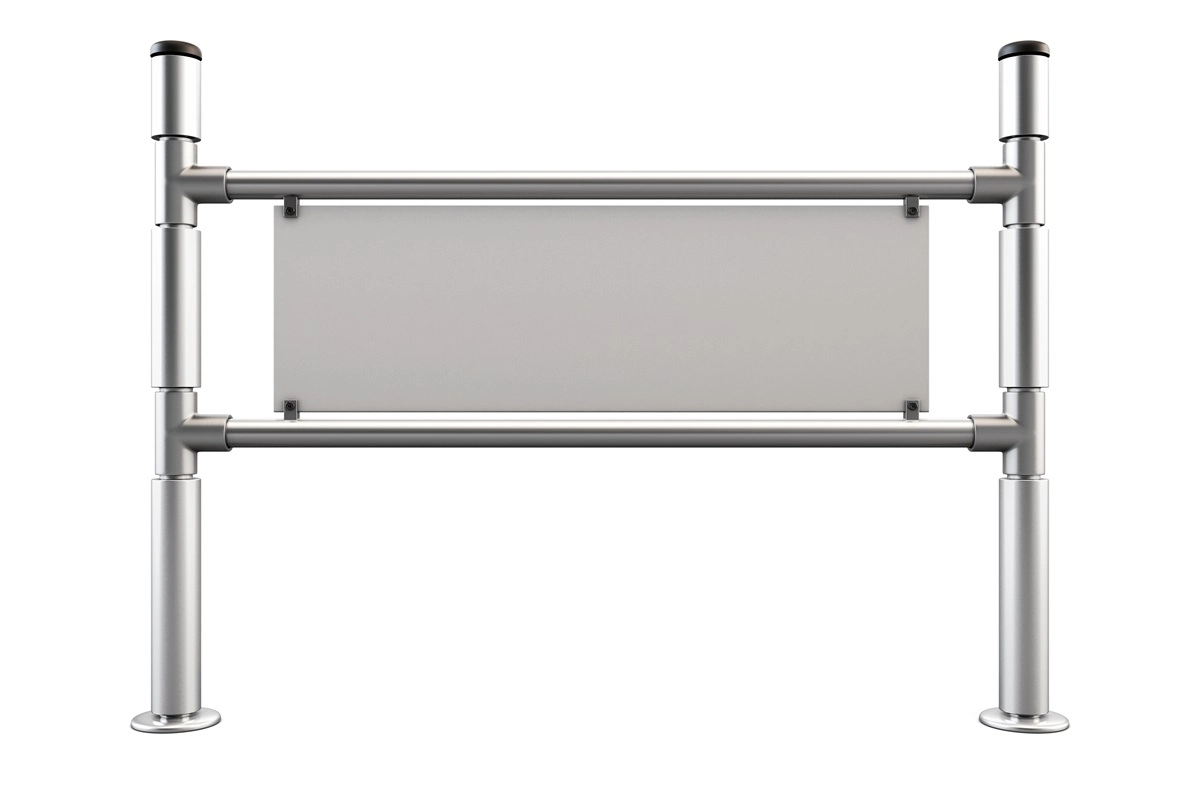
Removable mezzanine railing is a specific type of industrial safety barrier. Mezzanines are elevated platforms inside warehouses, factories, and distribution centers. They’re used for storage, office space, or equipment staging.
Workers on mezzanines face a serious fall hazard. OSHA requires guardrails on any platform 4 feet or higher above the ground. The standard specs are:
- Top rail height: 42 inches minimum
- Mid-rail: Required halfway between the top rail and the floor
- Toe board: 4 inches high at the floor level to prevent objects from rolling off the edge
- Load capacity: 200 lbs of force at any point on the top rail
But here’s the challenge. Mezzanines often need open sections for loading and unloading. Forklifts raise pallets from the ground floor. Cranes lower equipment. Workers need to access the edge safely.
This is where removable mezzanine railing comes in. Instead of a permanent barrier, you install a section that lifts out or swings open.
Swing Gate vs. Removable Rail Section
| Feature | Swing Gate | Removable Rail Section |
| Opening speed | Fast — swings open | Fast — lifts out in seconds |
| Space needed | Needs clearance to swing | No swing clearance needed |
| Durability | Hinges wear over time | No moving parts to wear |
| Cost | Moderate | Moderate to low |
| Best for | Frequent daily access | Occasional access or wide openings |
Many facilities use a combination. Swing gates for high-traffic points. Removable rail sections for areas used only during certain shifts or seasons.
How to Install Removable Handrail Brackets (Step-by-Step)
Secondary Keyword: removable handrail brackets (installation)
Installing removable handrail brackets is straightforward. Most homeowners can do it with basic tools. Commercial installations may require a contractor, depending on local codes.
Here’s the step-by-step process:
Step 1: Measure and Mark Mounting Positions
Space brackets 3 to 4 feet apart along the railing. Check your local building code for exact spacing requirements. Use a tape measure and pencil to mark each position on the wall or post.
Step 2: Locate Wall Studs or Structural Supports
Use a stud finder to locate the studs behind the wall. Every bracket must mount into a stud or a concrete anchor. Never mount into drywall alone. Drywall cannot support the required 200 lbs of force.
Step 3: Drill Pilot Holes
Drill pilot holes at each marked position. For wood studs, use a drill bit slightly smaller than your lag bolts. For concrete or masonry, use a hammer drill with a masonry bit.
Step 4: Mount the Base Plate
Attach the base plate or receiver to the wall using stainless steel lag bolts or concrete anchors. Tighten each bolt firmly. The base plate is the permanent part. It stays on the wall even when the railing is removed.
Step 5: Attach the Railing to the Bracket
Slide, click, or pin the handrail bracket into the base plate. Each mechanism is slightly different. Follow the manufacturer’s instructions for your specific bracket model.
Step 6: Test for Stability
Push the railing sideways with firm hand pressure. Try to lift it upward. It should not move or wobble. If there’s any play, tighten the fasteners or check that the locking pin is fully engaged.
| 💡 Pro Tip Always mount into studs, not just drywall. Use a stud finder and stainless steel lag bolts for maximum hold. If you’re mounting into concrete, use sleeve anchors rated for at least 200 lbs of pull-out force. |
FAQ — Removable Handrail Brackets
Add FAQ schema markup (JSON-LD) to this section for Google rich results.
Q: Are removable handrail brackets safe for stairs?
A: Yes. Removable handrail brackets are designed to meet the same load requirements as fixed brackets. Most support 200 lbs or more of concentrated force. The key is proper installation into wall studs or structural posts. Always choose brackets from a trusted manufacturer that provides load-test documentation.
Q: Can I use removable railing brackets on a deck?
A: Absolutely. Removable deck railing brackets are one of the most popular applications. They let you open a railing section for furniture delivery, party setup, or seasonal maintenance. For outdoor use, choose 316 stainless steel brackets to resist weather and corrosion.
Q: What is the best material for removable handrail brackets?
A: 316 stainless steel is the best overall choice. It resists corrosion from rain, salt, and cleaning chemicals. For indoor-only use, 304 stainless steel is a more affordable option that still provides excellent strength and durability.
Q: How much weight can a removable railing bracket hold?
A: Most quality removable brackets support 200 lbs or more of concentrated load at any point. This matches the requirement set by the International Building Code (IBC). Always check the manufacturer’s specs for exact load ratings.
Q: Do removable mezzanine railings meet OSHA requirements?
A: Yes, when properly installed. OSHA requires guardrails on platforms above 4 feet. The top rail must be 42 inches high. A mid-rail and toe board may also be required. Removable mezzanine railing sections that meet these specs are fully OSHA-compliant.
Q: Where can I buy removable handrail brackets in bulk?
A: URailing supplies removable handrail brackets in bulk for contractors, builders, and distributors. Their 316 stainless steel brackets are available in multiple sizes and finishes. Visit urailing.com or contact their sales team for wholesale pricing.
Choosing the Right Removable Handrail Brackets for Your Project
Removable handrail brackets give you something fixed brackets never can. Flexibility. The freedom to open, close, and reconfigure your railing system whenever the situation demands it.
For residential projects, look for quick-release or slide-in brackets in 304 or 316 stainless steel. Focus on ease of use and clean aesthetics.
For commercial and industrial projects, prioritize load capacity, corrosion resistance, and code compliance. Pin-lock and flange systems in 316 stainless steel are the standard.
And for mezzanine platforms, make sure your removable rail sections meet OSHA guardrail height and mid-rail requirements.
No matter your project, the right removable bracket saves time, reduces maintenance costs, and keeps your space safe.
Ready to find the right brackets for your project?
Explore URailing’s full range of removable handrail brackets, stainless steel railing systems, and handrail fittings at urailing.com. Contact the sales team for bulk pricing, custom orders, and technical support.