Specifying the right removable handrail brackets is a decision that affects safety, compliance, and long-term maintenance cost on every railing project. Unlike fixed brackets, removable brackets let a rail section detach cleanly — for moving equipment, seasonal deck changes, wall renovation, or forklift access on a loading dock — then lock back to full code strength. For architects, contractors, and distributors, that flexibility is now a standard requirement rather than a premium add-on.
This guide explains the bracket types, materials, load standards, and buying criteria that matter in real projects. It’s written for professionals sourcing hardware at scale, so it focuses on specifications and supply, not marketing claims. Throughout, you’ll see how UNIKIM engineers and manufactures railing hardware factory-direct for global B2B buyers.
What Are Removable Handrail Brackets?
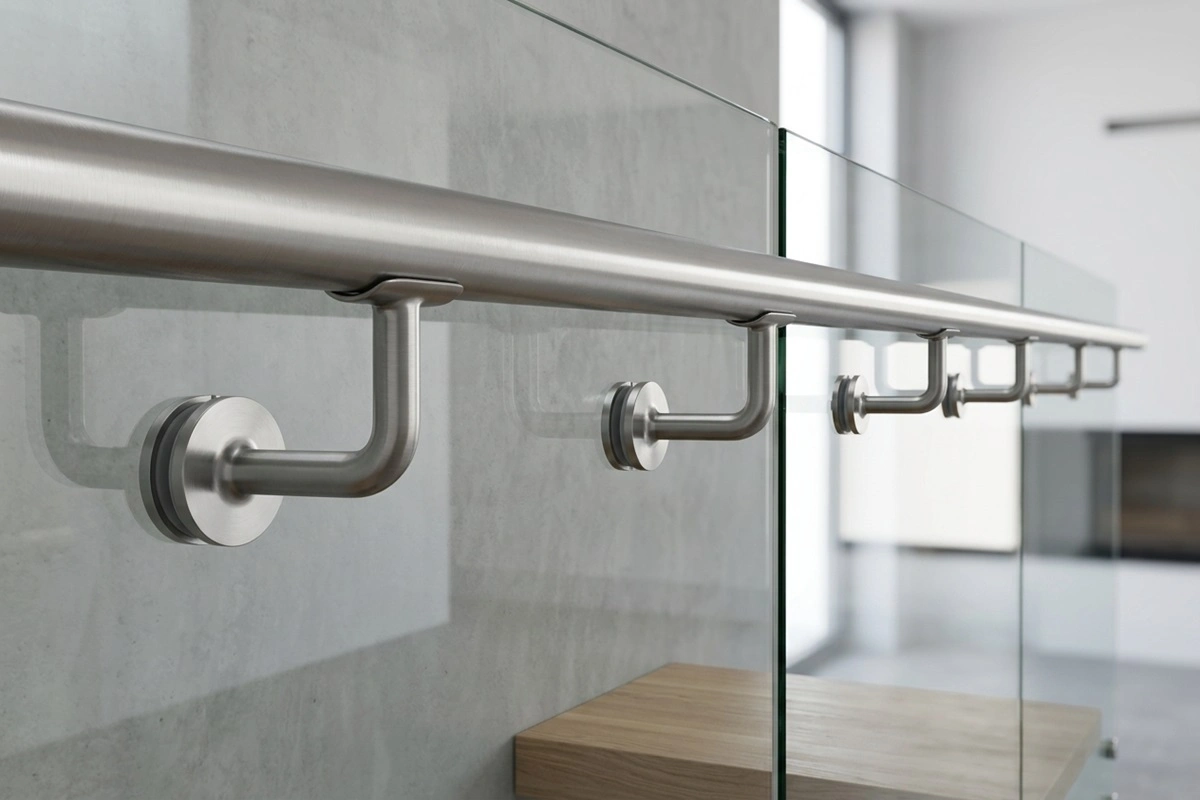
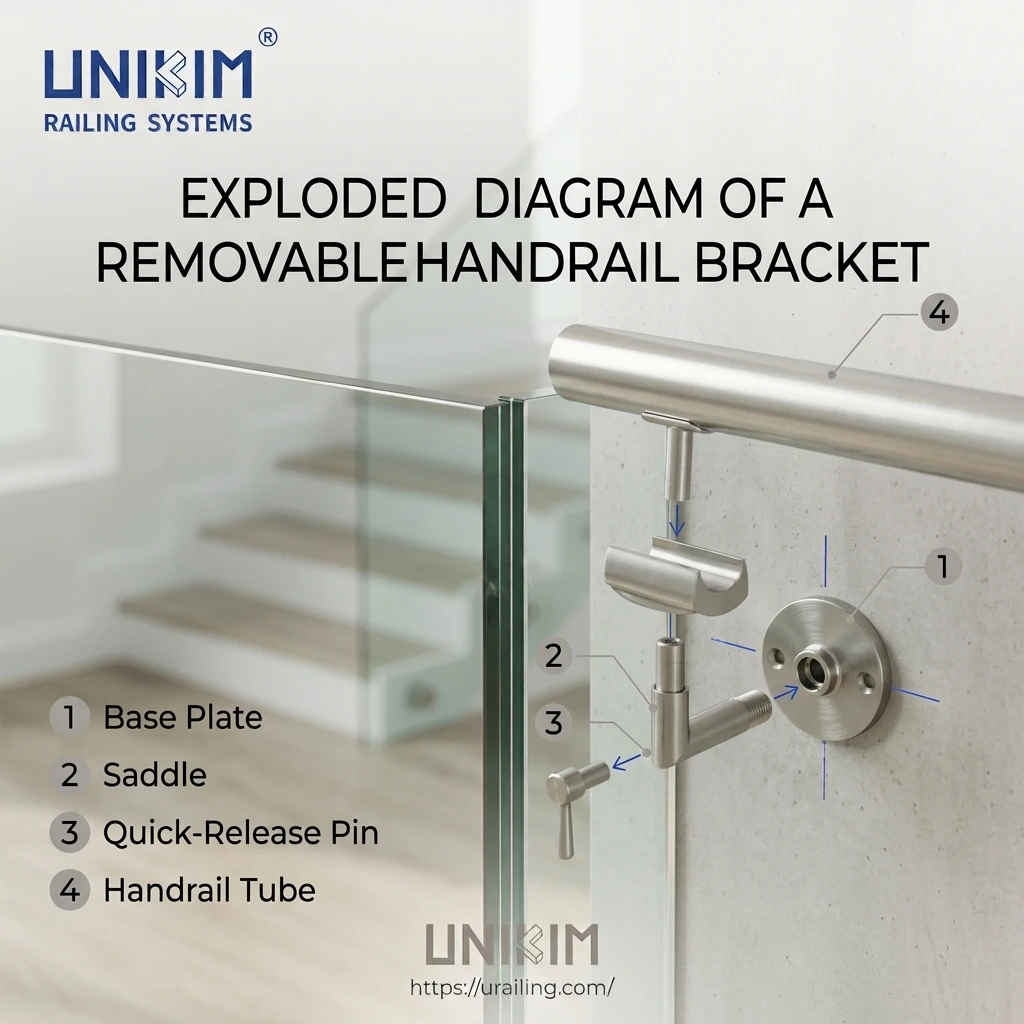
A removable handrail bracket is a two-part hardware component that fixes a handrail to a wall, post, or structure while allowing the rail to be detached without damaging the mount. A base plate stays permanently anchored to the structure. The rail-side saddle connects to that base through a release mechanism — a pin, a slide, or an interlocking flange — so the rail lifts out and re-seats in seconds.
The key point for buyers: removability is a connection design, not a compromise on strength. A well-engineered bracket carries the same rated load as a fixed unit when locked. The mechanism simply changes how the rail attaches, not how much force it holds.
Removable brackets sit within the wider category of handrail fittings and pair with posts, tubes, and rails to form a complete system. That system-level compatibility is what separates professional-grade hardware from generic parts.
Types of Removable Handrail Brackets
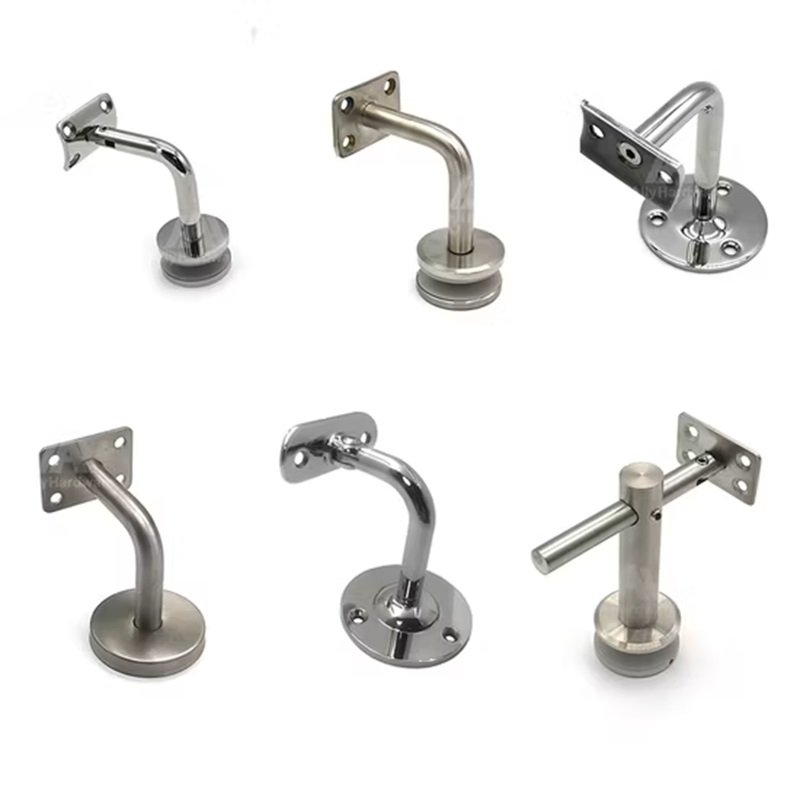
Different projects call for different release mechanisms. Choosing the right type up front prevents installation delays and callbacks.
Quick-Release Pin Brackets
A spring-loaded or screw-in pin locks the rail saddle to the wall plate. Installers remove the rail with simple hand tools and no disturbance to the fixed component. These are the most common choice for interior corridors and stairs where fast, repeatable removal matters.
Slide-In / Slotted Brackets
The rail or post section slides into a matching channel on the base. Lifting the section straight up releases it. This design suits removable deck railing brackets, where whole sections need to lift out for open access or seasonal storage.
Interlocking Flange Brackets
Two machined flanges connect and secure with a locking bolt or cam. They give a clean, tamper-resistant joint and work well in high-traffic commercial settings that still need occasional reconfiguration.
Pin-Secured Post Brackets
Used with post-and-handrail systems, these anchor a removable post rather than the rail alone — useful for defining temporary pedestrian lanes or event barriers.
Materials and Technical Details
Material grade drives corrosion resistance, load capacity, and service life. For B2B railing projects, stainless steel is the professional standard, and the grade you specify should match the environment.
Grade 304 stainless steel is strong, cost-effective, and well suited to dry interior settings — stair corridors, office mezzanines, and covered walkways. It resists everyday wear but can show surface staining in salt or chloride exposure.
Grade 316 stainless steel adds molybdenum, which sharply improves resistance to chlorides and salt air. For coastal properties, pool decks, and marine environments, 316 is the correct specification and protects structural integrity for decades.
UNIKIM manufactures brackets in both grades — see the 304/316 handrail bracket and the standard stainless steel handrail bracket — so buyers can match grade to project without switching suppliers.
Beyond grade, professional buyers should confirm:
- Base plate thickness — a thicker plate distributes load evenly across the mounting surface and reduces deflection.
- Surface treatment — passivation restores the protective chromium-oxide layer; electropolishing adds a brighter, cleaner finish; matte black coatings should sit over a genuine stainless base.
- Fastener quality — mounting hardware should match the bracket grade to avoid galvanic corrosion.
- Tolerances — precise machining ensures the removable joint seats consistently every time.
Applications: Residential and Commercial
Removable handrail brackets solve practical problems in both markets, though the priorities differ.
Residential projects value convenience and clean design. Common uses include deck railings that detach for snow clearance or moving large furniture, stair rails removed during wall painting, and pool or patio rails reconfigured for gatherings. Homeowners increasingly expect adaptable outdoor spaces, and removable brackets deliver that without sacrificing safety.
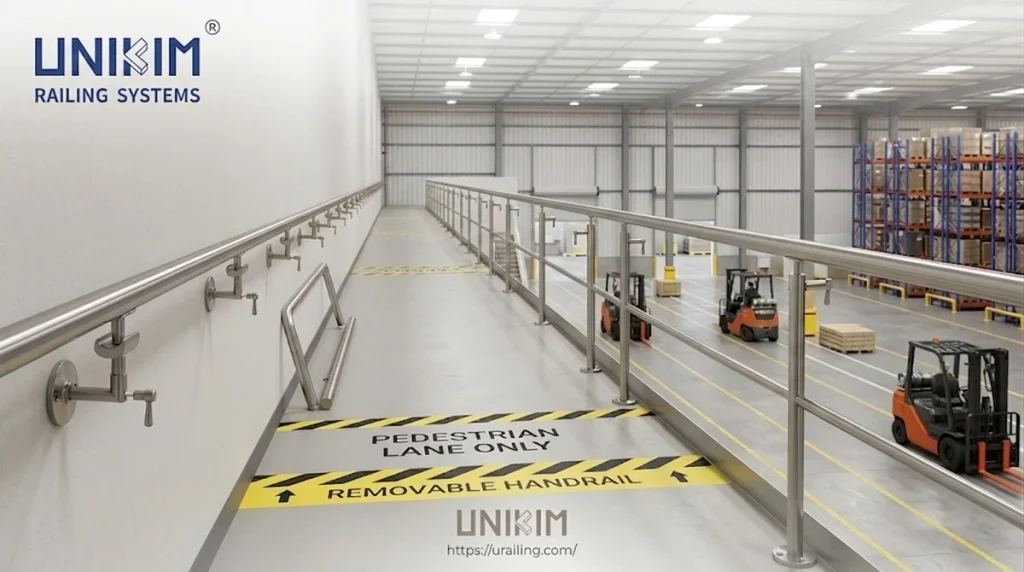
Commercial projects prioritize compliance, durability, and controlled access. Typical settings include warehouses and loading docks where rails open for forklift access, hospitals and airports with continuous foot traffic, event venues that reconfigure barriers, and public buildings subject to accessibility standards. Here, brackets must be heavy-duty, vandal-resistant, and code-compliant when locked.
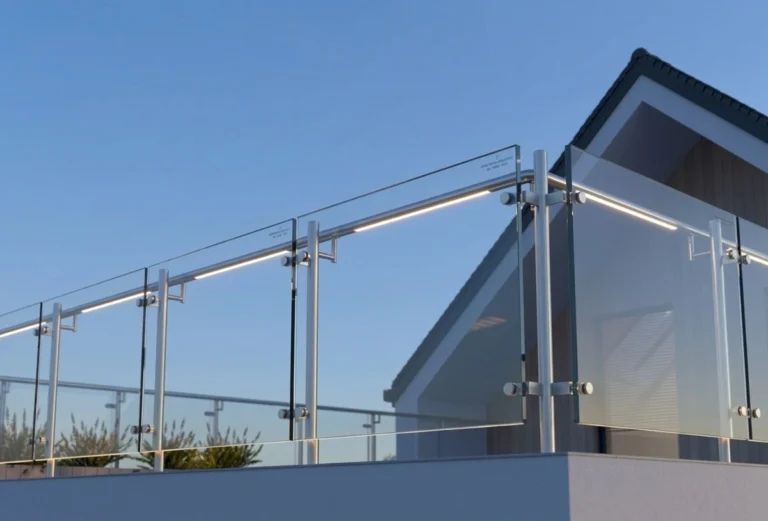
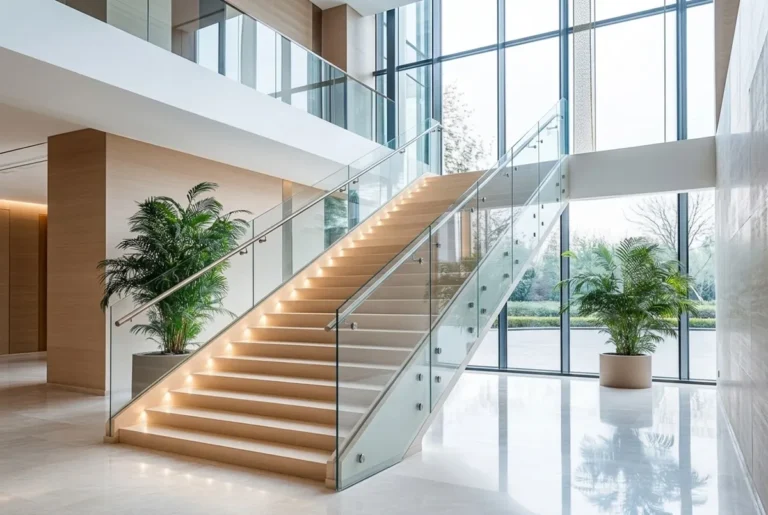
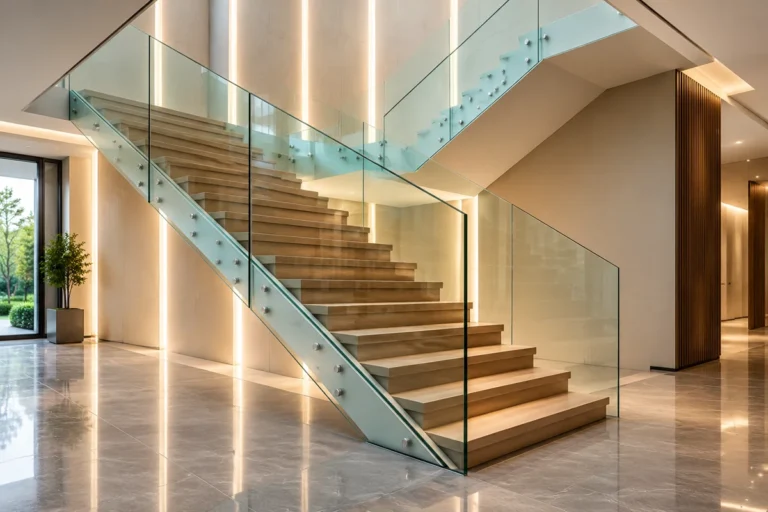
For projects that combine railing types, UNIKIM also supplies glass railing systems and stainless steel posts, so mixed-material specifications can be sourced from one manufacturer.
Benefits of Removable Handrail Brackets
For decision-makers weighing the switch from fixed hardware, the advantages are concrete:
- Non-destructive access — open a rail section for equipment, deliveries, or renovation without cutting or re-drilling.
- Simpler maintenance — detach rails to clean, repair, or refinish decking and walls with a clean work area.
- Longer rail life — remove and store sensitive sections through harsh seasons.
- Design flexibility — update layouts as architectural needs change, without replacing the anchored base.
- Code compliance retained — quality brackets meet IBC/IRC and accessibility load requirements when locked.
- Lower lifecycle cost — the permanent base stays put, so only the rail moves, reducing wear on the structure.
Installation Guide
Installation quality determines whether a removable bracket performs to its rating. The sequence below reflects standard professional practice; always confirm against local code and the manufacturer’s instructions.
- Locate structural backing. Anchor the base plate into studs, blocking, masonry, or steel — never drywall alone. This is non-negotiable for a load-bearing rail.
- Set height and clearance. For graspable handrails, most codes require a minimum clearance of 1½ inches (38 mm) between the wall and the gripping surface. Confirm handrail height against local requirements.
- Mount the fixed base plate. Use fasteners matched to the bracket grade and the substrate. Check the plate sits flush and plumb.
- Space brackets correctly. As a general rule, place brackets no more than 48 inches (1200 mm) apart, with a bracket within about 12 inches of each rail end. On stairs, measure spacing along the pitch line.
- Fit the saddle and rail. Seat the removable section into its base and engage the pin, slide, or flange lock.
- Test the lock and load. Confirm the mechanism holds firmly and the rail resists movement before the space goes into use.
For stair and ramp runs, a pivoting saddle keeps the rail level and graspable along the full pitch — a key factor in accessibility compliance and user comfort.
Comparison Tables
Bracket Type Comparison
| Type | Release mechanism | Best for | Install effort | Tamper resistance |
|---|---|---|---|---|
| Quick-release pin | Spring or screw pin | Interior stairs & corridors | Low (hand tools) | Moderate |
| Slide-in / slotted | Lift-out channel | Deck & patio sections | Low | Moderate |
| Interlocking flange | Locking bolt/cam | High-traffic commercial | Medium | High |
| Pin-secured post | Removable post pin | Event & lane barriers | Medium | High |
Material Grade Comparison
| Factor | Grade 304 | Grade 316 |
|---|---|---|
| Corrosion resistance | Good (dry/indoor) | Excellent (coastal/marine) |
| Chloride & salt resistance | Limited | High (molybdenum content) |
| Typical environment | Interior stairs, offices | Pool decks, coastal, exterior |
| Relative cost | Lower | Higher |
| Recommended use | Cost-driven indoor specs | Long-life outdoor specs |
For most exterior and coastal work, 316 stainless with an interlocking or slide-in mechanism gives the best balance of durability and access. Interior, cost-sensitive runs can specify 304 with a quick-release pin.
Buying Guide for B2B Purchasers
Sourcing at volume rewards a systematic approach. Work through these criteria before placing an order:
1. Match grade to environment. Coastal, poolside, or exterior → 316. Dry interior → 304.
2. Confirm the load rating. Handrails generally must withstand a 200-pound concentrated load applied in any direction under IBC/IRC. Verify the bracket meets or exceeds this when locked.
3. Check accessibility clearance. The bracket must hold the 1½-inch minimum wall clearance precisely in the locked position.
4. Standardize the system. Specify brackets, slot-tube handrail, posts, and fittings that share grade and finish. A single-source system avoids mismatched threads and finishes on site.
5. Assess the supplier, not just the part. Look for a real manufacturer that publishes specs, offers material certificates, and supports custom or OEM production for your brand.
6. Confirm lead time and MOQ. For distributors and importers, factory-direct sourcing shortens lead times and removes trading-company markup.
Browse the full product catalog to compare compatible components before you specify.
Why Choose UNIKIM
UNIKIM is a factory-direct manufacturer of stainless steel railing hardware, supplying architects, contractors, railing companies, distributors, and importers worldwide. The company controls the full process in-house, which is what lets it hold consistent tolerances and load performance across large orders.
What professional buyers get from UNIKIM:
- Material expertise — 304 and 316 stainless specified correctly for each environment, with proper passivation and finishing.
- In-house manufacturing — CNC machining, forming, and quality inspection under one roof for repeatable results.
- Complete systems — brackets, posts, slot-tube rail, handrail fittings, and glass railing hardware from a single source.
- Custom and OEM production — private-label and made-to-spec brackets for railing brands and volume buyers.
- Global B2B supply — factory-direct pricing, documented specifications, and export experience.
That combination of manufacturing capability, product depth, and supply credibility is why railing companies choose UNIKIM as a long-term hardware partner rather than a one-off vendor.
Summary
Removable handrail brackets give architects, contractors, and distributors a practical way to combine full code compliance with real-world flexibility. The right specification comes down to matching grade to environment, confirming load and clearance requirements, and standardizing the whole system through one reliable source.
Grade 316 stainless suits exterior and coastal projects, 304 covers cost-sensitive interior work. Whichever you specify, sourcing removable handrail brackets factory-direct from a genuine manufacturer lowers cost, shortens lead times, and unlocks custom and OEM options. As a global stainless steel railing hardware manufacturer, UNIKIM supplies that combination of quality, product depth, and B2B supply credibility for projects of any scale.
FAQ
What are removable handrail brackets used for?
Removable handrail brackets are used to support handrails while allowing easier removal, maintenance, and adjustment compared with fixed systems.
Are stainless steel handrail brackets suitable for outdoor use?
Yes. 316 stainless steel brackets are highly recommended for outdoor applications because they provide excellent corrosion resistance.
What is the best material for commercial handrail brackets?
316 stainless steel is often preferred for commercial projects because of its durability and resistance to harsh environments.
Can handrail brackets be customized?
Yes. Manufacturers can customize dimensions, finishes, and designs according to project requirements.
How do I choose a handrail bracket supplier?
Choose a supplier with manufacturing experience, quality control systems, OEM capability, and international export experience.
Are removable handrail brackets safe for stairs?
Yes. Removable handrail brackets are designed to meet the same load requirements as fixed brackets. Most support 200 lbs or more of concentrated force. The key is proper installation into wall studs or structural posts. Always choose brackets from a trusted manufacturer that provides load-test documentation.
Can I use removable railing brackets on a deck?
Absolutely. Removable deck railing brackets are one of the most popular applications. They let you open a railing section for furniture delivery, party setup, or seasonal maintenance. For outdoor use, choose 316 stainless steel brackets to resist weather and corrosion.
How much weight can a removable railing bracket hold?
Most quality removable brackets support 200 lbs or more of concentrated load at any point. This matches the requirement set by the International Building Code (IBC). Always check the manufacturer’s specs for exact load ratings.