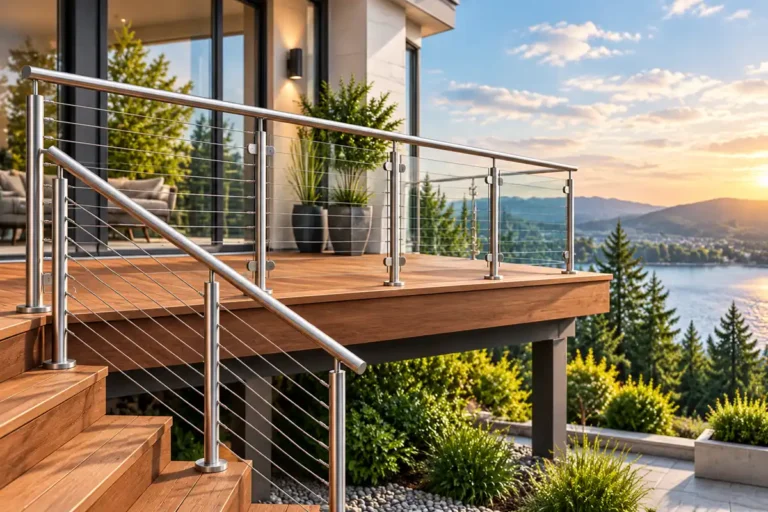
When upgrading a property, choosing a barrier that provides safety without sacrificing aesthetics can be a challenge. Traditional bulky wooden balusters or heavy iron bars frequently block natural light and sever your visual connection to the surrounding landscape.
Modern architectural design centers on openness, and nothing achieves this balance quite like Cable Railing Fence Kits.
Whether you are a homeowner trying to maximize your backyard panorama or a commercial property manager seeking a durable, low-maintenance safety barrier, modern cable railing kits deliver a sleek, industrial-chic aesthetic that preserves your view.
What Are Cable Railing Fence Kits?
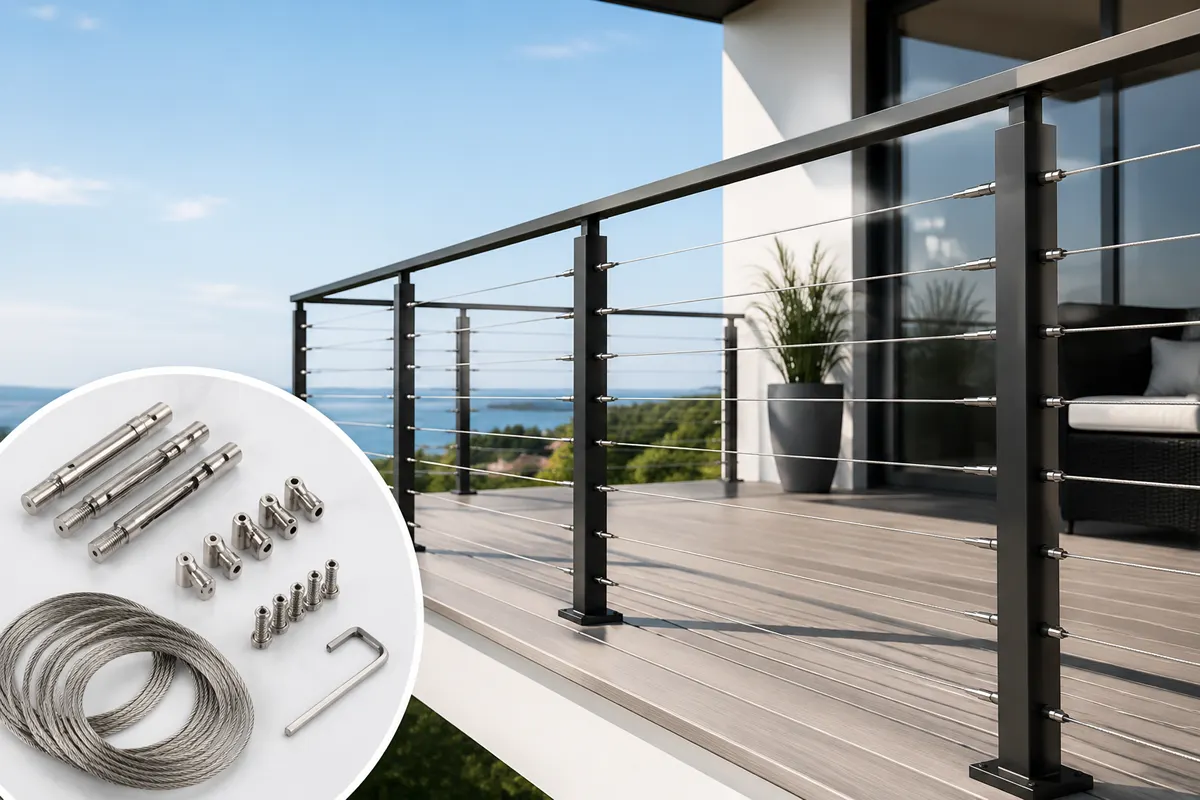
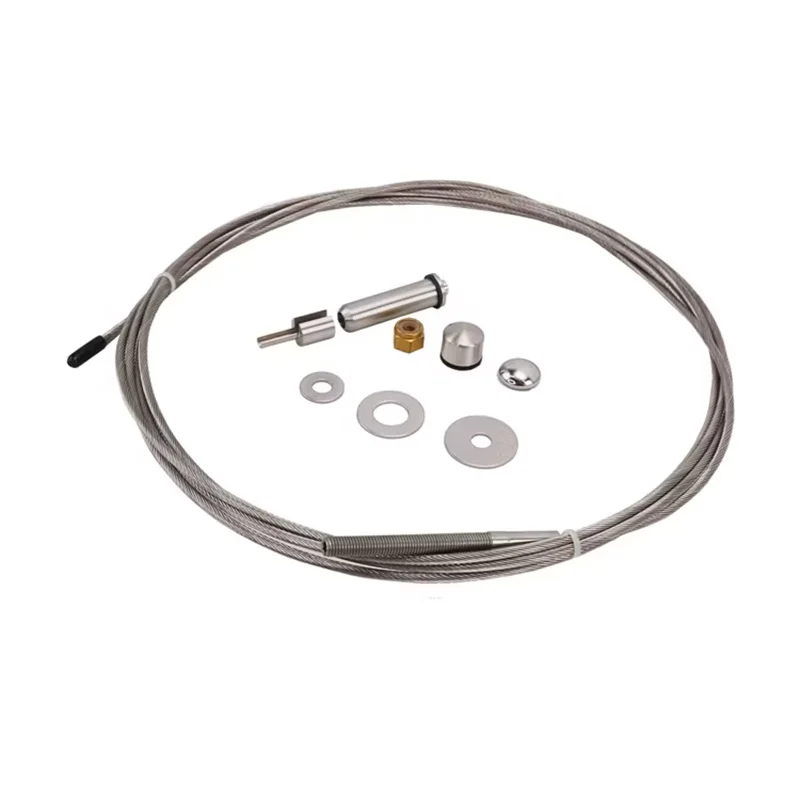
Cable Railing Fence Kits are complete railing systems that use tensioned stainless steel cables instead of traditional balusters or pickets. A typical kit includes:
- Stainless steel cables
- Posts (aluminum, stainless steel, or wood compatible)
- Cable fittings and tensioners
- End terminals
- Mounting hardware
- Installation accessories
These kits are designed for quick installation while providing maximum safety without obstructing the surrounding view.
Unlike bulky fencing systems, cable railings create a clean, open appearance that complements both modern and traditional architecture.
Why Choose Cable Railing Fence Kits?
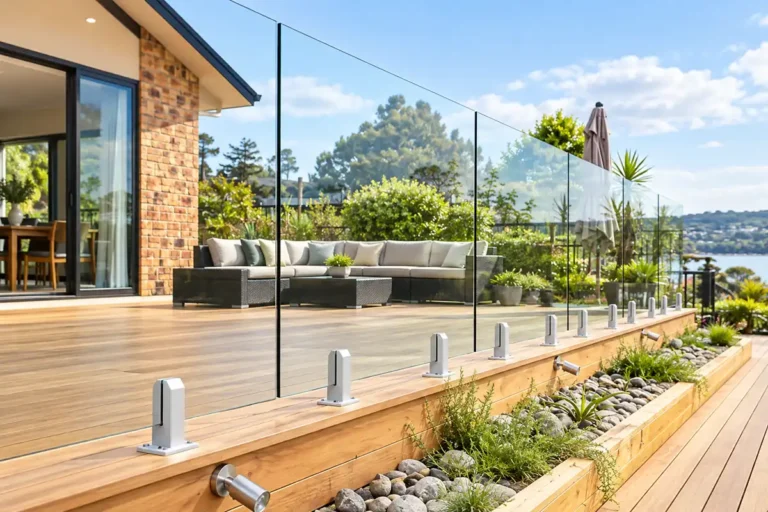
When evaluating modern barrier options, property owners frequently compare cable configurations with minimalist alternatives, such as glass railings for decks. While glass offers a completely unobstructed perspective, it presents massive challenges in real-world environments:
- Maintenance Hurdles: Glass panels catch fingerprints, pollen, water spots, and pet nose prints. Keeping them pristine requires constant squeegeeing. Cable setups, by contrast, require virtually no cleaning beyond an occasional rinse.
- Airflow and Ventilation: Glass completely blocks the breeze. In warm summer months, a glass-enclosed deck becomes a heat trap. Cable systems let air pass through freely, keeping your space cool.
- Cost Predictability: Heavy tempered glass requires specialized, costly freight and highly precise professional installation. Affordable cable hardware brings premium styling within reach of tighter budgets.
Beyond the glass comparison, horizontal cable systems offer unrivaled longevity. Standard wood pickets warp, split, and require staining every two to three years. Wrought iron or cheap aluminum can rust or peel. High-quality stainless steel wire rope preserves its tension and appearance for decades with minimal intervention.
Residential vs. Commercial Applications of Cable Railing Fence Kits
The utility of cable railing fence kits bridges two distinct markets, addressing different pain points for homeowners and business operators alike.
Residential Appeal
For the residential user, it is all about lifestyle enhancement and property value. Decks, balconies, patios, and internal staircases feel larger and more connected to the surrounding environment when enclosed by thin steel lines. It is an investment that pays off during resale; buyers heavily favor modern, low-maintenance outdoor living features.
Commercial Durability
In commercial architecture—such as restaurant patios, multi-family apartment walkways, corporate offices, and public boardwalks—the priorities shift to safety, liability, and durability. Commercial spaces experience heavy wear and tear. High-tension steel cables endure impacts that would shatter glass or dent aluminum pickets, ensuring the property remains safe and structurally compliant without looking institutional.
How to Choose Stainless Steel Railing Fence Kits
Not all hardware is created equal. When navigating the market, understanding the specific material grades and components will protect you from buying kits that degrade prematurely. Use this breakdown to understand how to choose stainless steel railing components that fit your environment and budget.
Material Selection: Grade 304 vs. Grade 316
Stainless steel is defined by its alloy composition. The two most common varieties you will find from a cable railing fence kits supplier are:
- Grade 304 (Standard Stainless): Excellent for indoor installations or protected residential outdoor spaces far from saltwater or heavy industrial pollution. It is highly cost-effective but susceptible to superficial tea-staining if exposed to harsh environments.
- Grade 316 (Marine-Grade Stainless): The gold standard for outdoor and commercial use. It contains molybdenum, an element that drastically increases resistance to chlorides (like sea salt or road de-icing salts) and industrial chemicals. Always invest in Grade 316 for coastal or exposed exterior installations.
Cable Thickness and Layout
Most residential and commercial kits utilize a $1/8\text{-inch}$ or $3/16\text{-inch}$ diameter cable. The $1/8\text{-inch}$ option is incredibly discrete and perfectly suited for residential loads. Commercial applications frequently opt for $3/16\text{-inch}$ profiles for increased structural presence and higher load capacities.
| Feature | Residential Standard | Commercial Standard |
| Cable Diameter | $1/8\text{ inch}$ | $3/16\text{ inch}$ |
| Post Material | Wood, Aluminum, or Steel | Heavy-Duty Steel or Aluminum |
| Spacing Constraint | Maximum $3\text{-inch}$ sphere pass | Strict $3\text{-inch}$ spacing (4-inch code limit) |
| Primary Focus | Aesthetics & Views | Structural Rigidity & Compliance |
Step-by-Step Selection: Finding the Right System
To avoid overspending, follow this logical progression when selecting your hardware and configuration.
Step 1: Identify Your Post Material
Cable kits can be adapted to wood posts, metal posts, or composite sleeves. Ensure the kit you order explicitly states it matches your post material, as the anchoring screws and tensioning receivers utilize entirely different threading systems for wood versus metal.
Step 2: Determine Your Tensioning Style
- Swageless Fittings: These are the friendliest options for DIYers. They utilize internal jaw mechanisms that lock onto the raw cable without requiring specialized hydraulic tools. You simply push the cable in, tighten the locking nut, and trim the excess.
- Swaged Fittings: These require a specialized hydraulic swaging tool to physically crimp the metal terminal onto the cable. While the tools add an upfront cost, the individual fittings are often less expensive, making them perfect for large-scale commercial builds.
Step 3: Account for Code Compliance
International Building Codes (IBC) and Residential Building Codes (IRC) mandate that a $4\text{-inch}$ sphere cannot pass through any opening in a railing. Because steel wire has inherent flexibility, you must space your cables no more than $3\text{ inches}$ apart vertically, and utilize vertical spacer posts or intermediate supports every $3$ to $4\text{ feet}$ horizontally to eliminate dangerous cable deflection.
Finding a Reliable Cable Railing Fence Kits Supplier
Achieving an affordable install relies heavily on your supply chain. Buying piece-by-piece from a local big-box hardware store is almost always the most expensive path. Instead, look for a specialized cable railing fence kits supplier that offers cohesive, bulk packages.
When vetting a supplier, verify the following:
- Pre-Assembled Hardware Packs: Look for suppliers offering grouped kits that bundle the tensioner, terminal end, washers, and structural screws together per run. This dramatically minimizes planning errors.
- Material Certifications: Reputable suppliers will readily provide material grade sheets proving their steel is genuinely Grade 316, guarding you against cheap, zinc-coated counterfeits that rust within a single season.
- Engineering and Layout Support: The best value suppliers aren’t just selling boxes of steel; they provide layout calculators or take-off services where you submit a basic drawing of your deck or commercial space, and they calculate the exact linear footage of cable and quantity of fittings required.
Final Summary
Whether you’re renovating a home, upgrading a commercial property, or designing a new construction project, Cable Railing Fence Kits offer an outstanding combination of affordability, durability, and modern style.
Compared with traditional railing options, cable railing systems provide better visibility, lower maintenance, and exceptional longevity. When paired with premium stainless steel components and installed correctly, they deliver years of reliable performance in virtually any environment.
Before making your purchase, compare product quality, hardware, stainless steel grades, and supplier reputation. Choosing a trusted Cable Railing Fence Kits supplier ensures you receive a complete system that meets your project’s safety and design requirements.
If you’re looking for an attractive railing solution that enhances both residential and commercial spaces, affordable Cable Railing Fence Kits are a smart investment that combines elegance, strength, and long-term value.
FAQs
Are Cable Railing Fence Kits code-compliant for residential decks and commercial spaces?
Yes, when installed correctly. Most local building codes specify that a 4-inch sphere cannot pass through any part of the railing. Because steel wire has natural flexibility, you must follow two strict rules to remain compliant: space your horizontal rows no more than 3 inches apart vertically, and install intermediate support posts every 3 to 4 feet to prevent the cables from bowing or deflecting under load.
What is the average cost of installing Cable Railing Fence Kits compared to glass or wood?
While wood has the lowest upfront material cost, it requires expensive, ongoing staining, sealing, and repair. Glass railings offer beautiful views but are highly expensive due to heavy tempered glass manufacturing and complex professional installation. Cable Railing Fence Kits sit perfectly in the affordable sweet spot: they carry a moderate upfront hardware cost but virtually zero long-term maintenance costs, saving you thousands of dollars over the lifetime of the system.
How much maintenance do these cable systems require after installation?
Very little. Unlike wood that rots or aluminum that can scratch and peel, stainless steel cable requires minimal care. In typical inland environments, a quick spray with a garden hose once or twice a year is all it takes to keep them looking clean. For properties directly on coastal ocean fronts, a brief periodic wipe-down with fresh water and a mild detergent prevents salt buildup and keeps the metal pristine.