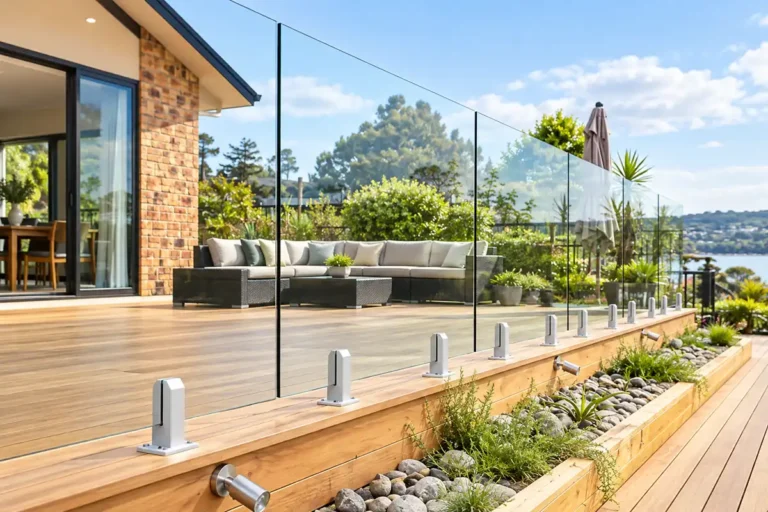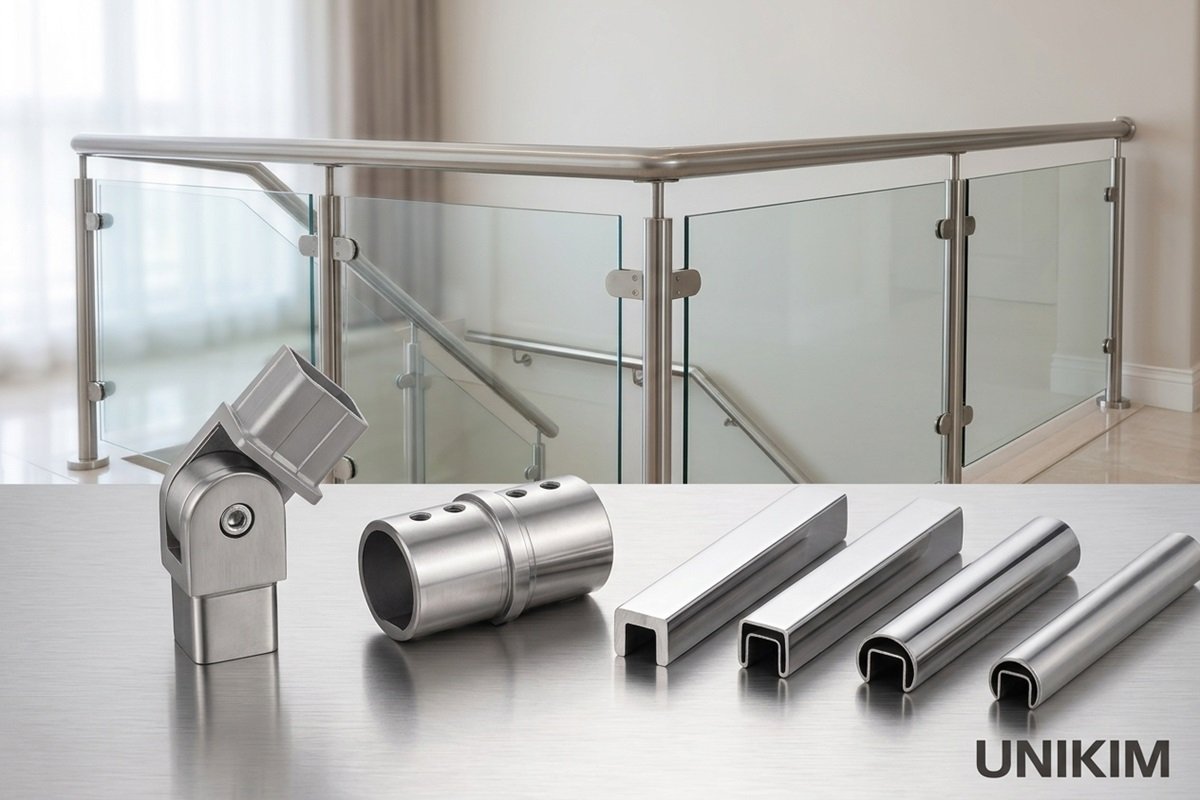
Choosing the right stainless steel handrail fittings can make the difference between a railing system that simply looks good and one that performs reliably for years. Handrails need more than a strong tube. They also require properly matched elbows, connectors, end caps, wall brackets, base plates, and other components.
For architects, contractors, fabricators, builders, and distributors, the challenge is often knowing which fitting suits a particular tube, installation method, environment, and design. A fitting that works perfectly indoors may not be the best choice beside a swimming pool or near the coast.
This guide explains the main types of stainless steel handrail fittings, how they are used, how 304 compares with 316 stainless steel, and how to select the correct components for a complete railing system. It also covers surface finishes, tube compatibility, bulk purchasing, and practical considerations for commercial projects.
For a broader look at railing solutions, explore the UNIKIM railing systems and architectural components.
What Are Handrail Fittings and Why Do They Matter?
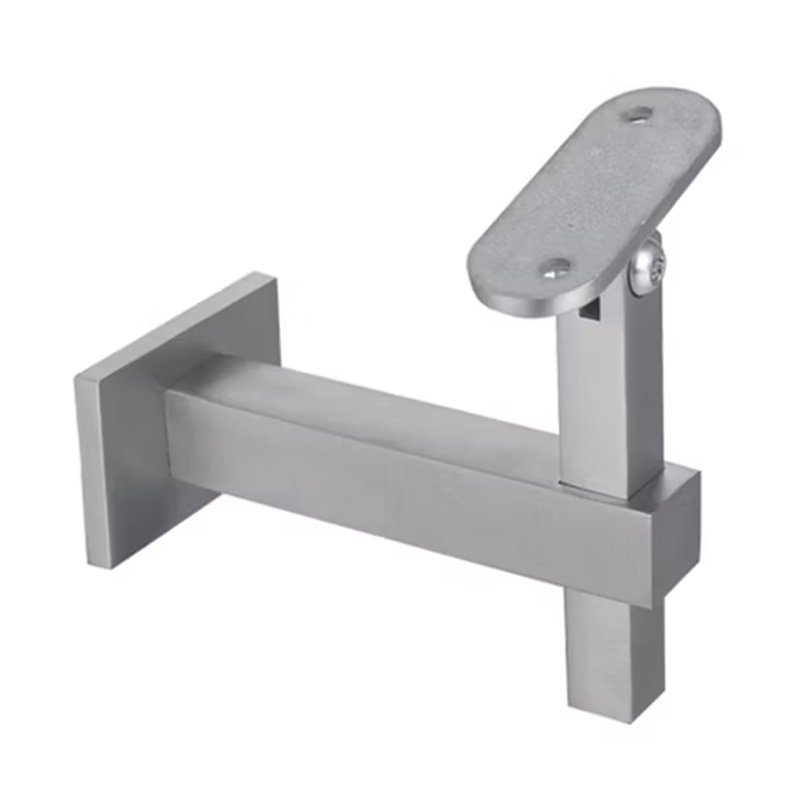
Handrail fittings are the connection and support components used to assemble a handrail or balustrade system. They connect tubes, change direction, terminate rails, attach handrails to walls, and secure railing structures to floors or posts.
A stainless steel handrail system normally combines several components rather than relying on one fitting. For example, a staircase may need elbows to change direction, wall brackets to support the rail, connectors to join tube sections, and end caps to close exposed tube ends.
The quality of these connections matters because the handrail is both an architectural feature and a safety element.
Stainless steel is particularly useful because its chromium content helps create a passive surface layer that protects the metal from corrosion. World Stainless notes that stainless steel contains at least 10.5% chromium, while alloying elements such as nickel and molybdenum can further improve corrosion resistance.
That does not mean every stainless steel fitting performs equally in every environment. Grade, fabrication quality, finish, installation, cleaning, and exposure conditions all influence long-term performance.
This is why selecting fittings as part of a complete system is more effective than choosing individual components based only on appearance or price.
Essential Types of Stainless Steel Handrail Fittings
Different railing layouts require different connection methods. The most common stainless steel handrail fittings include elbows, end caps, wall brackets, base plates, flanges, tube joiners, and handrail connectors.
The exact combination depends on whether the handrail is wall mounted, post mounted, glass mounted, or integrated into a larger balustrade system.
Elbow Connectors — 90°, 135° and Adjustable
An elbow connector changes the direction of a handrail tube.
A 90-degree elbow is commonly used when the railing needs to turn at a right angle. It can be useful around landings, corners, and square architectural layouts.
A 135-degree elbow creates a wider angle and is particularly useful for stair transitions and sloped railing arrangements. The correct angle depends on the geometry of the staircase and the design of the handrail.
Adjustable connectors provide additional flexibility. They can help fabricators deal with unusual angles where a fixed elbow does not provide the required alignment.
The important point is simple: the connector should match both the tube diameter and the intended angle. A visually similar fitting with the wrong internal dimension can create installation problems.
UNIKIM offers stainless steel handrail components in several common tube sizes, including 33.7 mm, 38.1 mm, 42.4 mm, 48.3 mm, and 50.8 mm on selected products.
End Caps — Flat, Dome and Round
An end cap closes the exposed end of a handrail tube.
Although an end cap appears simple, it serves several purposes. It gives the rail a finished appearance, protects the open tube end, and prevents the interior of the tube from becoming visually exposed.
Common styles include flat end caps, dome end caps, and rounded designs.
The choice usually depends on the architectural style. Flat caps create a minimal appearance, while domed or rounded caps provide a softer visual transition.
For outdoor and high-traffic installations, buyers should also consider how the cap attaches to the tube. A properly matched fitting reduces movement and creates a cleaner finished connection.
UNIKIM’s stainless steel handrail range includes 304 and 316 options with brushed and polished surface choices for architectural applications.
Wall Brackets and Supports
Wall brackets attach the handrail directly to a wall or structural surface.
They are especially common on staircases, corridors, ramps, balconies, and commercial buildings. The bracket transfers the handrail load to the supporting structure.
A wall bracket must therefore be selected according to more than tube diameter. The installer should also consider the wall construction, anchor type, bracket geometry, spacing, and expected loading.
UNIKIM lists handrail brackets compatible with several tube diameters, including 33.7 mm, 38.1 mm, 42.4 mm, 48.3 mm, and 50.8 mm. Selected models are available in AISI 304 and AISI 316 stainless steel and can use satin or mirror-polished finishes.
For projects requiring a complete railing solution, buyers can review the UNIKIM post and handrail system range rather than sourcing brackets separately from unrelated suppliers.
Base Plates and Flanges
Base plates and flanges connect posts or railing components to floors, decks, platforms, or other structural surfaces.
They are particularly important in post-supported railing systems. A base plate distributes forces through the connection and provides a mounting interface between the railing assembly and the supporting surface.
The correct design depends on the post profile, structural substrate, anchor arrangement, and project requirements.
For glass railing projects, base components may also work together with posts, clamps, spigots, or top rails. This makes compatibility especially important.
Architects and contractors working on transparent architectural systems can also compare UNIKIM frameless glass railing systems when a minimalist appearance is required.
Tube Joiners and Converters
Tube joiners connect two sections of handrail tubing.
They are useful when a single tube length cannot cover the complete railing run. They can also simplify transportation, fabrication, and installation.
A tube joiner should match the tube’s outside diameter, wall thickness, connection method, and material grade.
Some systems use internal joining components, while others use external connectors. The preferred solution depends on the desired appearance and fabrication method.
Converters are useful when two components have different connection requirements. However, reducing the number of transitions is often preferable because every additional connection introduces another point that needs accurate alignment and inspection.
For related railing components, the UNIKIM handrail fittings collection provides a useful starting point for comparing component types.
Material Choices — 304 vs 316 Stainless Steel
One of the most important decisions when purchasing stainless steel handrail fittings is choosing the correct grade.
The two most common options for architectural railing applications are 304 and 316 stainless steel.
| Feature | 304 Stainless Steel | 316 Stainless Steel |
|---|---|---|
| General corrosion resistance | Excellent | Very high |
| Typical indoor use | Excellent | Excellent |
| General outdoor use | Good to excellent | Excellent |
| Chloride exposure | More limited | Better suited |
| Coastal environments | Application dependent | Generally preferred |
| Relative cost | Lower | Higher |
| Common architectural use | Very common | Premium/high-exposure applications |
Grade 304 is widely used because it provides a strong combination of corrosion resistance, fabrication performance, appearance, and cost.
Grade 316 contains molybdenum. World Stainless explains that Type 316 typically contains about 2–3% molybdenum, which improves resistance to corrosion, particularly in chloride environments where pitting can occur.
That makes 316 particularly attractive for coastal projects, marine environments, swimming-pool areas, and locations exposed to salt or aggressive atmospheric conditions.
ASTM standards also distinguish 304 and 316 as established stainless steel alloy groups used for corrosion-resistant applications.
However, 316 is not automatically the correct choice for every project. Indoor commercial staircases may not require its additional corrosion resistance. Using 316 everywhere can unnecessarily increase material costs.
A practical approach is to assess the environment first, then choose the grade.
Finish Options — Satin, Mirror and Matte Black
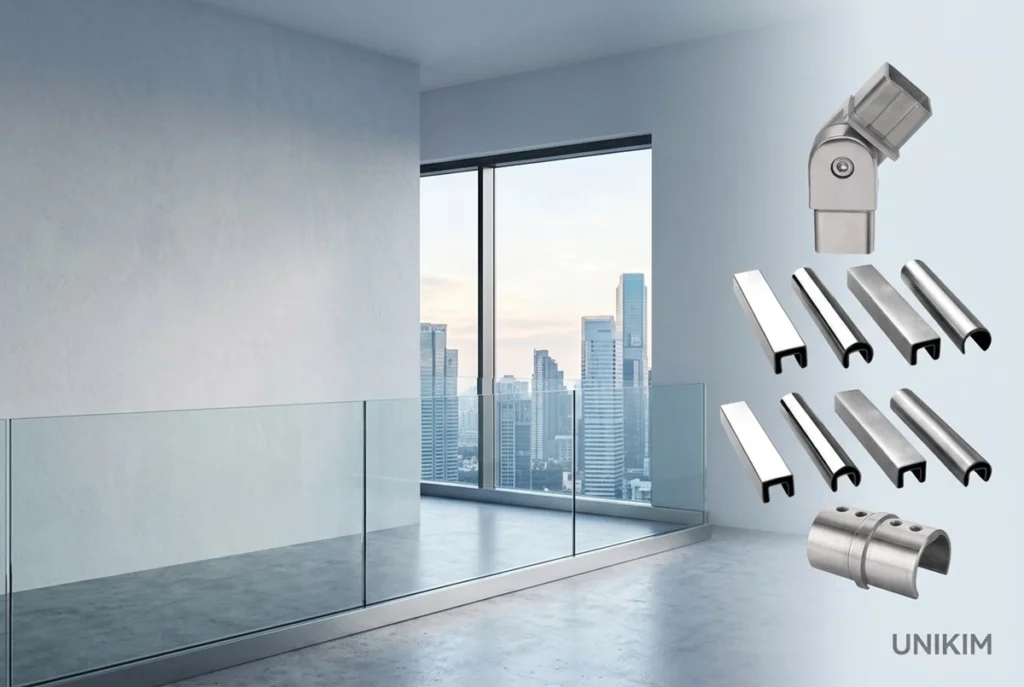
Material grade determines corrosion performance, but the surface finish strongly influences appearance.
Satin or Brushed Finish
A satin finish has a softer, directional appearance. It hides fingerprints and small surface marks better than highly reflective finishes.
It works particularly well in commercial interiors, modern staircases, office buildings, and minimalist architectural projects.
Mirror Finish
A mirror finish is highly polished and reflective.
It creates a brighter, more decorative appearance and can complement premium interiors. However, the reflective surface can make fingerprints and scratches more noticeable.
Matte Black Finish
Matte black finishes have become popular in contemporary architecture. They create a strong contrast against glass, timber, concrete, and light-colored walls.
For projects where black hardware is part of the visual identity, UNIKIM also provides a dedicated matte black design collection.
A matte black component can be especially effective when combined with clear glass. For example, UNIKIM’s matte black glass railing bracket is designed for this type of architectural application.
The finish should be considered alongside maintenance requirements and the environment. A decorative coating does not replace the need to select an appropriate underlying material.
How to Match Fittings to Your Handrail Tube Size
Correct dimensional matching is one of the easiest ways to avoid installation problems.
Before ordering stainless steel handrail fittings, confirm the tube’s outside diameter.
Common architectural handrail tube dimensions include:
33.7 mm, 38.1 mm, 42.4 mm, 48.3 mm, and 50.8 mm.
UNIKIM lists several of these dimensions across its handrail bracket and tube products.
Do not assume that two tubes with similar visual dimensions are interchangeable. Even a small mismatch can create looseness, poor alignment, or installation difficulties.
The tube wall thickness can also matter. For example, UNIKIM lists selected round handrail tubes in dimensions such as 42.4 × 2.0 mm and 50.8 × 1.5 mm.
Before purchasing, confirm:
- Tube outside diameter.
- Tube wall thickness where relevant.
- Stainless steel grade.
- Fitting connection type.
- Required angle.
- Mounting method.
- Surface finish.
- Environmental exposure.
- Required glass compatibility, if applicable.
- Project-specific structural and building-code requirements.
This checklist can prevent an inexpensive component from becoming an expensive installation problem.
For projects combining posts and handrails, the UNIKIM stainless steel post collection can help maintain consistent materials and finishes across the system.
Stainless Steel Handrail Fittings for Glass Railing Systems
Glass and stainless steel are frequently combined because they create an open, modern appearance.
In these systems, the handrail may sit above the glass, connect to posts, or use specialized brackets that secure the rail to the glass structure.
Glass thickness must be considered carefully. UNIKIM lists selected brackets for glass structures ranging from 6 mm through 12.76 mm, depending on the product.
That does not mean every bracket fits every glass panel. The fitting specification must match the actual glass construction and the engineered railing design.
For a complete architectural solution, explore UNIKIM’s glass railing systems.
For projects that prioritize an unobstructed glass appearance, frameless systems may be appropriate. Cable systems are another option where designers want a lighter visual structure. You can compare stainless steel cable railing systems when planning alternatives.
Buying in Bulk — What Wholesalers Need to Know
Bulk purchasing requires a different approach from buying components for a single residential staircase.
Wholesalers, distributors, contractors, and project suppliers should focus on consistency, specifications, packaging, lead times, quality control, and repeatability.
A supplier may offer a low unit price, but that price becomes less attractive if different production batches have inconsistent finishes or dimensions.
For large orders, request a detailed specification sheet. Confirm the material grade, dimensions, surface finish, packaging method, and quantity per carton.
It is also useful to standardize common tube sizes across a project. For example, if a contractor repeatedly uses 42.4 mm tubing, stocking compatible elbows, brackets, connectors, and end caps can simplify procurement.
UNIKIM publishes product specifications for multiple handrail components and lists a production capacity of up to 20,000 pieces per month for several selected fittings.
Buyers interested in international sourcing can review the UNIKIM manufacturer profile for additional company and product information.
For a bulk project, it is also sensible to request samples before approving a large production run. A physical sample allows the buyer to check the finish, dimensions, connection quality, and visual consistency.
UNIKIM’s Handrail Fittings Range
UNIKIM develops railing components for residential, commercial, architectural, and industrial applications.
Its product range covers handrail brackets, tubes, posts, glass railing components, connectors, and related fittings. Selected components are available in AISI 304, AISI 316, and other material options, depending on the product.
For example, the UNIKIM stainless steel handrail tube range includes multiple round tube dimensions and brushed or polished surface options.
The company also offers products such as the matte black stainless steel handrail cap and 304/316 stainless steel glass handrail components.
For buyers who need a complete system rather than individual fittings, the UNIKIM post handrail system collection can be a more efficient starting point.
The main advantage of sourcing components as a coordinated system is consistency. Tube dimensions, fittings, finishes, posts, and mounting components can be specified together rather than mixed from unrelated suppliers.
How to Choose the Right Stainless Steel Handrail Fittings
The best selection process starts with the project rather than the product catalogue.
First, identify the installation environment. Indoor staircases usually have different corrosion requirements from coastal balconies.
Next, determine the handrail tube diameter and wall thickness. Then identify every required connection point.
A straight railing may need only brackets and end caps. A staircase with multiple landings may require elbows, joiners, brackets, connectors, and transition pieces.
After that, select the stainless steel grade. Use 304 where general corrosion resistance is sufficient. Consider 316 when chloride exposure or aggressive environments make additional corrosion resistance valuable.
Finally, choose the surface finish.
This sequence reduces errors because it puts performance before appearance. Once the engineering requirements are established, the aesthetic choice becomes much easier.
Remember that the fittings are only one part of a safe railing system. Anchor design, substrate strength, spacing, glass specification, tube dimensions, installation quality, and applicable local building requirements also matter.
For projects requiring professional sourcing or technical assistance, contact UNIKIM through its contact page.
Frequently Asked Questions
1. What are stainless steel handrail fittings used for?
Stainless steel handrail fittings connect, support, terminate, or redirect handrail tubes within staircases, balconies, walkways, ramps, terraces, and glass railing systems. Common examples include elbows, brackets, end caps, flanges, joiners, and connectors. The correct component depends on the railing geometry, tube dimensions, mounting method, and environment.
2. Are 304 or 316 stainless steel handrail fittings better?
Neither grade is universally better. Stainless steel handrail fittings made from 304 provide excellent corrosion resistance for many indoor and general outdoor applications. Grade 316 offers greater resistance to chloride-related corrosion because it contains molybdenum. Therefore, 316 is often a stronger choice for coastal, marine, poolside, or high-salt environments.
3. What tube sizes are commonly used with stainless steel handrail fittings?
Common sizes include 33.7 mm, 38.1 mm, 42.4 mm, 48.3 mm, and 50.8 mm. However, the correct fitting must match the actual tube specification. UNIKIM lists several of these sizes across its handrail brackets and tubes.
4. Are stainless steel handrail fittings suitable for outdoor use?
Yes, stainless steel handrail fittings can be suitable for outdoor applications when the correct grade and finish are selected. Grade 304 works well in many general environments, while 316 is usually more appropriate where chloride exposure is significant. Proper cleaning and installation also influence long-term performance.
5. Which finish should I choose for stainless steel handrail fittings?
The choice depends mainly on appearance and maintenance expectations. Satin or brushed finishes provide a softer architectural appearance and tend to hide fingerprints better. Mirror finishes create a highly polished appearance. Matte black finishes provide a contemporary contrast with glass, wood, and other architectural materials.
6. Can UNIKIM supply complete railing components?
Yes. Stainless steel handrail fittings form part of a broader UNIKIM railing range that includes handrail tubes, brackets, posts, glass railing components, connectors, and related accessories. Buyers can therefore specify multiple components as part of a coordinated railing system instead of sourcing each item independently.
Summary
The right stainless steel handrail fittings should balance safety, compatibility, corrosion resistance, appearance, and installation requirements.
Start by identifying the railing layout and tube size. Then select the correct elbows, brackets, connectors, end caps, and base components. After that, choose between 304 and 316 stainless steel according to the environment.
For general applications, 304 can provide an effective combination of performance and cost. For coastal or chloride-rich environments, 316 can provide stronger corrosion resistance. Surface finishes such as satin, mirror, and matte black then allow the system to match the architectural design.
The most reliable approach is to treat the handrail as a complete system. Matching tubes and stainless steel handrail fittings from a consistent product range can simplify specification, installation, procurement, and long-term maintenance.
For additional railing information, you can also explore UNIKIM’s railing solutions, glass railing systems, and the handrail fittings collection.
As a general architectural reference, the Wikipedia overview of balusters provides useful background on railing terminology and components. For additional product demonstrations, the UNIKIM YouTube channel provides visual examples of railing products and applications.