In commercial development, municipal planning, and heavy industrial asset management, structural components are exposed to harsh environmental realities. Marine and coastal environments are particularly demanding, where atmospheric salt, persistent moisture, and volatile weather create a severe corrosive environment. For asset owners and project managers, specifying materials for exposed perimeters is a critical decision that impacts long-term profitability, risk management, and brand reputation.
When architectural hardware fails prematurely, the true costs extend far beyond the price of replacement metal. Businesses face costly project downtime, unexpected maintenance labour, increased safety risks, and reduced visual appeal. This technical whitepaper examines why specifying premium 316 Stainless Steel Handrail Systems is the most financially sound, structurally secure, and long-term option for marine-adjacent construction. Using specialized alloy compositions isn’t a luxury-it’s a strategic choice that protects your capital investment, ensures compliance with building codes, andreduces ongoing operational costs.
The Science Behind 316 Stainless Steel Handrail Systems
To understand why 316 Stainless Steel Handrail Systems excel where other metals fail, it is necessary to analyze their chemical composition. Stainless steels are iron alloys containing a minimum of 10.5% chromium. This chromium reacts with ambient oxygen to form a microscopic, self-repairing layer of chromium oxide across the surface of the metal. This passive film prevents oxygen from penetrating the underlying iron, effectively eliminating common rust.
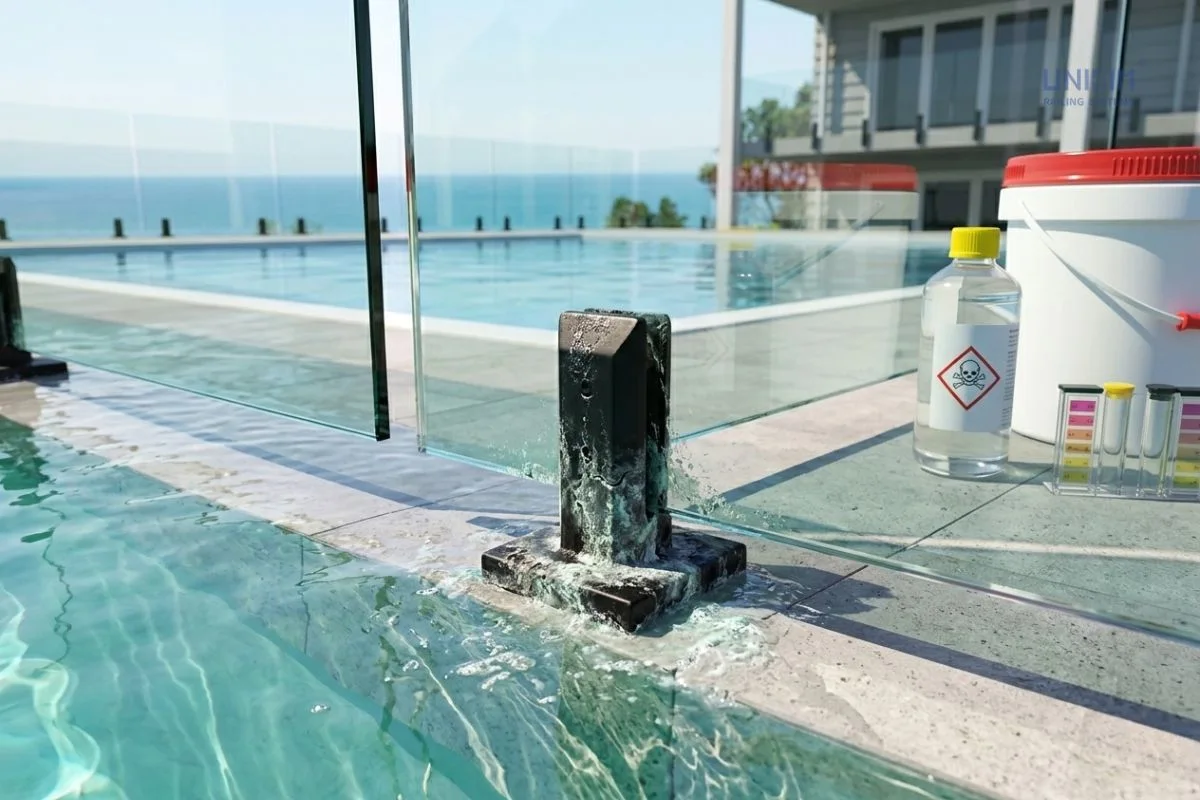
However, in coastal environments, airborne chloride ions from sea spray penetrate this standard passive film. Once chloride ions breach standard 304 steel’s protective layer, it suffers rapid pitting (localized corrosion) and crevice corrosion beneath brackets, joints, and glass clamps.
Grade 316 stainless steel counters this chemical vulnerability through a precise metallurgical formulation:
- The Molybdenum Component: Grade 316 contains 2.0% to 3.0% molybdenum by weight. This specific addition alters the alloy’s microstructure, significantly increasing its resistance to chloride-induced pitting and crevice corrosion.
- Enhanced Nickel Content: Higher nickel content (10–14%) in Grade 316 stabilizes its austenitic structure, providing superior ductility and formability, and ensuring robust impact resistance across diverse temperature ranges.
- Low-Carbon Variations (316L): For heavy welding, low-carbon variants prevent carbide precipitation, protecting the heat-affected zone from corrosion.
Alloy Composition and Performance Data
| Alloy Grade | Chromium (Cr) % | Nickel (Ni) % | Molybdenum (Mo) % | Pitting Resistance Equivalent Number (PREN) |
| Grade 304 (Standard Industrial) | 18.0 – 20.0 | 8.0 – 10.5 | — | ~18.0 |
| Grade 316 (Marine-Grade Premium) | 16.0 – 18.0 | 10.0 – 14.0 | 2.0 – 3.0 | ~23.0 – 25.0 |
The Pitting Resistance Equivalent Number (PREN) is an industry-recognized mathematical index derived from chemical composition metrics. A higher PREN indicates superior resistance to localized chloride attacks. As shown above, molybdenum increases the PREN score of 316 Stainless Steel Handrail Systems by over 30%, making them the standard choice for marine-grade balustrades.
Financial Benefits of 316 Stainless Steel Handrail Systems
In business procurement, decisions must balance initial capital expenditure (CapEx) against long-term operational expenditure (OpEx). While aluminum and mild or carbon steels cost less upfront, they create significant long-term liabilities in coastal environments.
Lowering Replacement Lifecycles
Selecting sub-optimal metals for coastal architectural hardware initiates a rapid cycle of material degradation. Powder coatings on mild steel crack and peel over time due to UV exposure and wind-borne sand abrasion. Once moisture penetrates these coatings, sub-film corrosion develops unseen, ultimately compromising the system’s structural integrity.
Implementing premium 316 Stainless Steel Handrail Systems eliminates this failure cycle. A single installation delivers a reliable operational lifecycle often exceeding 25 to 50 years, even when directly exposed to marine environments. This longevity eliminates the regular material replacement, structural rebuilding, and disruption costs that plague inferior building installations.
Saving on Long-Term Maintenance
For facility managers, the labor costs involved in constantly painting, scraping, treating, and replacing corroded hardware can quickly exceed the initial cost of the material. Grade 316 infrastructure requires only periodic washing with fresh water and mild soap to remove salt buildup. By saving thousands annually in maintenance and material costs, 316 Stainless Steel Handrail Systems quickly offset their higher upfront cost, making them the most cost-effective lifecycle solution.
Code Compliance with 316 Stainless Steel Handrail Systems
Beyond visual design considerations, handrails and balustrades are critical structural safety elements. Building codes worldwide enforce strict regulations regarding uniform point loads and distributed load-bearing limits to ensure public safety in high-occupancy settings. Material degradation caused by rust can compromise the structural integrity of a railing system, leading to failures that risk catastrophic structural collapse and significant corporate legal liabilities.
Specifying 316 Stainless Steel Handrail Systems provides assurance across critical compliance metrics:
- Retaining Structural Yield Strength: Unlike metals that thin and weaken under uniform rust, grade 316 maintains its nominal wall thickness and cross-sectional strength over decades, consistently meeting mandatory uniform load requirements.
- Mitigating Corporate Liability: For developers of public spaces, oceanfront resorts, and municipal piers, installing certified marine-grade systems demonstrates a proactive commitment to risk management, lowering corporate insurance premiums and minimizing structural liability risks.
- Certified Production Frameworks: Leading manufacturers design components to meet international certifications like CE, SGS, and ISO 9001. This alignment ensures that every base flange, glass bracket, slot tube, and connector delivers predictable, verifiable structural performance.
Commercial Glass Railings and 316 Stainless Steel Handrail Systems
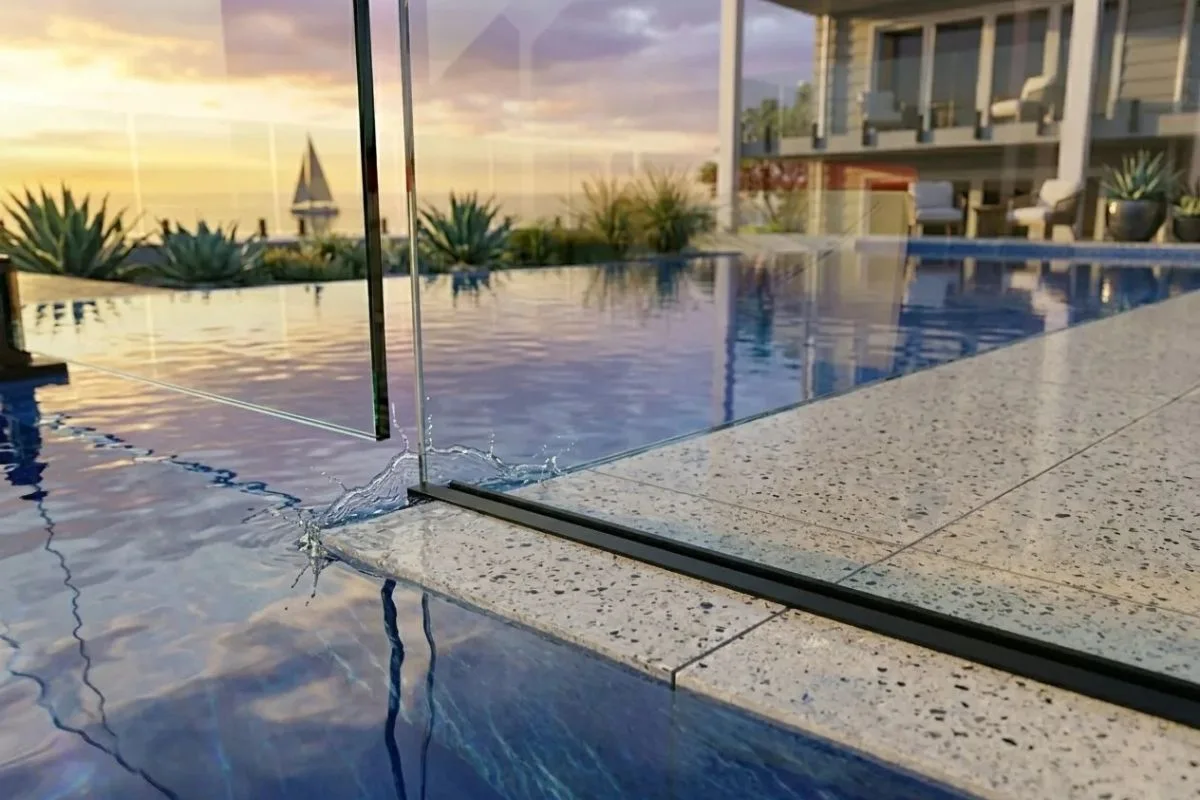
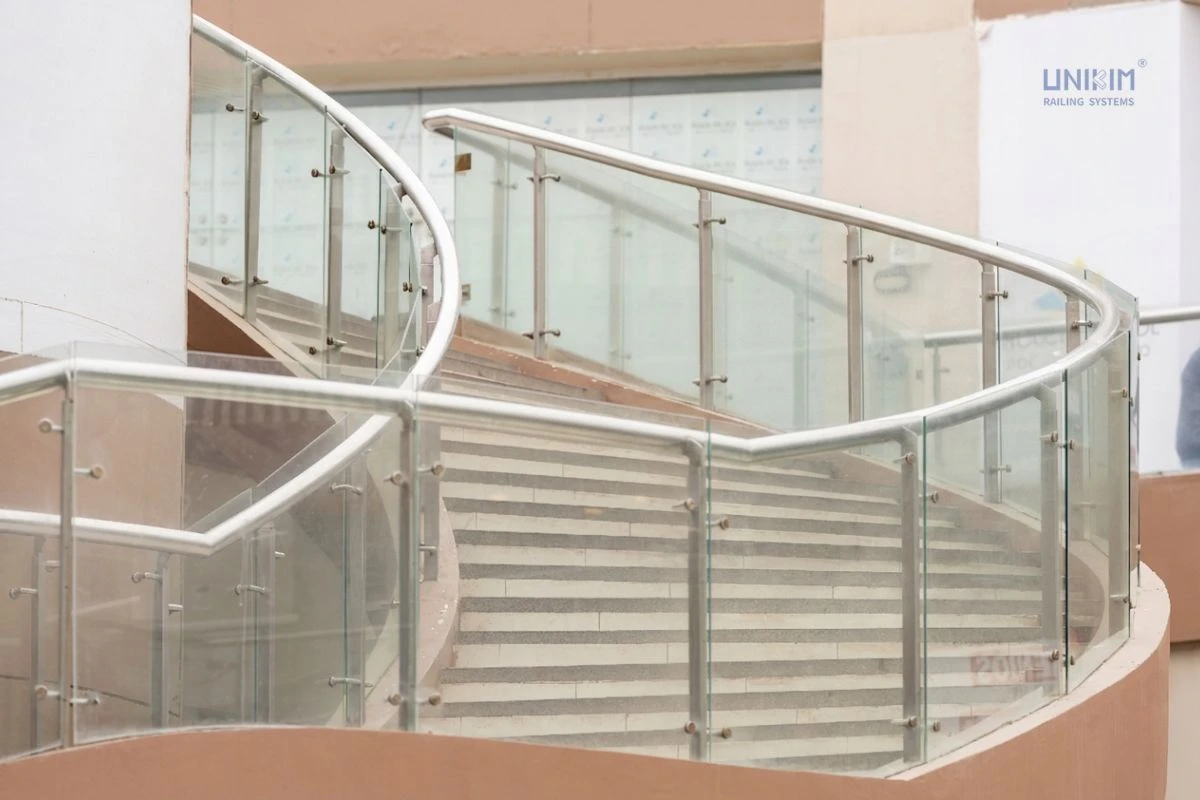
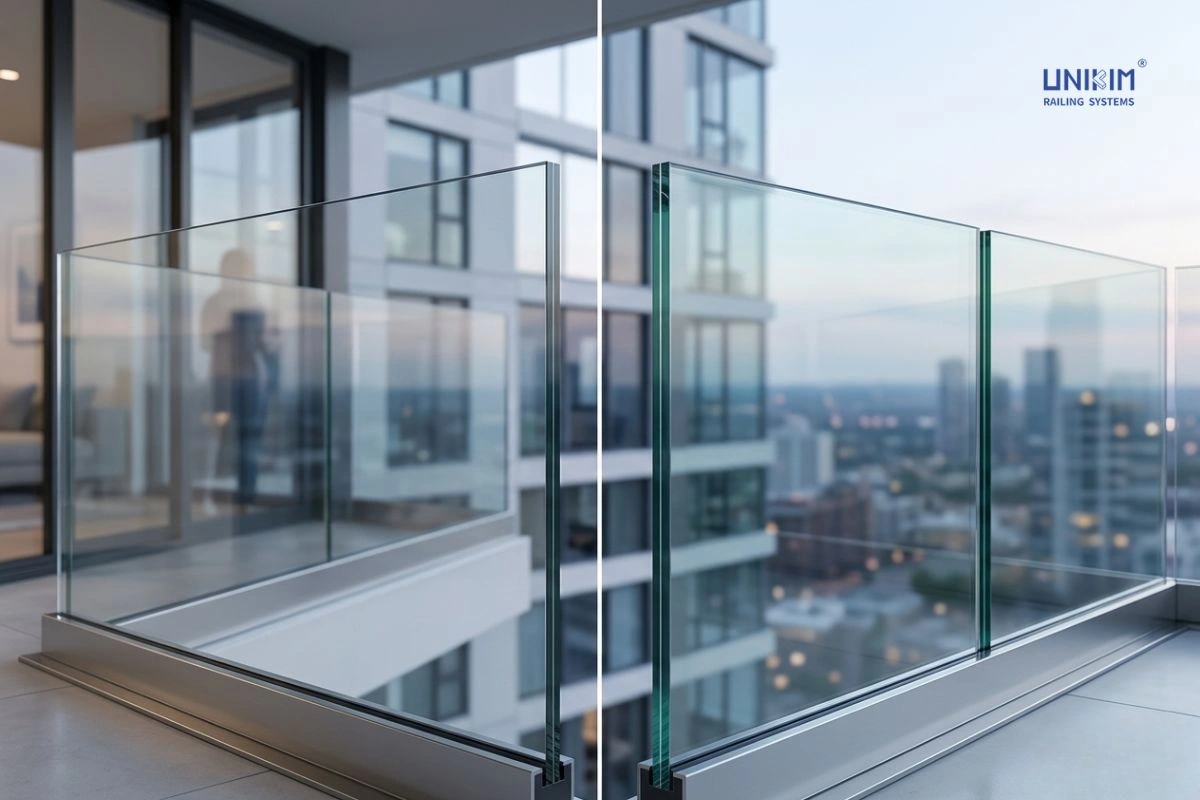
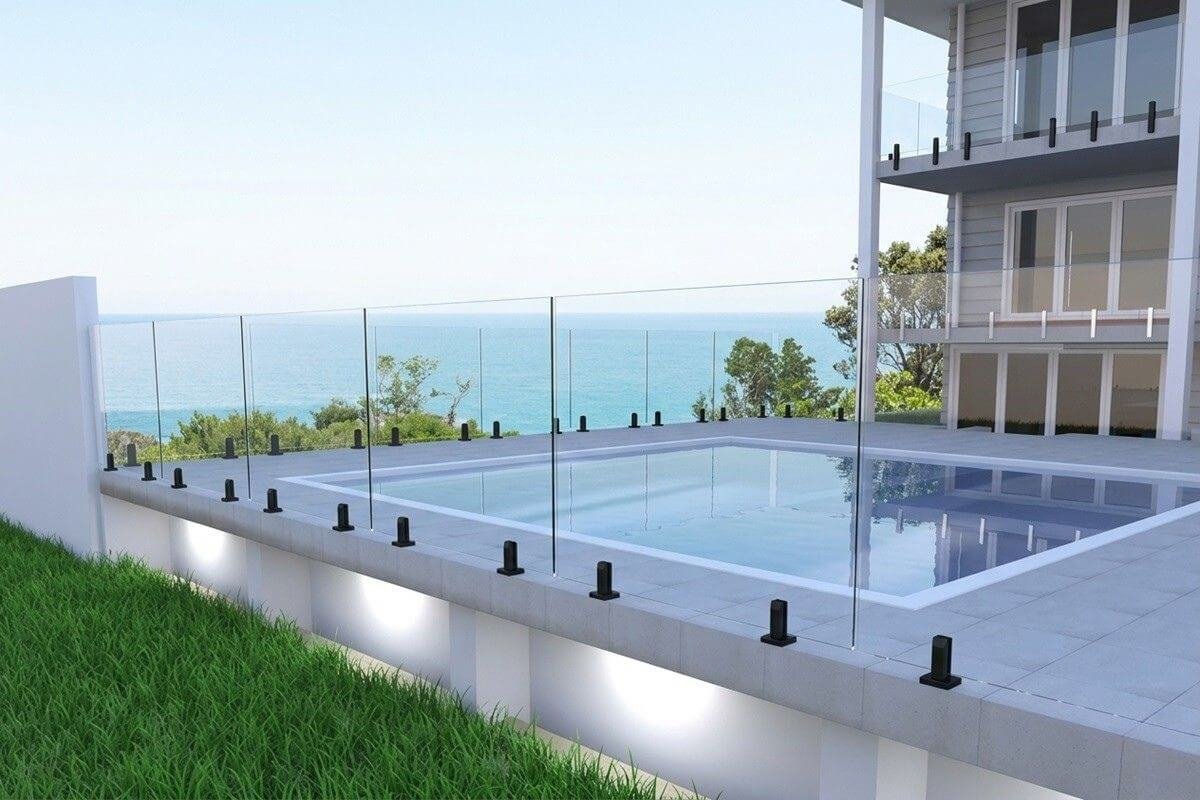
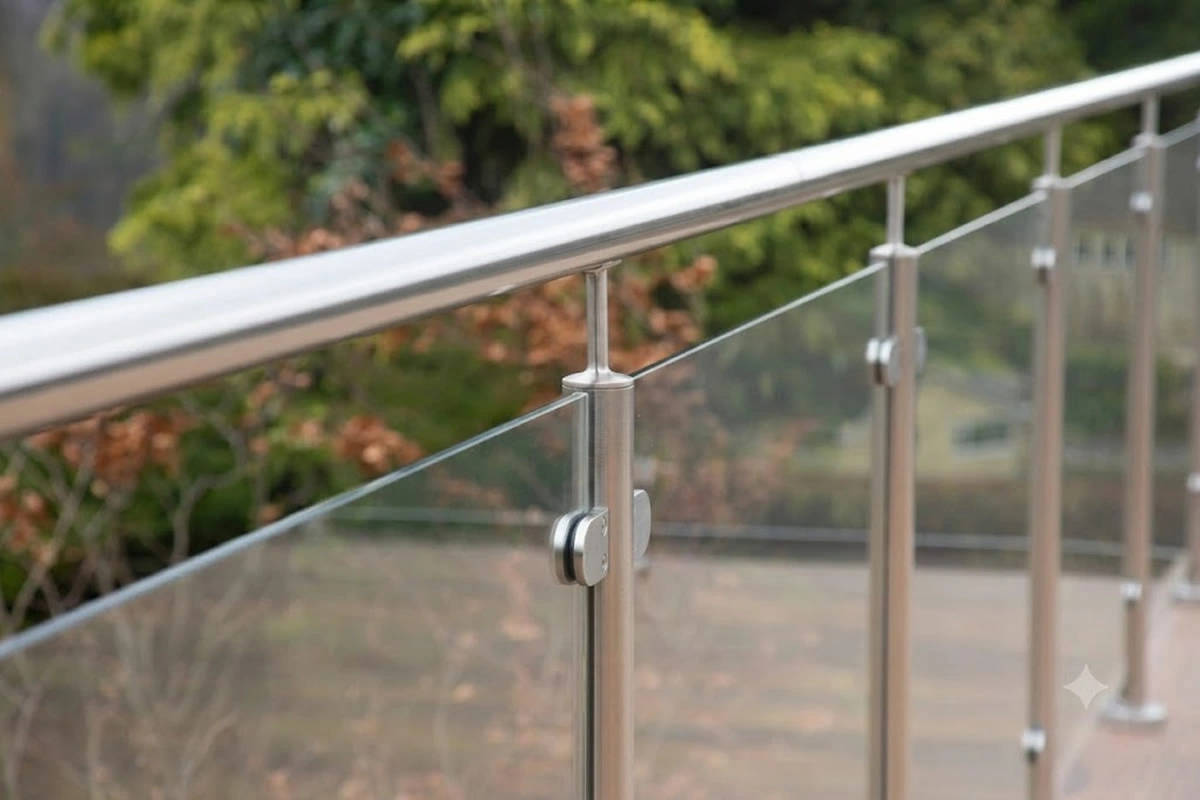
Modern architecture emphasizes clean lines, clear views, and natural light. In oceanfront resorts, high-end residential complexes, and cruise terminals, this design usually pairs commercial glass railings with metal posts. Integrating structural glass panels within high-salinity zones requires a premium structural framework. 316 Stainless Steel Handrail Systems provide the necessary strength and corrosion resistance to support heavy laminated glass panels securely.
Precision Component Integration
A handrail system is only as strong as its weakest component. Even if the main post resists corrosion, low-grade fasteners or brackets can cause galvanic corrosion, accelerating structural failure. Comprehensive 316 Stainless Steel Handrail Systems provide complete material consistency across all structural parts:
- Heavy-Duty Adjustable Glass Clamps: Engineered to secure heavy glass panels without shifting, while utilizing marine-grade EPDM gaskets to prevent glass-to-metal friction.
- 90-Degree and 180-Degree Square Balustrade Posts: Pre-drilled, precision-milled posts that facilitate rapid cornering and seamless straight runs, reducing on-site fabrication errors.
- Structural Tube Connectors & Elbows: Internal sleeve connectors that ensure flush joints across long handrail paths, preventing crevice spaces where moisture can collect.
- Heavy-Duty Base Flanges and Escutcheons: Provide robust anchor points to concrete substrates, safely distributing high wind loads and horizontal pressures.
Design and Finish Options for 316 Stainless Steel Handrail Systems
While functional longevity is paramount, commercial projects also require exceptional visual appeal. 316 Stainless Steel Handrail Systems offer versatile design choices that complement a wide range of architectural styles.
Satin vs. Mirror Surface Finishes
The mechanical surface finish applied to marine-grade components significantly affects both its visual style and its long-term corrosion resistance:
- Satin Finish (Brushed): This finish delivers a sleek, contemporary, non-reflective aesthetic that hides fingerprints and minor scuffs in high-traffic commercial environments.
- Mirror Polished Finish: Recommended for installations directly exposed to heavy sea spray. The ultra-smooth surface prevents salt crystals and moisture from sticking, enhancing the alloy’s natural self-cleaning properties.
Premium Matte Black Hardware
Responding to contemporary design trends, advanced manufacturers now supply matte black 316 Stainless Steel Handrail Systems. Unlike standard paint finishes, these premium black layers are applied using physical vapor deposition (PVD) or specialized chemical bonding processes. This approach preserves the molybdenum alloy steel’s exceptional corrosion resistance while delivering a bold, modern appearance for high-end developments.
Strategic Procurement Guidelines
When designing infrastructure for coastal landscapes, overlooking material specifications can lead to severe operational issues. Choosing alternative alloys to save on short-term costs frequently leads to premature structural failure, elevated maintenance costs, and potential liability risks.
Specifying 316 Stainless Steel Handrail Systems ensures outstanding material performance, combining exceptional structural strength with advanced corrosion resistance. For modern enterprises, investing in marine-grade 316 systems ensures structural safety, long-term durability, and strong financial returns for decades.
Procurement Checklist for Engineering Specifications:
- Verify Chemistry: Ensure mill test certificates confirm a minimum of 2.0% elemental molybdenum.
- Confirm Compliance: Mandate components certified to international standards (CE, SGS, or ISO 9001).
- Specify Lower Carbon: Select 316L for all joints requiring field welding to eliminate localized corrosion risk.
- Match Finish to Exposure: Deploy high-polish mirror profiles for elements directly interacting with open marine spray.
Final Summary
For contractors, developers, architects, and procurement professionals working in coastal and marine environments, specifying 316 Stainless Steel Handrail Systems is not simply a material preference; it is a sound business decision backed by chemistry, performance data, and decades of proven application.
Grade 316 is ideal for marine-grade handrails, offering strong corrosion resistance, 50+ year life, low maintenance, design flexibility, and certified quality.
Whether you are sourcing standard balcony railing posts, glass balustrade systems, matte black handrail fittings, or complete post and handrail systems for a large coastal development, ensure your supply partner can verify material grade, provide certified documentation, and deliver consistent quality at the volume your project demands.
FAQs
What makes 316 Stainless Steel Handrail Systems better for coastal areas than standard Grade 304?
The primary difference lies in chemical composition. While both grades offer structural strength, standard Grade 304 lacks molybdenum and quickly develops pitting or crevice corrosion when exposed to salt spray and atmospheric chlorides. Premium 316 Stainless Steel Handrail Systems contain 2.0% to 3.0% molybdenum by weight. This specific metallurgical addition increases the metal’s Pitting Resistance Equivalent Number (PREN) by over 30%, allowing it to withstand high-salinity marine environments without degrading.
How do 316 Stainless Steel Handrail Systems protect commercial projects from structural liability?
Handrails in public or commercial spaces must strictly meet load-bearing building codes. Inferior metals or low-grade steels rust over time, which thins the metal walls and leads to structural failure. Because 316 Stainless Steel Handrail Systems strongly resist localized corrosion, they maintain their original structural thickness, load distribution, and yield strength for decades. Specifying certified Grade 316 components (such as those with CE, SGS, or ISO 9001 certifications) minimizes risk and protects businesses from liability.
Can 316 Stainless Steel Handrail Systems match modern color palettes, like matte black?
Yes. Advanced manufacturers offer matte black 316 stainless steel handrail systems using Physical Vapor Deposition (PVD) or advanced chemical bonding instead of standard paint. This delivers a modern finish while maintaining the steel’s corrosion resistance and strength.
Why is it important to use Grade 316 for components like glass clamps and tube connectors, not just the posts?
A handrail system is only as strong as its weakest component. Mixing different grades of metal creates a vulnerability to galvanic and crevice corrosion, which accelerates structural failure at connection points. Using complete 316 Stainless Steel Handrail Systems ensures every base flange, heavy-duty adjustable glass clamp, internal tube connector, and elbow matches the exact same high standard of corrosion resistance.