Tempered glass railings have become one of the most desirable architectural features in modern construction. They create open views, allow natural light to flow freely, and deliver a clean contemporary appearance that complements almost any property style.
However, choosing the right handrail for tempered glass railing systems is just as important as selecting the glass itself.
A handrail does more than provide support. It improves safety, enhances structural performance, contributes to visual appeal, and helps ensure compliance with local building regulations. The right handrail can transform a standard glass railing into a premium architectural feature.
Whether you are designing a balcony, staircase, deck, pool enclosure, or commercial walkway, selecting the proper handrail requires careful consideration of materials, durability, maintenance, and aesthetics.
This comprehensive guide explores the best handrail options available today and explains how to choose the perfect solution for your project.
For homeowners, architects, and contractors looking for premium railing products, the complete collection available at Unikim offers solutions for both residential and commercial applications.
Why a Handrail Matters in Tempered Glass Railing Systems
Many people focus primarily on the glass panels when planning a railing project. While glass is visually dominant, the handrail plays an equally important role.
A quality handrail provides stability and confidence when walking near stairs, balconies, decks, and elevated platforms. It also helps distribute force across the railing system, improving overall structural performance.
In some jurisdictions, building codes require a handrail for specific applications. Even when regulations permit frameless designs, many property owners choose to install a handrail because of the added safety and comfort it provides.
Most importantly, the right handrail for tempered glass railing systems can significantly enhance the finished appearance of the project.
Tempered Glass Railing Systems
Tempered glass is heat-treated to increase strength and improve safety. Industry testing shows that tempered glass can be several times stronger than standard annealed glass of the same thickness.
When breakage occurs, tempered glass shatters into small granular fragments rather than dangerous sharp shards. This characteristic makes it a preferred choice for residential and commercial railing applications.
Modern glass railing systems commonly use:
- Frameless glass railings
- Stainless steel post systems
- Aluminum-supported railings
- Clamp-mounted glass railings
- Top-mounted glass balustrades
The handrail selected must complement the specific system configuration.
For example, many modern projects utilize stainless steel support structures similar to those featured in stainless steel posts.
Best Handrail Materials for Tempered Glass Railing Systems
The material used in a handrail affects durability, maintenance requirements, aesthetics, and overall project cost.
Let’s examine the most popular options.
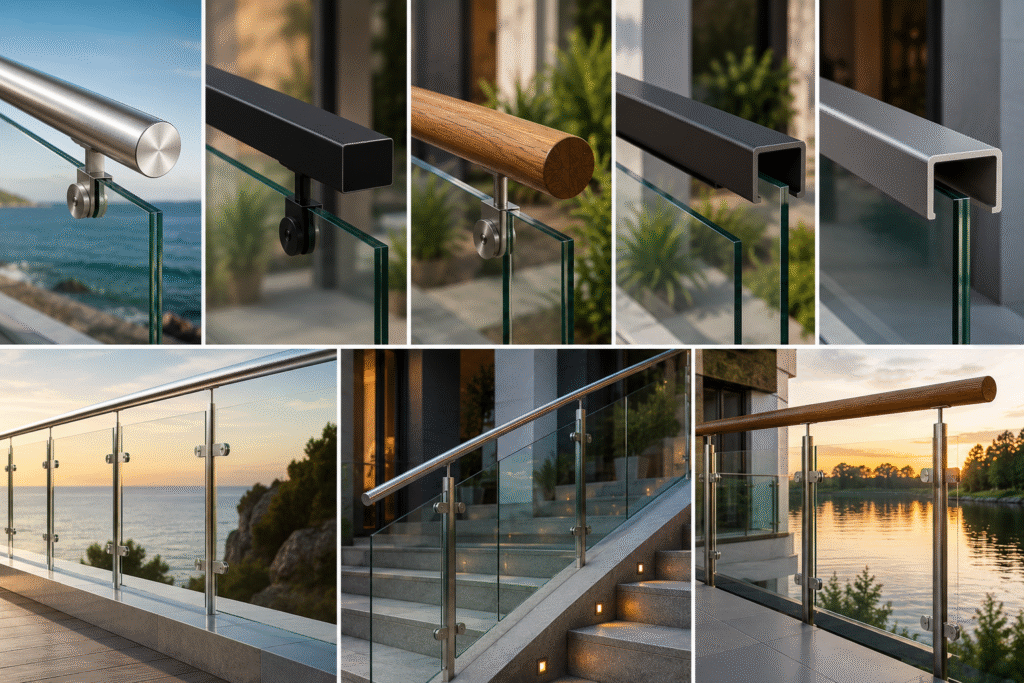
Stainless Steel Handrails
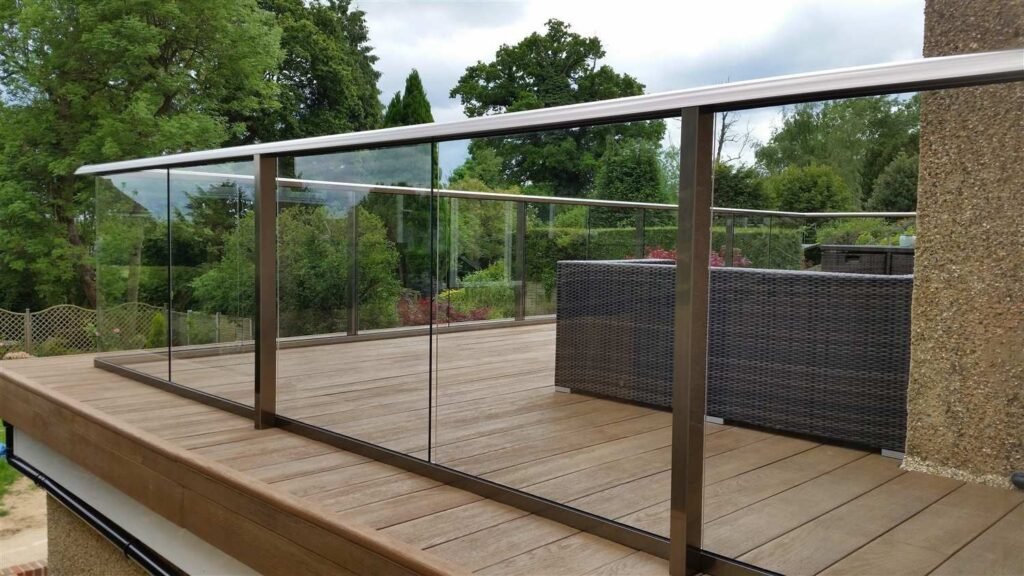
Stainless steel remains the most popular choice for a handrail for tempered glass railing applications. There are several reasons for this popularity. First, stainless steel provides exceptional strength. Even slim profiles can support significant loads while maintaining a sleek appearance.
Second, stainless steel pairs naturally with glass. The combination creates a modern, high-end aesthetic often seen in luxury homes, hotels, office buildings, and commercial developments. Third, stainless steel offers impressive corrosion resistance.
For outdoor projects, many professionals recommend marine-grade stainless steel systems. Homeowners can learn more about these solutions through 316 stainless steel handrail systems.
Advantages of Stainless Steel Handrails
Stainless steel offers a unique balance of beauty and performance.
The material resists rust, handles heavy use, and requires relatively little maintenance. Additionally, its polished or brushed finish remains attractive for decades when properly maintained.
For coastal properties, 316 stainless steel performs particularly well because it resists salt exposure more effectively than standard grades.
Aluminum Handrails
Aluminum is another excellent option for tempered glass railing systems. One of aluminum’s biggest advantages is weight. Aluminum weighs substantially less than stainless steel, making transportation and installation easier.
Despite being lightweight, modern aluminum handrails provide impressive strength and durability. Powder-coated finishes further improve corrosion resistance while allowing property owners to choose from numerous colors and textures.
Aluminum often costs less than stainless steel, making it attractive for larger projects where budget considerations matter.
Wood Handrails
Although modern designs often favor metal, wood remains a popular choice in certain environments. Wood introduces warmth and natural character that many homeowners appreciate.
Hardwoods such as oak, teak, and walnut can create beautiful visual contrasts against clear glass panels. However, wood typically requires more maintenance than stainless steel or aluminum. Regular sealing, staining, or refinishing may be necessary, especially for outdoor installations.
For this reason, wood handrails are generally more common indoors.
Mixed-Material Handrails
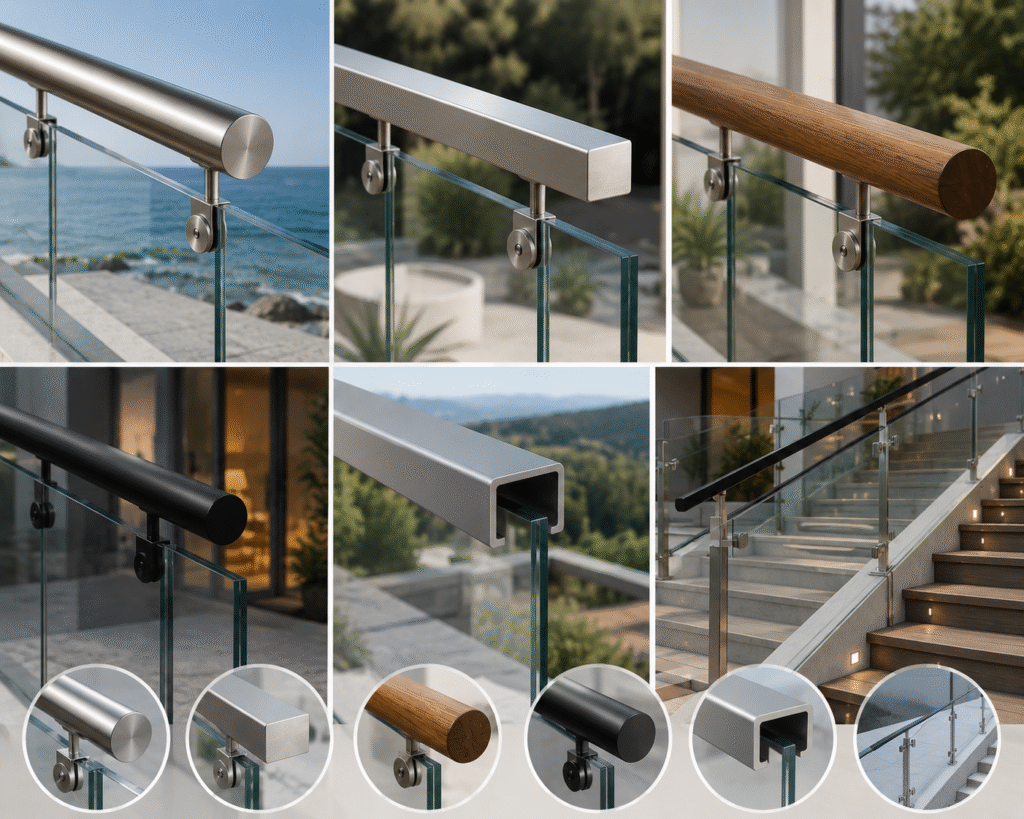
Architectural trends increasingly favor mixed-material designs. Some projects combine stainless steel supports with wooden top rails. Others incorporate aluminum structures with decorative timber accents.
These combinations provide visual interest while maintaining structural performance. The result is often a highly customized railing system that reflects the overall architectural style of the property.
Comparing Popular Handrail Materials
| Feature | Stainless Steel | Aluminum | Wood |
|---|---|---|---|
| Durability | Excellent | Excellent | Moderate |
| Maintenance | Low | Very Low | High |
| Outdoor Performance | Excellent | Excellent | Moderate |
| Modern Appearance | Excellent | Excellent | Good |
| Cost | Higher | Moderate | Variable |
| Lifespan | 30-50+ Years | 20-30+ Years | Depends on Maintenance |
This comparison highlights why stainless steel and aluminum dominate modern glass railing installations.
Best Handrail for Tempered Glass Railing in Outdoor Applications
Outdoor environments create unique challenges. Rain, UV exposure, humidity, pollution, and salt air can all affect railing materials over time. For balconies, decks, terraces, and pool surrounds, stainless steel and aluminum consistently outperform most alternatives.
Stainless steel provides maximum structural performance and luxury aesthetics. Aluminum delivers excellent weather resistance with lower maintenance requirements.
Those planning contemporary outdoor spaces may find inspiration from the designs featured in modern balcony glass railing ideas.
Choosing a Handrail for Tempered Glass Stair Railings
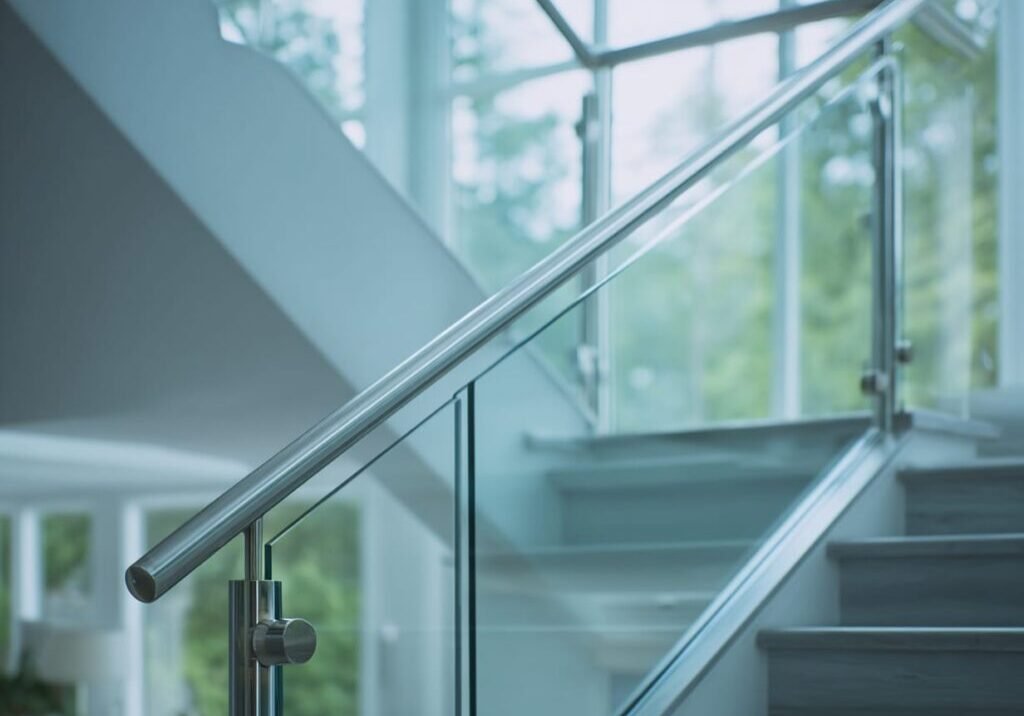
Staircases place additional demands on railing systems. Unlike balconies or decks, stair handrails receive frequent physical contact. Therefore, comfort becomes an important consideration.
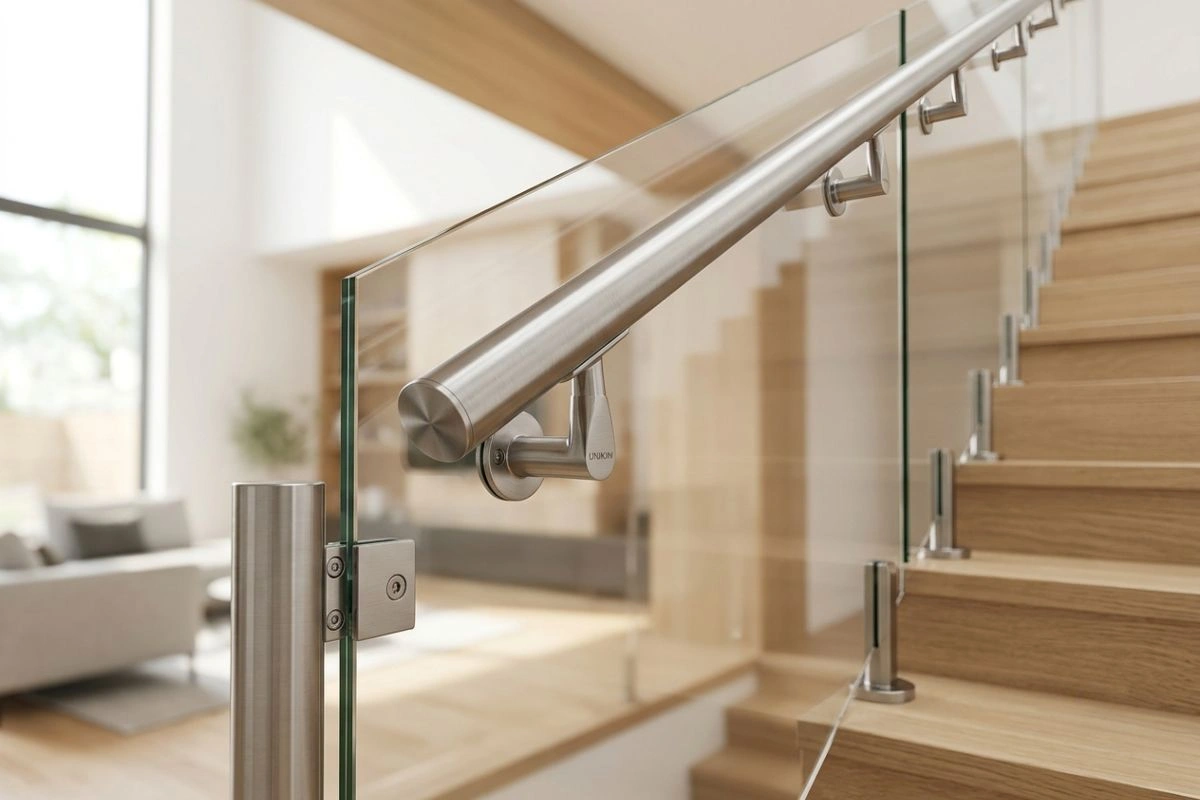
Round and oval profiles often feel more comfortable to grip than square designs. Many designers choose stainless steel handrails mounted using specialized brackets because they provide both safety and visual appeal.
Examples of these systems can be explored at stainless steel handrail brackets for stairs.
The smooth surface of stainless steel also improves user comfort while maintaining a contemporary appearance.
Frameless Glass Railings and Top Rail Options
Frameless glass railing systems have grown rapidly in popularity over the last decade. These systems maximize visibility and create unobstructed views. Some frameless installations include a slim top rail, while others eliminate the handrail entirely.
Although handrail-free designs look striking, many property owners still prefer adding a minimal top rail for safety and comfort.
A narrow stainless steel cap rail can preserve the clean frameless appearance while providing practical benefits.
How Building Codes Influence Handrail Selection
Building codes vary by location.
Many jurisdictions establish requirements for:
- Handrail height
- Load resistance
- Grip dimensions
- Stair safety standards
- Balcony protection requirements
Before selecting a handrail for tempered glass railing, always verify local code requirements. Working with experienced suppliers helps ensure compliance while maintaining design objectives.
Professionals frequently review railing system configurations such as those shown at stainless steel fitting glass railing clamp handrail system.
Stainless Steel vs Aluminum Handrails
Property owners often compare these two materials directly. Stainless steel offers greater strength and a more premium appearance. It performs exceptionally well in luxury projects and commercial environments.
Aluminum provides easier installation and lower initial costs. The best choice depends on project priorities. If appearance and long-term prestige matter most, stainless steel usually wins. If affordability and low maintenance are primary concerns, aluminum becomes highly attractive.
Additional material comparisons can be found through stainless steel and aluminum railing posts.
Current Design Trends in Tempered Glass Railings
Architectural preferences continue evolving. Today’s most popular designs emphasize simplicity, openness, and minimal visual obstruction.
Brushed stainless steel handrails remain among the most requested options because they complement glass beautifully without overwhelming the design.
Manufacturers continue developing innovative railing technologies. Industry professionals often review product developments through resources such as unikimchina.en.made-in-china.
Many installers and designers also follow installation demonstrations and product showcases available through youtube @unikimrailings8270. These resources provide valuable insights into modern railing trends and installation techniques.
How to Choose the Right Handrail for Your Project
The ideal handrail depends on several factors. Consider the installation environment first. Outdoor coastal projects require greater corrosion resistance than indoor staircases.
Next, evaluate the desired appearance. Contemporary designs often favor stainless steel, while traditional interiors may benefit from wood accents.
Budget also matters. Aluminum generally costs less than stainless steel while still offering excellent performance.
Finally, think about maintenance expectations. Some property owners prefer materials requiring virtually no upkeep. Balancing these considerations will help identify the most suitable solution.
Summary
Selecting the right handrail for tempered glass railing systems is essential for achieving the perfect balance of safety, durability, and design.
While aluminum, wood, and mixed-material options all have advantages, stainless steel continues to be the preferred choice for many residential and commercial projects. Its strength, corrosion resistance, and timeless appearance make it an outstanding investment.
By considering environmental conditions, maintenance expectations, budget, and design preferences, property owners can confidently choose a handrail solution that enhances both functionality and aesthetics for years to come.
For expert advice, product recommendations, or customized railing solutions, visit unikim or contact the team directly at contact.
FAQs
Q: What is the best handrail material for tempered glass railings?
A: For most applications, stainless steel is considered the best handrail for tempered glass railing systems because it combines strength, durability, and modern aesthetics.
Q: Can tempered glass railings be installed without a handrail?
A: Yes, some frameless systems can function without a top rail. However, a handrail for tempered glass railing installations often improves safety and user comfort.
Q: Is stainless steel better than aluminum for glass railings?
A: In many projects, stainless steel provides superior strength and appearance. However, the ideal handrail for tempered glass railing depends on budget, environment, and design goals.
Q: What grade of stainless steel should I choose?
A: For outdoor applications, particularly near coastal areas, 316 stainless steel is often the preferred handrail for tempered glass railing because of its superior corrosion resistance.
Q: How long does a stainless steel handrail last?
A: A high-quality handrail for tempered glass railing made from stainless steel can last several decades with minimal maintenance.
Q: Does a handrail improve safety?
A: Yes. A properly installed handrail for tempered glass railing provides additional support, improves user confidence, and helps meet many building code requirements.