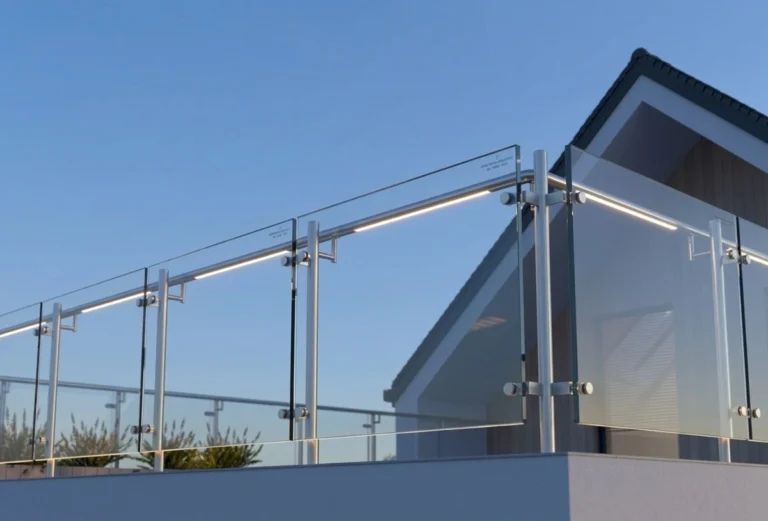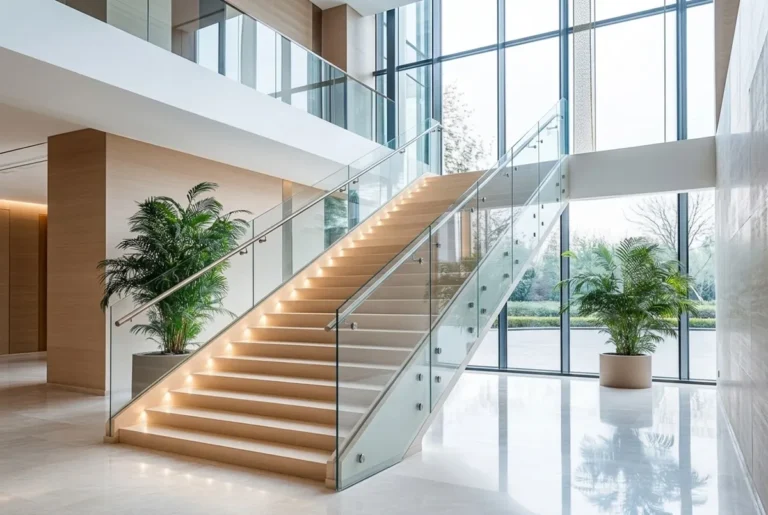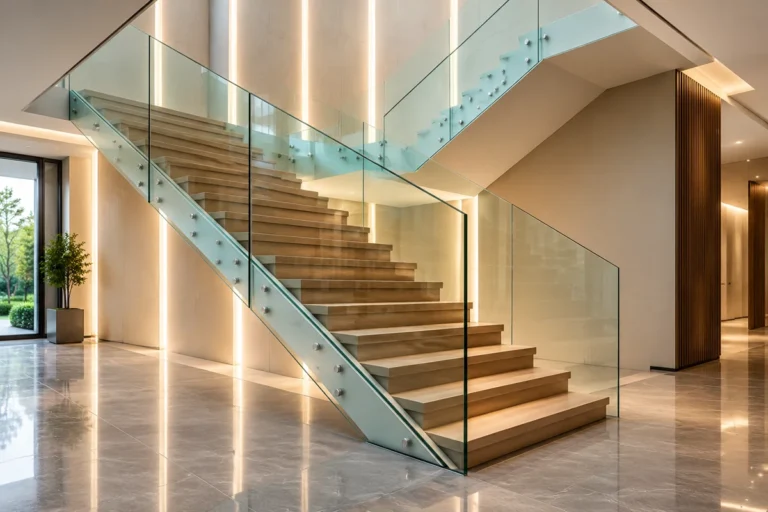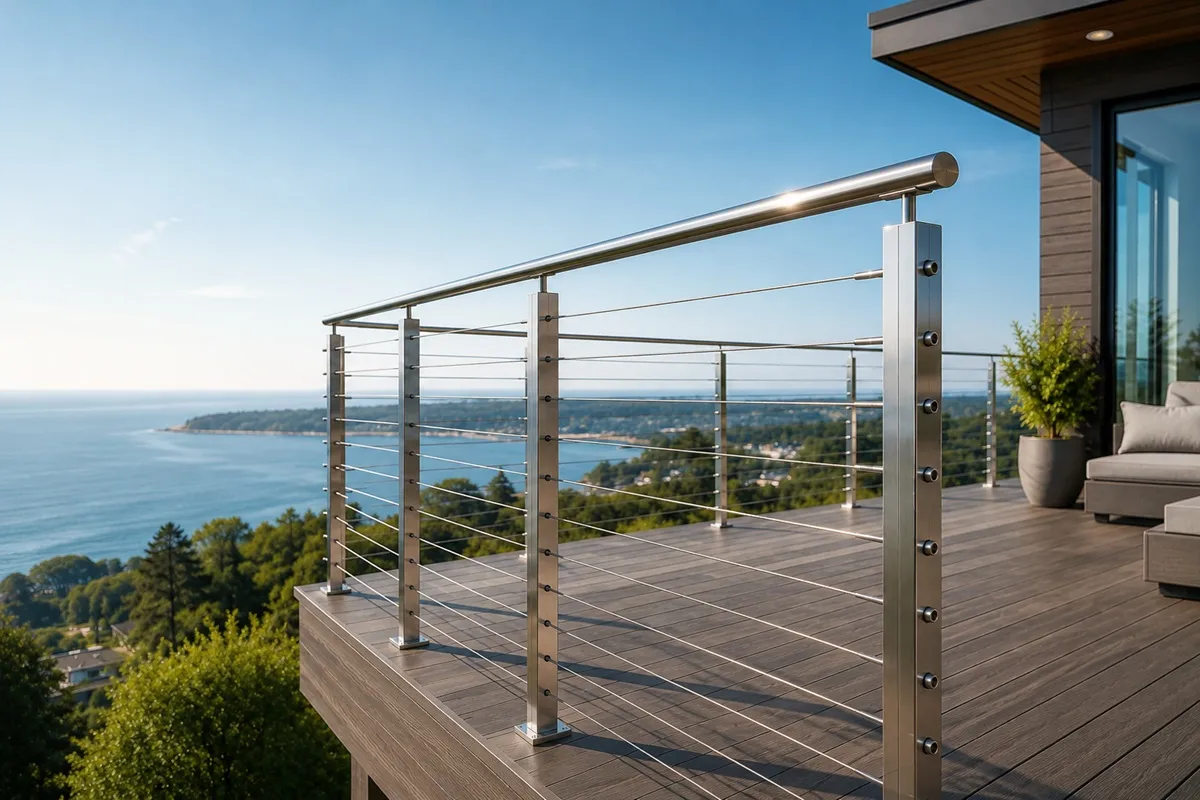
Choosing the right cable railing hardware decides whether your railing looks clean for decades or loosens within a season. The fittings hold tension, resist weather, and carry the safety load of the entire system. Get them wrong, and cables sag, terminals corrode, and inspections fail. Get them right, and you gain a slim, modern railing with almost invisible sightlines.
This guide breaks down every part of a cable railing system, the materials that matter, and how to buy with confidence. Along the way, you’ll see how UNIKIM engineers and supplies factory-direct hardware for buyers, architects, contractors, and distributors worldwide.
What Is Cable Railing Hardware?
Cable railing hardware is the full set of stainless steel fittings that anchor, tension, and secure horizontal or vertical cable runs between posts. Instead of glass panels or vertical balusters, the system uses tensioned wire rope as the infill. The hardware is what makes that tension possible and keeps it stable over time.
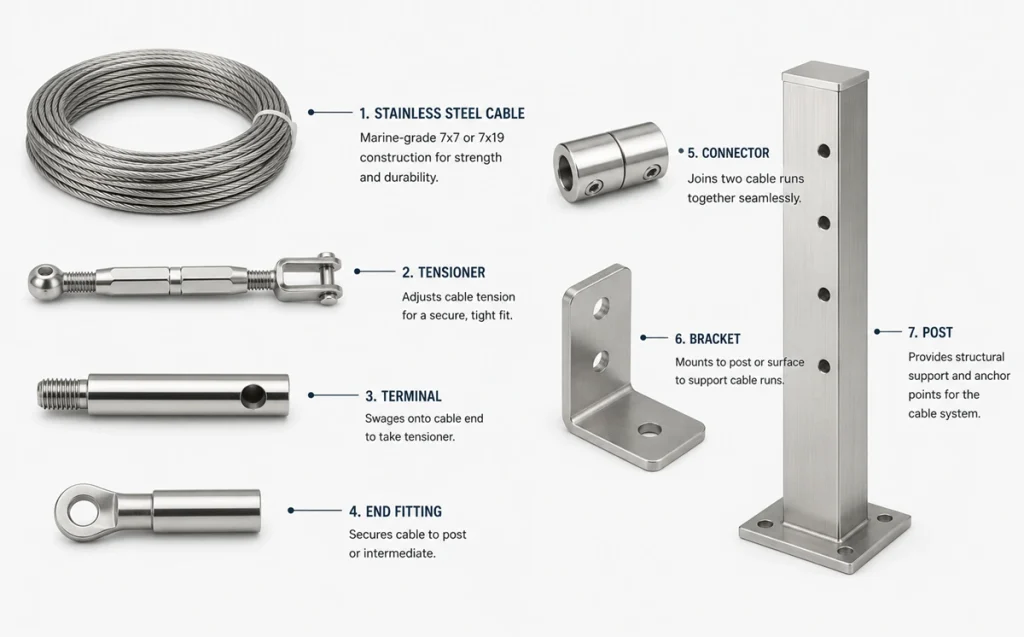
A complete kit usually includes tensioners, terminals, end fittings, and mounting components. Each part plays a role in load transfer. When these pieces work together, the cables stay taut, the posts stay plumb, and the railing meets local building codes.
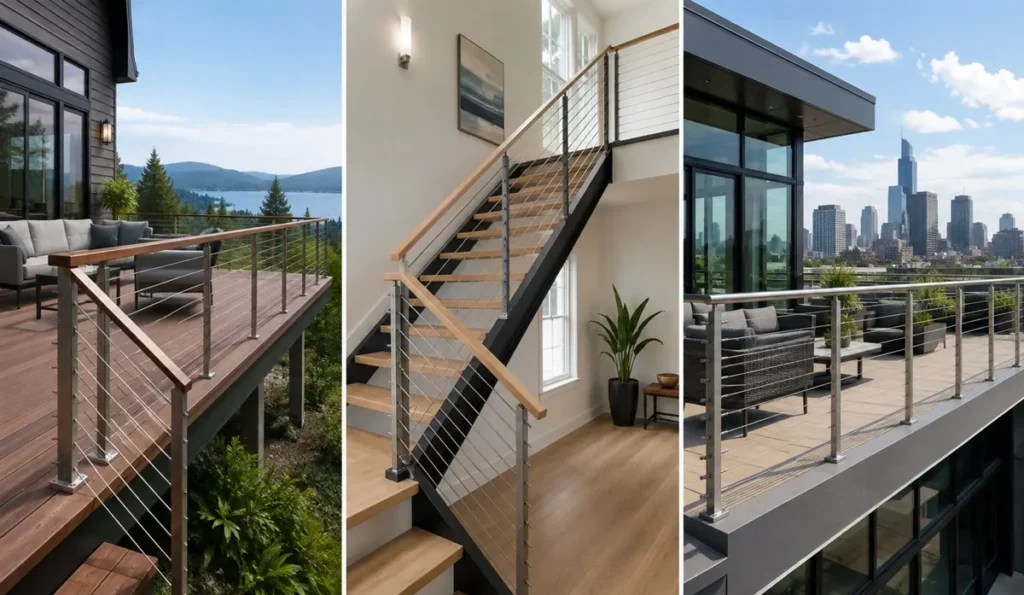
Cable railing suits many settings: deck perimeters, staircases, balconies, rooftop terraces, and commercial mezzanines. The look is minimal, the maintenance is low, and the views stay open. That combination explains why designers keep specifying it.
Why Choose a Professional Cable Railing Hardware Manufacturer
Not all fittings are equal. Cheap imports often use lower-grade steel, thin threads, and loose tolerances. They can look identical on a product photo, then fail under real tension and coastal weather.
A professional manufacturer controls the entire process. That means consistent alloy sourcing, precise CNC machining, and proper passivation for corrosion resistance. It also means the threads actually match, so installers don’t fight mismatched parts on site.
UNIKIM manufactures cable and glass railing hardware factory-direct. Buyers skip layers of middlemen, which lowers cost and shortens lead times. For distributors and contractors ordering in volume, that direct relationship also unlocks custom and OEM options that trading companies simply can’t offer.
There’s a trust factor too. A real factory can show its production, publish technical specs, and stand behind load ratings. You can review UNIKIM’s catalog on its Made-in-China storefront and see installations on its YouTube channel.
Types of Cable Railing Hardware and Their Applications
Every cable railing system is a small assembly of specialized parts. Knowing what each one does helps you order the correct kit the first time.
Cable Tensioners
Tensioners apply and hold the pulling force that keeps cables straight. They usually sit at one end of the run and let you fine-tune tension with a wrench or hex key. Well-made tensioners resist loosening from vibration and temperature swings. Explore UNIKIM’s cable tensioner range for deck and stair applications.
Cable End Fittings
End fittings terminate the cable at a post or wall. They come in swage, swageless (field-installed), and threaded styles. Swageless fittings are popular because installers can assemble them on site without a hydraulic tool. Browse UNIKIM’s cable end fittings to match your post type.
Terminals and Connectors
Terminals anchor the cable and transfer load into the structure. Connectors join runs or turn corners. These small pieces carry big forces, so material grade and thread quality matter more than price.
Posts and Mounting Hardware
Posts hold the whole system upright and set the spacing between cables. Base plates, fascia mounts, and post caps secure them to decks, stairs, or concrete. UNIKIM produces matching stainless steel posts so hardware and structure share the same finish and grade.
Cable and Wire Rope
The cable itself is part of the system. Most projects use 1×19 stainless steel wire rope for its stiffness and low stretch. You can review UNIKIM’s stainless steel cable options alongside the fittings that pair with them.
Typical applications include:
- Residential decks and patios — open views, salt and moisture resistance
- Interior and exterior stairs — angled runs needing adjustable fittings
- Balconies and rooftops — wind exposure and strict code compliance
- Commercial and hospitality spaces — high traffic and durability demands
Materials and Technical Details
Material grade is the single biggest driver of long-term performance. Cable railing hardware is almost always stainless steel, but the grade determines how well it survives its environment.
Grade 304 stainless steel works well for dry, inland, and indoor settings. It’s economical and strong, but it can develop surface staining in salty or humid air.
Grade 316 stainless steel contains molybdenum, which sharply improves resistance to salt and chlorides. For coastal decks, pool areas, and marine environments, 316 is the safer specification. UNIKIM offers 316 hardware for exactly these demanding conditions.
Finish also matters. Passivation removes free iron from the surface and restores the protective chromium-oxide layer, which is what gives stainless steel its corrosion resistance. Electropolishing takes it further for a bright, cleaner finish. Matte black coatings add a modern look but should sit over a proper stainless base, not a cheap substrate.
Key technical points to check before you buy:
- Cable diameter: commonly 1/8″, 3/16″, or 4mm depending on span and code
- Thread standard: must match between tensioner and terminal
- Load rating: hardware should meet or exceed local guardrail load requirements
- Cable spacing: most codes require gaps small enough that a 4″ sphere can’t pass through
For background on railing terminology and the components that guardrails historically replaced, the Wikipedia article on balusters offers a useful primer.
The Cable Railing Hardware Manufacturing Process
Understanding how quality fittings are made helps you judge a supplier. Reliable cable railing hardware follows a controlled sequence rather than a rushed one.
- Material selection. Certified 304 or 316 stainless bar and wire stock are sourced with mill test reports.
- CNC machining. Bodies, threads, and terminals are cut to tight tolerances so parts fit without force.
- Cold forming and swaging. Fittings are shaped and, where needed, prepared for cable compression.
- Passivation. Surfaces are cleaned and treated to rebuild corrosion resistance.
- Finishing. Electropolishing or coating is applied for the required look and durability.
- Quality inspection. Threads, dimensions, and pull strength are checked before packing.
UNIKIM runs this full process in-house, which is why its hardware ships with consistent threads and predictable load behavior across large orders.
Cable Railing Hardware Comparison
The table below compares common material and fitting choices so you can match hardware to your project.
| Factor | Grade 304 Hardware | Grade 316 Hardware | Swageless Fittings | Swage Fittings |
|---|---|---|---|---|
| Best environment | Indoor / dry / inland | Coastal / pool / marine | Any (field install) | Shop or pro install |
| Corrosion resistance | Good | Excellent | Depends on grade | Depends on grade |
| Install tool needed | Standard | Standard | Hand tools only | Hydraulic swager |
| Ease for DIY | Moderate | Moderate | High | Low |
| Relative cost | Lower | Higher | Moderate | Lower per unit |
| Typical use | Interior stairs | Ocean-front decks | Contractors & DIY | High-volume runs |
For most outdoor and coastal projects, 316 stainless with swageless fittings gives the best mix of durability and installation speed. High-volume commercial runs may favor swage terminals for lower per-unit cost.
Cable Railing Hardware Buying Guide
Buying the right system is easier when you work through a short checklist. These steps prevent the most common ordering mistakes.
1. Confirm your environment. Coastal, poolside, or humid? Choose 316. Dry and indoor? 304 will do.
2. Measure spans and posts. Longer runs need intermediate supports and stronger tension. Angled stair runs need adjustable fittings.
3. Check your local code. Verify cable spacing, top rail height, and infill load requirements before ordering.
4. Match the full kit. Cable diameter, thread standard, and fitting type must all align. Mixed standards cause site delays.
5. Choose swage vs. swageless. No hydraulic tool on site? Order swageless fittings you can assemble by hand.
6. Buy from the manufacturer. Factory-direct sourcing lowers cost, improves consistency, and opens custom and OEM options.
If you’re comparing complete systems, UNIKIM’s cable railing systems category and its cable railing buying guide are good starting points. For stair-specific projects, the vertical cable rail tensioner staircase kit is built for angled runs, while the outdoor wire rope railing kit suits patios and decks.
Why Choose UNIKIM for Cable Railing Hardware
UNIKIM is a factory-direct manufacturer of cable and glass railing hardware, serving buyers, architects, contractors, and distributors across global markets. The company controls production end to end, which keeps quality consistent and lead times short.
What sets UNIKIM apart:
- 316 stainless options for coastal and high-corrosion environments
- In-house CNC machining and passivation for reliable threads and finish
- Complete systems — cables, tensioners, terminals, posts, and glass hardware from one source
- Custom and OEM manufacturing for railing brands and importers
- Factory-direct pricing with no trading-company markup
Beyond cable systems, UNIKIM also supplies glass railing systems, including frameless glass railing hardware, so mixed-material projects can use one supplier. To request specifications or a quote, reach the team through the contact page.
FAQs
Q1: What is included in a cable railing hardware kit?
A: A typical cable railing hardware kit includes tensioners, end fittings, terminals, and mounting components, and it may also include the stainless steel cable and posts. UNIKIM supplies matched kits so every part shares the same grade and thread standard.
Q2: Is 316 stainless steel cable railing hardware worth the extra cost?
A: For coastal, poolside, or humid climates, yes. The added molybdenum in 316 cable railing hardware resists salt and chloride corrosion far better than 304, which protects your investment and appearance over the long term.
Q3: Can I install cable railing hardware myself?
A: Many homeowners can. Choosing swageless cable railing hardware lets you assemble fittings with hand tools instead of a hydraulic swager. Always confirm cable spacing and tension against your local code before finishing.
Q4 : Where can I buy stainless steel cable railing hardware factory-direct?
A : You can order stainless steel cable railing hardware directly from UNIKIM at urailing.com. Buying from the manufacturer lowers cost, ensures consistent quality, and opens custom and OEM options for contractors and distributors.
Summary
Cable railing hardware is the backbone of a clean, durable, code-compliant railing. The right tensioners, terminals, end fittings, and stainless grade decide how well your system performs for years. Match the material to your environment, align every fitting to the same standard, and confirm local code before you order.
For decks, stairs, balconies, and commercial spaces, a factory-direct partner removes guesswork and cost. UNIKIM manufactures complete cable railing hardware systems in 304 and 316 stainless, backed by in-house machining, custom OEM capability, and factory-direct pricing — a dependable choice for buyers who want quality that lasts.