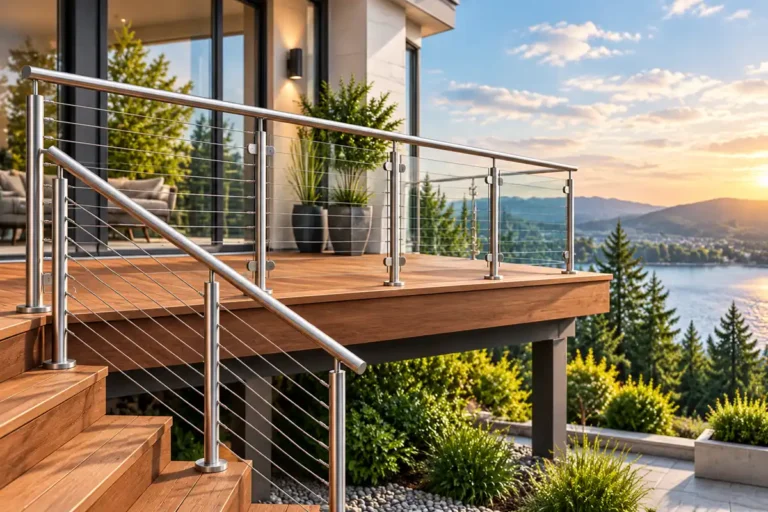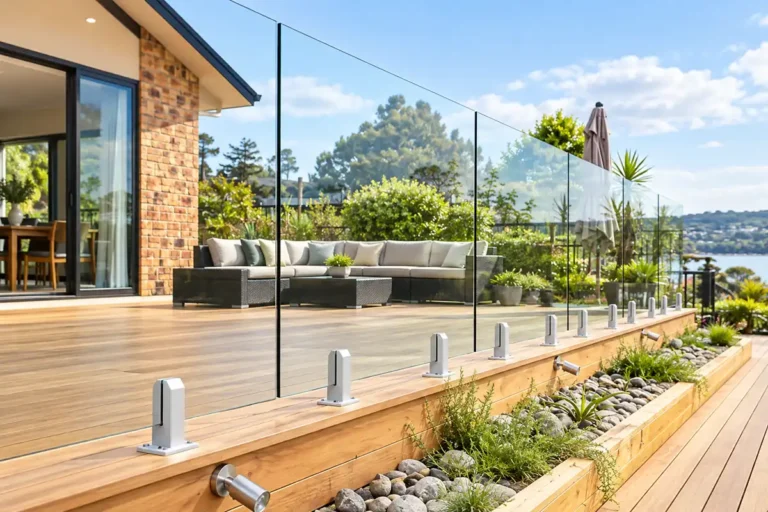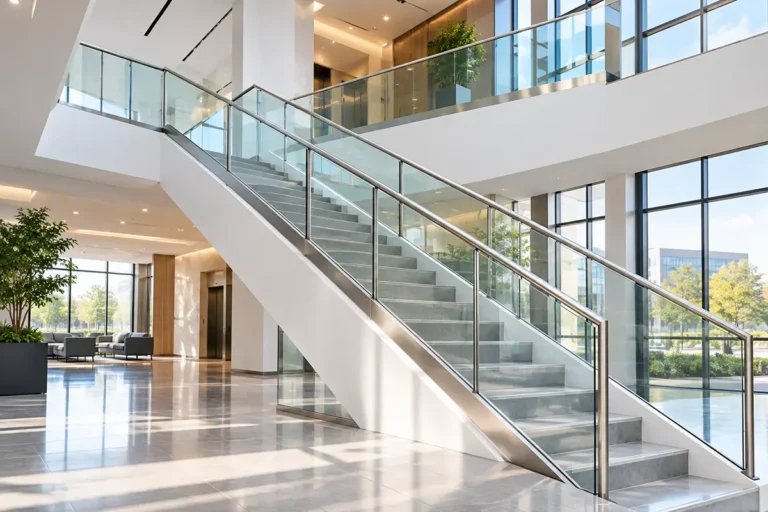
Frameless glass railing systems have become one of the most sought-after deck upgrades for homeowners who want unobstructed views without sacrificing safety. UNIKIM is a manufacturer that produces frameless glass railing hardware designed for residential and light commercial deck applications. This guide explains how the system works, what installation involves, and how to avoid the most common mistakes.
UNIKIM Frameless Glass Railing for Decks is a post-and-clamp or channel-based glass balustrade system that uses tempered or laminated safety glass panels held in place by stainless steel hardware — without visible vertical framing between panels. It delivers a clean, modern aesthetic on decks and balconies while meeting standard railing height and load requirements. The system suits wood, composite, and concrete deck surfaces.
Key Takeaways
- Tempered safety glass — typically 10 mm or 12 mm thick — is the standard panel material for structural integrity and safety compliance.
- Most building codes require deck railings to be at least 36 inches high for decks under 30 inches off the ground, and 42 inches for higher decks [1].
- Proper substrate preparation (concrete anchoring or through-bolted wood framing) is critical; the glass itself does not carry the structural load.
- Frameless systems cost more upfront than aluminum or wood railings but require less long-term maintenance because there are no painted surfaces to chip or corrode.
- DIY installation is possible for experienced builders, but professional installation is recommended where local permits require engineer-stamped drawings.
- Regular cleaning with non-abrasive glass cleaner and periodic hardware inspection keeps the system looking and performing well for many years.
What Is UNIKIM Frameless Glass Railing for Decks?
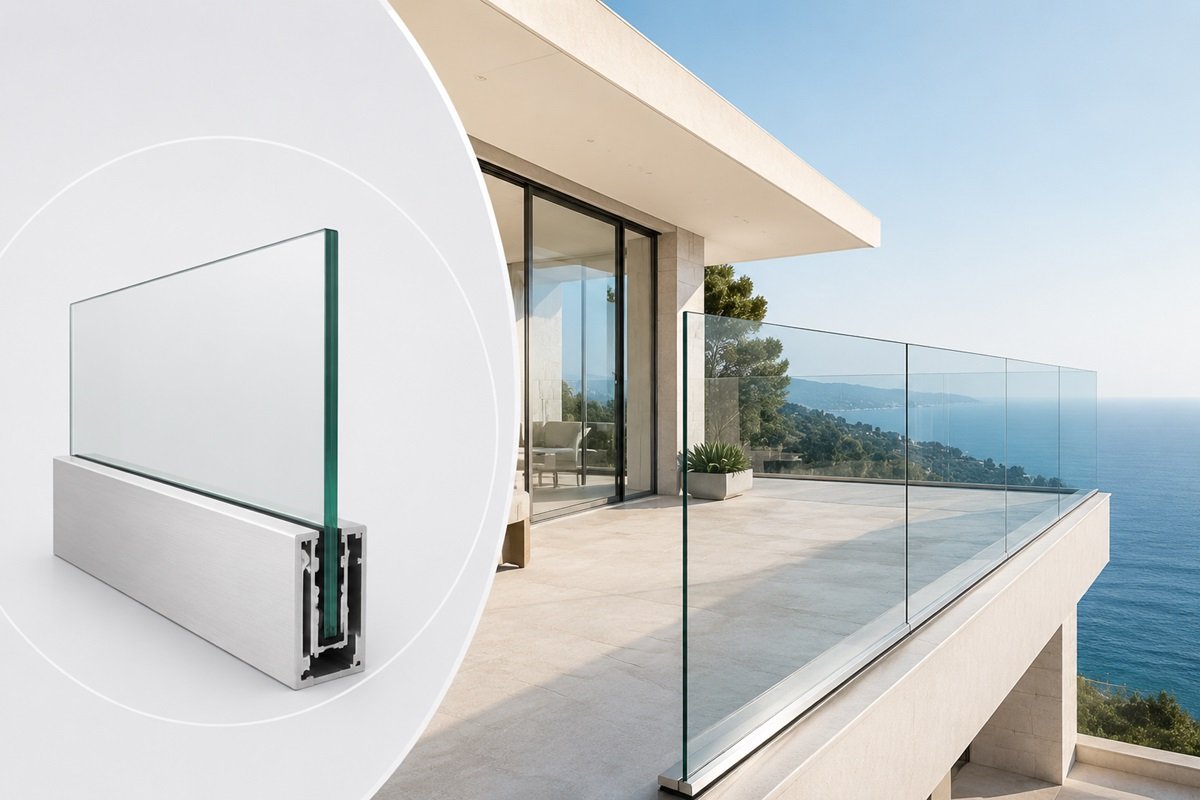
UNIKIM frameless glass railing is a complete hardware-and-glass balustrade system engineered for outdoor deck use. Unlike traditional railings that rely on vertical balusters or aluminum frames to hold panels in place, a frameless system uses precision-machined stainless steel components — base shoes, standoff clamps, or spigots — that grip the glass directly at the bottom or sides.
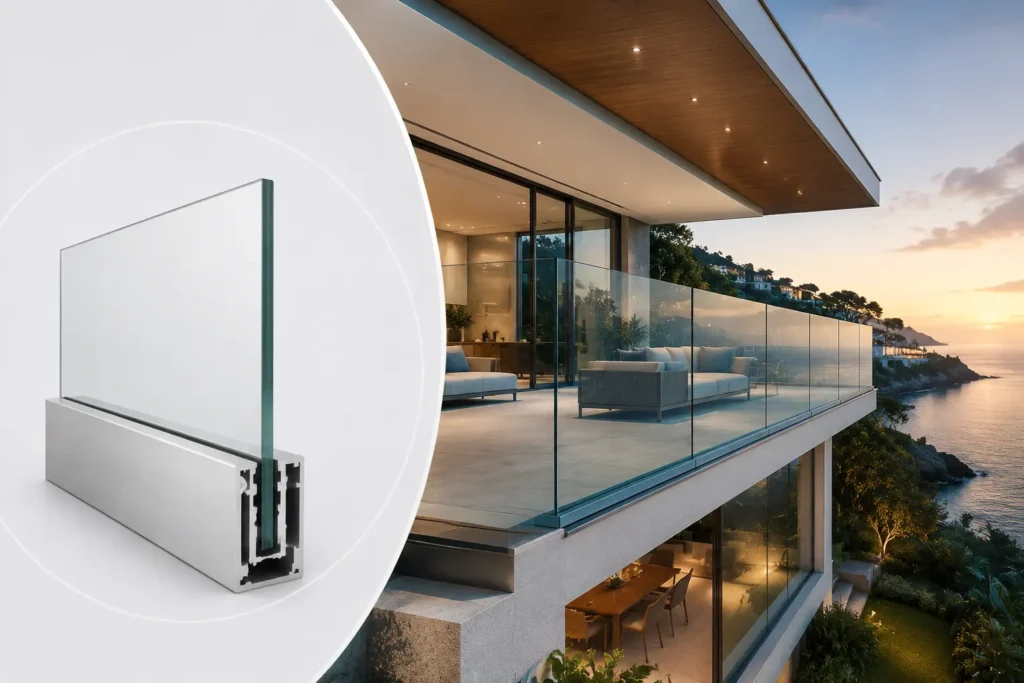
The result is a railing that appears to float, giving decks an open, contemporary look while preserving sightlines to gardens, water features, or landscapes beyond. UNIKIM produces the metal hardware components; the glass panels are typically sourced locally and cut to specification, which reduces shipping costs and allows custom sizing for any deck layout.
Key components in a typical UNIKIM frameless glass railing kit include:
- Base shoe (bottom channel): A continuous aluminum or stainless steel channel that runs along the deck edge and holds the glass from below.
- Standoff spigots or clamps: Individual point-fix hardware pieces used when a continuous channel is not preferred.
- Tempered or laminated glass panels: Usually 10 mm or 12 mm thick, cut to the required height and width.
- Top handrail (optional): A stainless steel or glass top cap rail for grip and additional rigidity.
- Mounting hardware: Anchor bolts, base plates, and shims for attachment to the deck substrate.
Why Frameless Glass Railing Matters for Deck Design
Frameless glass railing matters because it solves a longstanding tension in deck design: the need for a code-compliant safety barrier that does not visually close off the space. Traditional wood or aluminum balusters create a cage-like appearance, especially on elevated decks with scenic surroundings.
Beyond aesthetics, frameless glass offers practical advantages:
- Weather resistance: Stainless steel hardware and tempered glass do not rust, rot, or require repainting.
- Low maintenance: No wood to seal, no paint to touch up, and no aluminum to re-powder-coat.
- Durability: Tempered glass is roughly four times stronger than standard annealed glass of the same thickness [2], and laminated glass holds together on impact rather than shattering.
- Property value: Open, modern railings are a recognized visual upgrade that can contribute positively to curb appeal and resale perception.
How Does a UNIKIM Frameless Glass Railing System Work?
The system works by transferring lateral load (the force of someone leaning against the railing) from the glass panel into the base hardware and then into the deck structure. The glass does not act as a structural column — the stainless steel spigots or base shoe do.
Here is the basic load path:
- A person applies lateral force to the glass panel.
- The glass transfers that force to the clamping hardware (spigot or base shoe).
- The hardware transfers the force through anchor bolts into the deck framing or concrete slab.
- The deck structure absorbs and distributes the load.
This is why substrate preparation is the most critical step in any frameless glass railing installation. A glass panel held by perfectly machined hardware will still fail if the anchor bolts are set into rotted wood or under-sized concrete.
What Glass Thickness and Type Does UNIKIM Recommend?
The correct glass specification depends on panel height, post spacing, and local wind load requirements. As a general guide:
| Panel Height | Recommended Thickness | Common Glass Type |
|---|---|---|
| Up to 900 mm (36 in) | 10 mm | Tempered (toughened) |
| 900 mm – 1100 mm (36–43 in) | 12 mm | Tempered or laminated |
| Over 1100 mm (43 in) | 12 mm+ or laminated | Laminated safety glass |
| High wind-load zones | 12 mm minimum | Laminated or heat-strengthened |
Laminated glass (two glass layers bonded with a PVB interlayer) is preferred in overhead or high-traffic applications because it holds together after breakage rather than producing sharp fragments [3]. For most standard residential decks, 12 mm tempered glass is the practical standard.
What Are the Building Code Requirements for Deck Glass Railings?
Building codes set the minimum performance standards that any deck railing — including frameless glass systems — must meet. Requirements vary by country and jurisdiction, but common benchmarks include:
- Minimum railing height: 36 inches (914 mm) for decks 30 inches or less above grade; 42 inches (1067 mm) for higher decks in many North American jurisdictions [1].
- Top rail load resistance: Railings must typically resist a concentrated load of 200 lbs (890 N) applied in any direction at the top [1].
- Infill load resistance: The glass infill panel must resist a uniform load and a concentrated load without deflecting beyond allowable limits.
- Opening restrictions: Openings in the railing must not allow passage of a 4-inch (102 mm) sphere — frameless glass panels inherently satisfy this because there are no gaps between panels.
- Glass safety glazing: Most codes require tempered or laminated safety glass for railing applications [3].
Always check with your local building department before purchasing materials. Some jurisdictions require engineer-stamped drawings for glass railing systems, particularly for elevated decks.
How to Install UNIKIM Frameless Glass Railing: Step-by-Step Overview
Installation follows a logical sequence. This overview covers the standard base-shoe method for a wood-framed deck.
Step 1 — Plan and measure
Mark the railing line, measure total run, and calculate the number of glass panels needed. Account for corner hardware and any gate openings.
Step 2 — Prepare the substrate
Ensure the deck framing is structurally sound. Rim joists or blocking must be adequate to accept the anchor bolt loads. Replace any rotted or undersized lumber before proceeding.
Step 3 — Install base shoes
Position the base shoe channel along the deck edge. Use a chalk line to keep it straight. Drill pilot holes and fasten with the specified anchor bolts at the manufacturer’s recommended spacing.
Step 4 — Set glass panels
Insert rubber setting blocks into the base shoe. Lift each glass panel into position with suction cup handles (a two-person job for panels over 1 m wide). Ensure the panel is plumb.
Step 5 — Secure and shim
Insert rubber shims or wedge packers alongside the glass inside the base shoe to lock the panel in place. Do not over-tighten; glass requires a small amount of flex tolerance.
Step 6 — Install top rail (if applicable)
Slide the top cap rail over the glass panels or attach standoff brackets. Check level and secure end caps.
Step 7 — Final inspection
Check every panel for plumb, verify hardware torque, and confirm there are no sharp edges exposed at panel joints.
What Tools and Materials Are Needed for Installation?
A successful installation requires the right tools on hand before starting:
- Tape measure, chalk line, and level
- Drill with masonry or wood bits (matching anchor bolt diameter)
- Torque wrench (to meet manufacturer hardware torque specs)
- Suction cup glass lifters (minimum two for large panels)
- Rubber mallet
- Safety glasses and cut-resistant gloves
- Silicone sealant (for base shoe-to-deck joint, if specified)
- Stainless steel anchor bolts and washers (supplied or specified by UNIKIM)
How Does UNIKIM Frameless Glass Railing Compare to Other Railing Types?
| Railing Type | Aesthetics | Maintenance | Typical Cost Range | View Preservation | Lifespan |
|---|---|---|---|---|---|
| UNIKIM Frameless Glass | Excellent | Low | Higher upfront | Excellent | 20+ years |
| Aluminum Framed Glass | Good | Low–Medium | Moderate | Good | 15–20 years |
| Wood Baluster | Traditional | High | Lower upfront | Limited | 10–15 years |
| Cable Railing | Modern | Medium | Moderate–High | Good | 15–20 years |
| Aluminum Picket | Functional | Low | Moderate | Limited | 20+ years |
Frameless glass consistently scores highest for view preservation and long-term aesthetics. The higher upfront cost is offset by reduced maintenance over the system’s lifespan.
Mistakes to Avoid with Frameless Glass Railing Installation
Skipping substrate assessment
Installing base shoes into rotted rim joists or inadequate blocking is the most dangerous mistake. Always inspect and reinforce framing before anchoring hardware.
Using the wrong glass specification
Ordering standard annealed glass instead of tempered or laminated safety glass is a code violation in most jurisdictions and a serious safety risk. Confirm the glass certification before accepting delivery.
Ignoring manufacturer torque specifications
Over-tightening clamps can stress-crack tempered glass; under-tightening allows movement. Use a torque wrench and follow the hardware specification sheet.
Incorrect panel spacing at corners
Corner panels require specific mitered or butt-joint hardware. Improvising corner connections with standard mid-run hardware creates weak points and an unfinished appearance.
Skipping the permit process
Many homeowners skip permits to save time. If the railing fails inspection later — during a home sale, for example — removal and reinstallation costs far exceed the original permit fee.
Not sealing the base shoe
Leaving the base shoe-to-deck joint open allows water to pool inside the channel, accelerating corrosion of the anchor hardware and potentially damaging the deck surface beneath.
Frequently Asked Questions
What is UNIKIM Frameless Glass Railing for Decks?
UNIKIM Frameless Glass Railing for Decks is a stainless steel hardware system designed to hold tempered or laminated glass panels on deck edges without visible vertical framing between panels. The hardware — base shoes, spigots, or clamps — anchors to the deck structure and grips the glass directly, creating a clean, unobstructed barrier.
Is frameless glass railing safe for elevated decks?
Yes, when installed correctly with the right glass thickness, properly anchored hardware, and code-compliant railing height, frameless glass railing is safe for elevated decks. The key is ensuring the deck substrate is structurally sound and that the system meets local load requirements for top rail and infill panels [1].
How thick should the glass be for a deck railing?
For most residential decks, 12 mm tempered safety glass is the practical standard. Shorter panels on low-traffic decks may use 10 mm glass. High wind-load environments or panels taller than 1100 mm typically require 12 mm laminated glass. Always confirm the specification with your local building department or a structural engineer.
Can I install UNIKIM frameless glass railing myself?
DIY installation is feasible for experienced builders who are comfortable with structural anchoring, reading hardware specifications, and working with large glass panels safely. However, if your jurisdiction requires a permit and engineer-stamped drawings, professional installation is the more practical route to ensure compliance and avoid costly corrections.
How do I clean and maintain frameless glass deck railing?
Clean glass panels with a non-abrasive glass cleaner and a soft microfiber cloth to avoid scratching. Inspect stainless steel hardware annually for signs of corrosion, particularly in coastal environments where salt air accelerates oxidation. Tighten any fasteners that show movement and reseal the base shoe-to-deck joint if the silicone shows cracking.
Does frameless glass railing meet building codes?
A properly specified and installed frameless glass railing system can meet building codes in most jurisdictions. The system must use safety-rated glass, achieve the required railing height, and resist the specified lateral and top-rail loads [1][3]. Code compliance depends on correct installation, not just the product itself.
What is the difference between a base shoe system and a spigot system?
A base shoe uses a continuous channel running the full length of the railing to support the glass from below, offering a clean look and good lateral stability. A spigot system uses individual point-fix posts spaced along the railing line, which allows more flexibility in layout and is common on curved or irregular deck edges. Both approaches are structurally valid when correctly specified.
Conclusion
UNIKIM Frameless Glass Railing for Decks offers a practical path to a modern, low-maintenance deck barrier that preserves views and meets safety standards. The system’s performance depends far more on correct installation — sound substrate, right glass specification, proper hardware torque, and code compliance — than on the hardware brand alone. Use the guidance in this article to plan your project carefully, pull the necessary permits, and invest in the right glass thickness for your specific deck height and location. A well-installed frameless glass railing will serve reliably for decades with minimal upkeep.
References
- International Residential Code (IRC) Section R312 – Guards — Supports railing height requirements (36 in / 42 in) and load resistance standards for residential deck guards.
- National Glass Association – Tempered Glass Overview — Supports the statement that tempered glass is significantly stronger than standard annealed glass of equivalent thickness.
- Consumer Product Safety Commission – Safety Standard for Architectural Glazing Materials (16 CFR Part 1201) — Supports requirements for safety glazing in railing and balustrade applications.
- American Institute of Architects – Glass Railing Design Considerations — Supports design and load-path principles for glass balustrade systems in architectural applications.
- Glass and Glazing Federation (GGF) – Guidance on Structural Glass Balustrades — Supports glass thickness selection, laminated vs. tempered glass guidance, and installation best practices for balustrade systems.