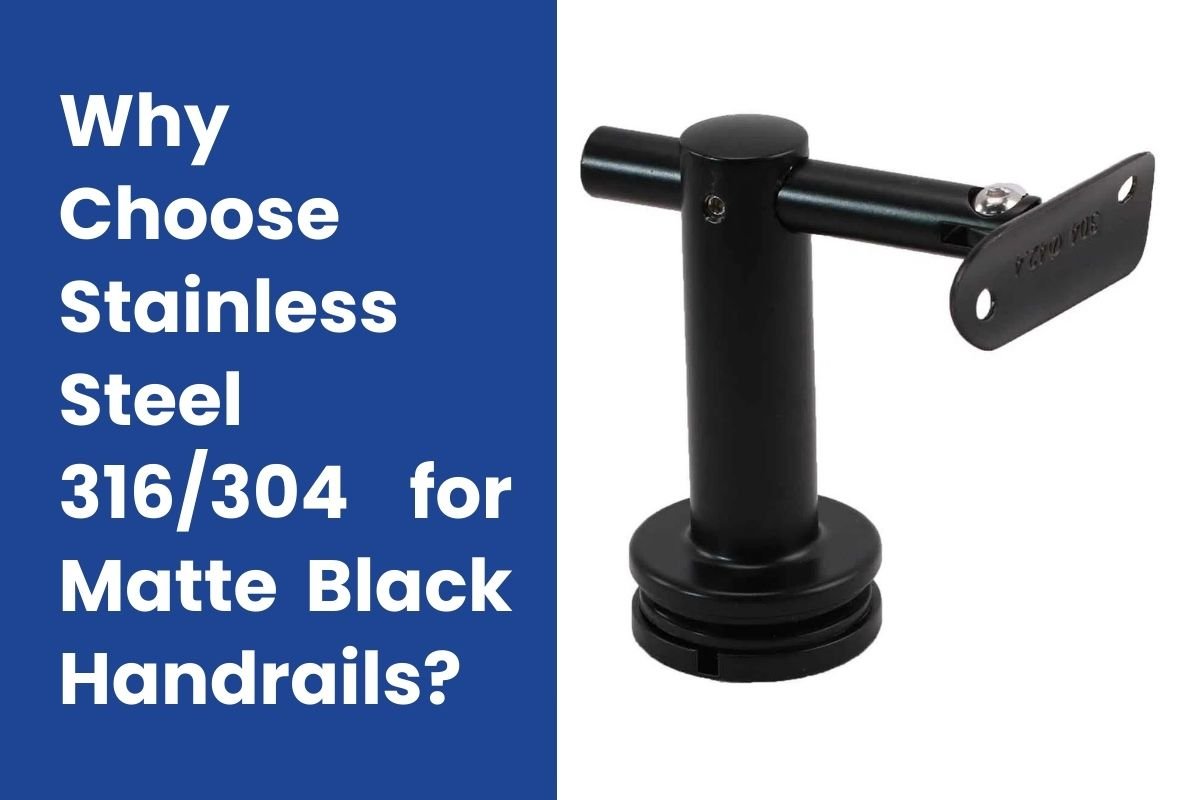
When you walk into a modern luxury home, the details often speak louder than the architecture itself. In 2026, the shift toward minimalist, high-contrast interiors has made the matte black aesthetic a dominant force in design. However, a common mistake many homeowners make is focusing solely on the color while ignoring the “bones” of the hardware. To achieve a look that lasts, you must understand the critical role of choosing 316/304 for Matte Black Handrails.
A Stainless Steel Handrail is naturally silver, so achieving that velvety black finish requires a specialized coating process. If the underlying metal is of poor quality, even the most expensive paint will flake, peel, or rust from the inside out. This is why architects insist on specific grades of stainless steel to serve as the foundation for their luxury projects.
In this deep dive, we will explore the technical and aesthetic reasons why 304 and 316 grades are the only viable options for high-end matte black installations. From chemical resistance to tactile comfort, we’ll help you decide which grade fits your specific project.
Stainless Steel 316/304 for Matte Black Handrails in Modern Architecture
In contemporary architecture, material selection defines both performance and perception. Clean lines, understated finishes, and long-term durability are no longer optional—they are expected. Within this design evolution, matte black handrails have emerged as a defining element across luxury homes, commercial buildings, and public spaces. However, the visual appeal of a matte black finish depends heavily on what lies beneath it.
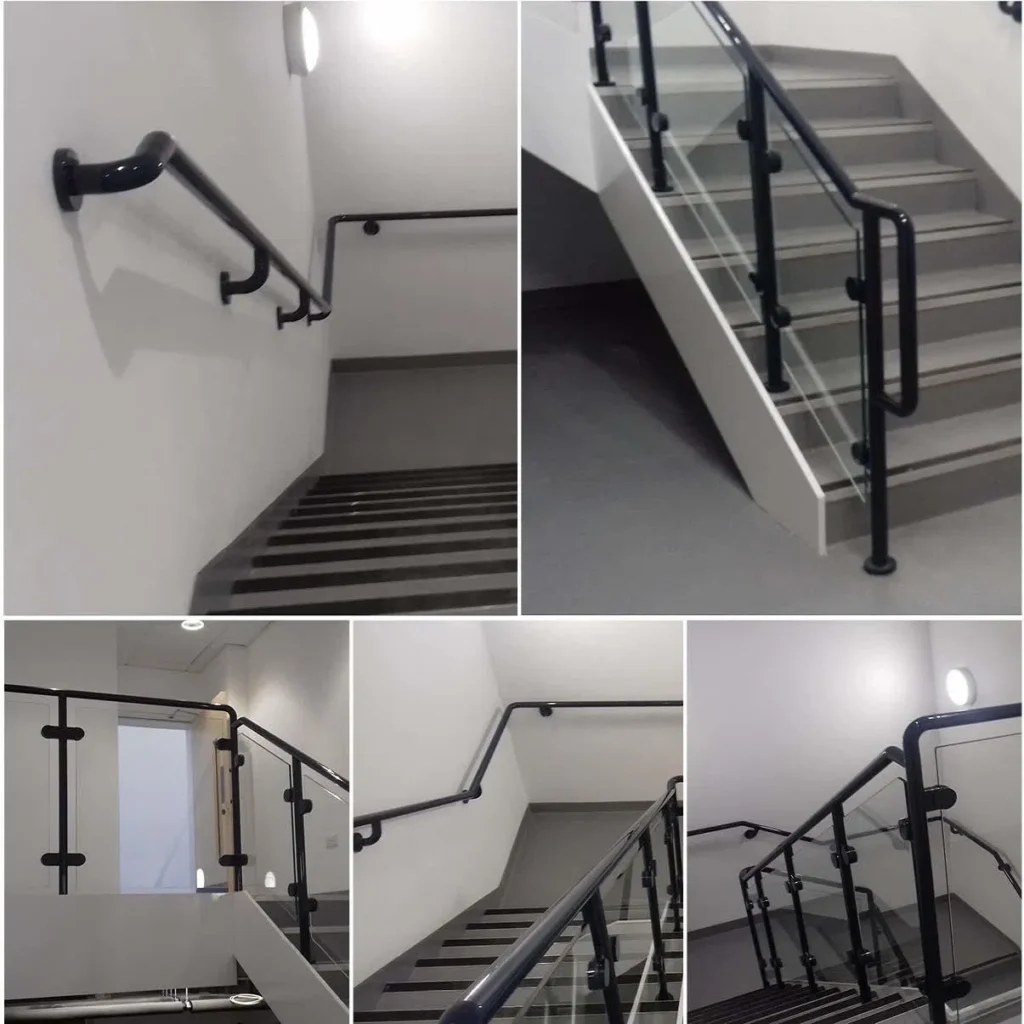
This is where 316/304 for Matte Black Handrails becomes a critical decision.
Choosing the right stainless steel grade ensures that a handrail does more than look good on installation day. It determines how well the structure resists corrosion, maintains strength, and preserves its finish over years of use. For architects, builders, and homeowners seeking reliability without compromising aesthetics, understanding why stainless steel 316 and 304 are preferred for matte black handrails is essential.
This guide explores the science, performance, and real-world benefits behind these materials, helping you make informed choices for long-lasting railing systems.
The Purpose of Handrails Beyond Safety
A handrail is traditionally defined as a support element that provides stability and guidance along staircases, ramps, and elevated walkways, as outlined in the general definition of a handrail. While safety remains its primary function, modern architecture has elevated the handrail into a design feature.
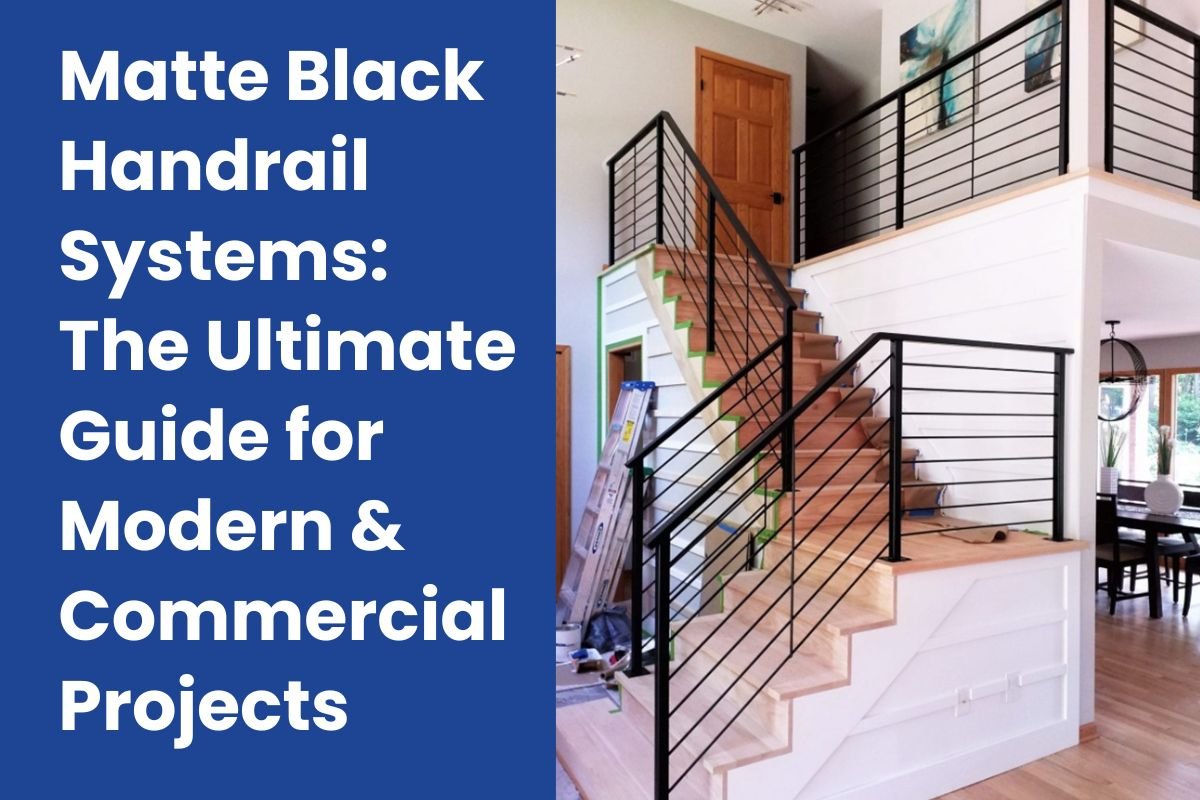
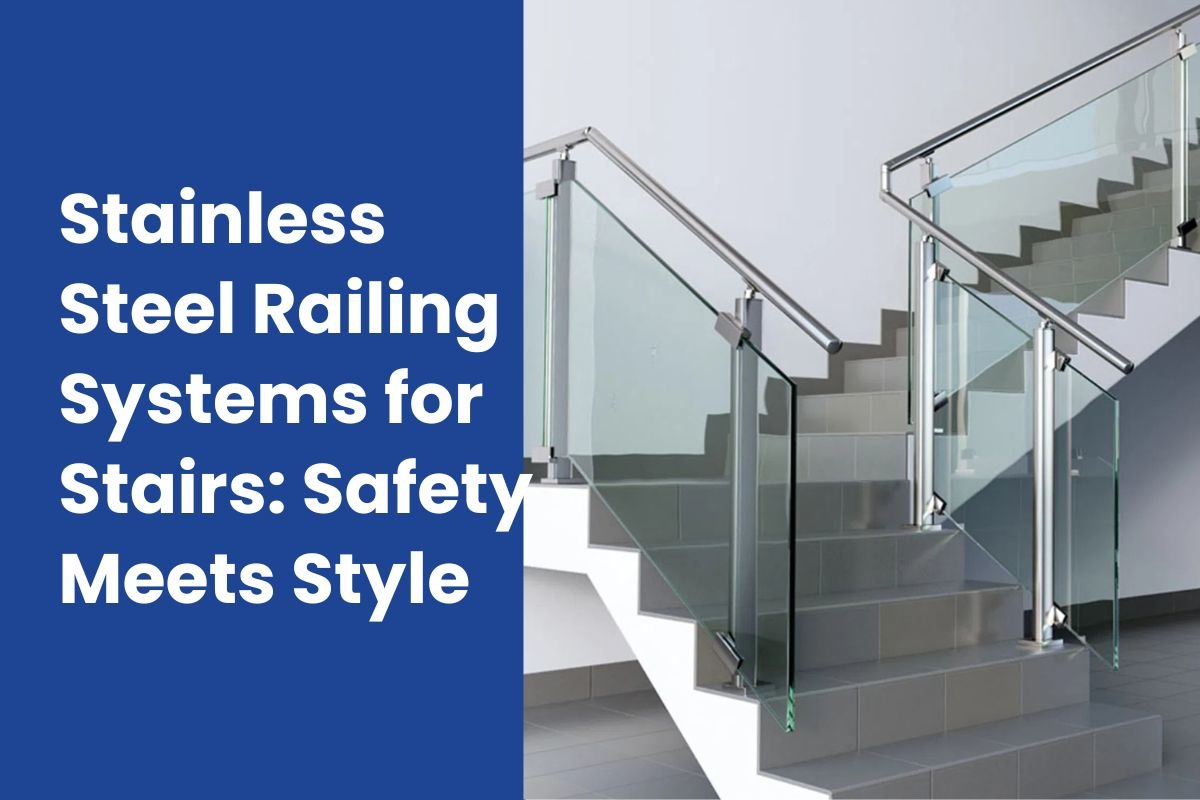
Today, matte black handrails are used intentionally to frame staircases, complement glass or cable railing systems, and create contrast against neutral interiors. In these applications, material failure is not just a structural issue—it is a visual flaw.
That is why selecting 316/304 for Matte Black Handrails is not simply a technical choice but a design safeguard.
Why Stainless Steel Is the Preferred Base for Matte Black Finishes
Not all metals respond equally to surface treatments. Matte black finishes require a stable, corrosion-resistant substrate to ensure adhesion and longevity.
Stainless steel offers this stability due to its chromium content. When exposed to oxygen, chromium forms a passive oxide layer that protects the metal from rust and chemical damage. This self-healing property makes stainless steel uniquely suited for architectural applications.
Unlike painted mild steel, which relies entirely on surface coatings for protection, stainless steel remains structurally sound even if minor surface wear occurs. This inherent resilience makes 316/304 for Matte Black Handrails the industry standard for premium projects.
A deeper overview of material selection is available in this guide on best stainless steel for handrails.
The Difference Between Stainless Steel 304 and 316
While both grades belong to the austenitic stainless steel family, their performance differs based on alloy composition.
Stainless Steel 304: The Interior Standard
Stainless steel 304 contains approximately 18% chromium and 8% nickel. This composition provides excellent corrosion resistance in dry or controlled environments.
For indoor matte black handrails used in residential staircases, offices, or retail interiors, 304 stainless steel offers an optimal balance of strength, finish compatibility, and cost efficiency. It is widely used because it performs reliably without unnecessary expense.
Stainless Steel 316: The Exterior and Marine Upgrade
Stainless steel 316 includes molybdenum, an element that significantly enhances resistance to chlorides and salt exposure. This makes it ideal for outdoor installations, coastal regions, and high-humidity environments.
When matte black handrails are exposed to rain, snow, or salty air, 316 stainless steel prevents pitting corrosion that can undermine both appearance and safety. The long-term advantages of this grade are explored further in durability benefits of 316 stainless steel handrails.
A side-by-side comparison is available in 304 vs 316 stainless steel handrails, which outlines when each grade is most appropriate.
Why 316/304 for Matte Black Handrails Performs Better Than Painted Steel
Matte black finishes are often achieved through powder coating or PVD coating. These processes rely on consistent adhesion and a stable substrate.
Painted carbon steel may look similar initially, but it lacks stainless steel’s corrosion resistance. Once moisture penetrates the paint layer, rust forms beneath the surface, causing bubbling, peeling, and eventual structural weakening.
In contrast, 316/304 for Matte Black Handrails ensures that the metal underneath the finish resists corrosion on its own. This redundancy significantly extends the lifespan of the railing system.
Over time, this difference translates into fewer repairs, lower maintenance costs, and a consistently refined appearance.
Compatibility with Modern Railing Systems
Matte black handrails rarely stand alone. They are often paired with glass panels, cable infill, or minimalist balustrade designs.
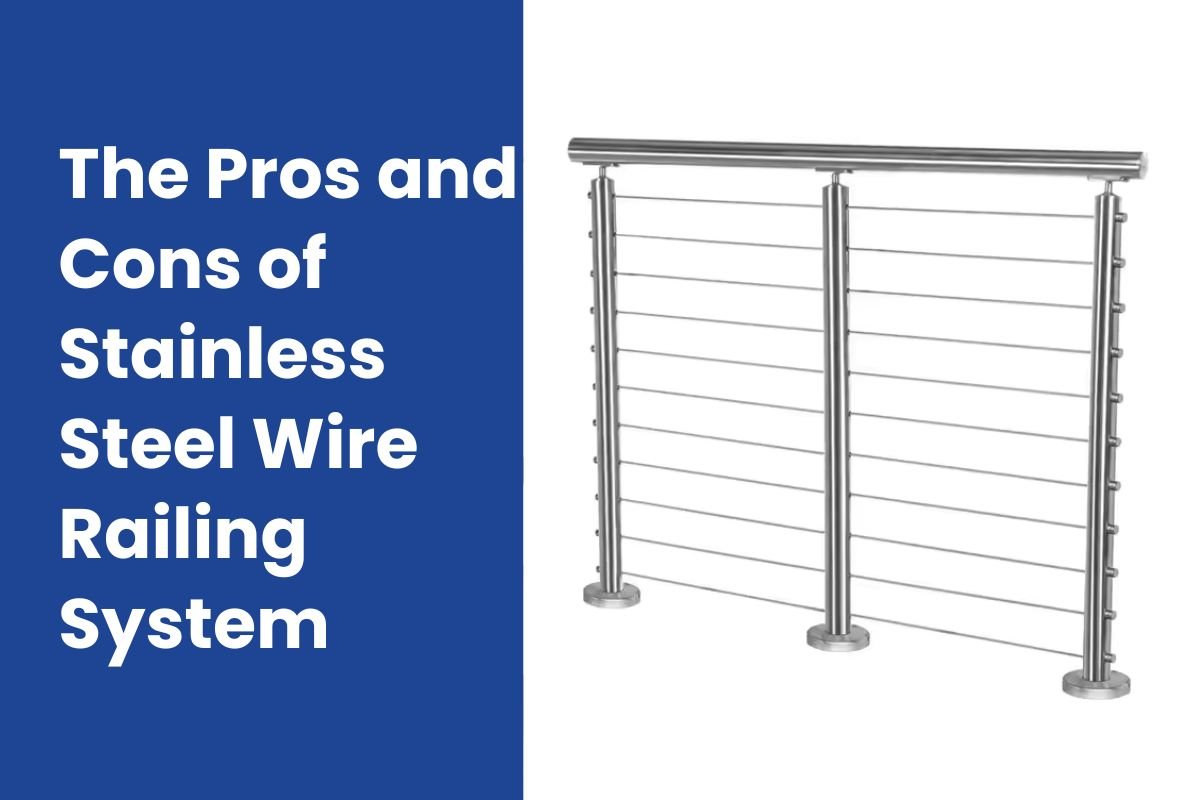
Stainless steel integrates seamlessly with these systems due to its strength and fabrication precision. Cable railings, in particular, require materials that can handle sustained tension without deformation.
Resources such as what is a cable railing system and stainless steel cable railings for DIY decks explain why stainless steel is essential for these applications.
For staircases, choosing the best stainless steel cable railing system for stairs ensures both code compliance and design consistency.
The Role of Brackets and Hardware in Matte Black Handrails
Even the best handrail material can fail if supported by inferior hardware. Brackets and connectors must match both the finish and the mechanical performance of the handrail.
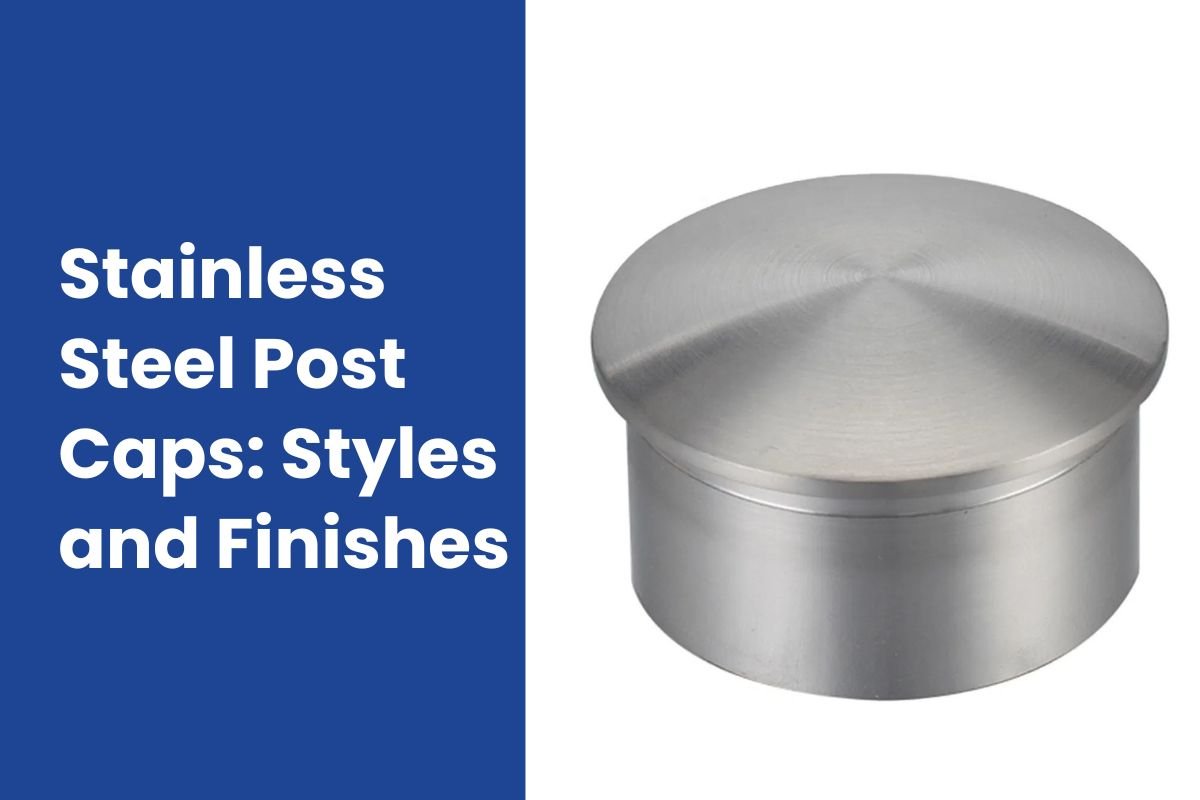
Using stainless steel brackets prevents galvanic corrosion and maintains uniform expansion and contraction. Matte black stainless steel brackets also preserve visual continuity.
Detailed guidance on selecting appropriate supports can be found in stainless steel handrail brackets for stairs and stainless steel handrail brackets: indoor vs outdoor.
Maintenance Expectations for Matte Black Stainless Steel Handrails
One of the strongest arguments for 316/304 for Matte Black Handrails is reduced maintenance.
Unlike glossy finishes, matte black surfaces hide fingerprints and minor scratches. Routine cleaning with mild soap and water is usually sufficient. Abrasive cleaners should be avoided to protect the coating.
For railing systems that include cables, periodic inspections help maintain tension and appearance. Best practices are outlined in how to maintain stainless steel cable railing.
With proper care, these handrails maintain their appearance and structural integrity for decades.
Manufacturing Quality and Global Standards
High-quality matte black stainless steel handrails result from precise manufacturing processes. Advanced welding, surface preparation, and coating techniques ensure consistency and durability.
Manufacturers such as those featured on Unikim China’s production platform demonstrate how industrial-grade quality control translates into architectural reliability. Visual insights and installation references are also available on the Unikim Railings YouTube channel.
Why unikim Recommends 316/304 for Matte Black Handrails
uRailing specializes in engineered stainless steel railing systems designed for modern architectural demands. Their approach prioritizes material integrity, safety compliance, and long-term performance.
By offering systems built on 304 and 316 stainless steel, uRailing ensures that matte black finishes are supported by materials that match their visual promise. Whether for residential stairs or large commercial installations, the focus remains on durability and design harmony.
Explore complete system options on unikim or request project-specific guidance through the contact page.
Summary
Choosing 316/304 stainless steel for matte black handrails ensures a perfect balance of style, durability, and low maintenance. Whether for luxury homes, commercial spaces, or coastal properties, these materials deliver unmatched performance.
For expert advice and premium handrail solutions, visit unikim today
FAQs
Is 316/304 for Matte Black Handrails suitable for outdoor installations?
Yes, 316/304 for Matte Black Handrails is ideal, with 316 recommended for outdoor and coastal environments.
Does stainless steel affect the longevity of matte black finishes?
Absolutely. Using 316/304 for Matte Black Handrails provides a stable base that helps coatings adhere and last longer.
Which grade is better for indoor staircases?
For interiors, 316/304 for Matte Black Handrails typically means choosing 304 stainless steel for cost-effective durability.
Are maintenance requirements high for matte black stainless steel handrails?
No. 316/304 for Matte Black Handrails requires minimal upkeep compared to painted steel alternatives.
Can these handrails be used with glass or cable systems?
Yes. 316/304 for Matte Black Handrails integrates perfectly with glass panels and cable railing systems.