Choosing between 304 vs 316 stainless steel glass clamps looks like a small detail. However, it shapes how your railing looks after five years. It also affects your warranty claims, your maintenance costs, and your client’s trust.
Many buyers see two clamps that look the same on a sample table. Both shine. Both hold glass firmly. So why does one cost more? And does your project really need it?
At UNIKIM, we make glass clamps, standoffs, and railing hardware for importers, contractors, and architects worldwide. We get this question almost every week. So in this guide, we explain the real difference in plain words. You will learn where each grade works, where it fails, and how to order the right one.
What Are Stainless Steel Glass Clamps?
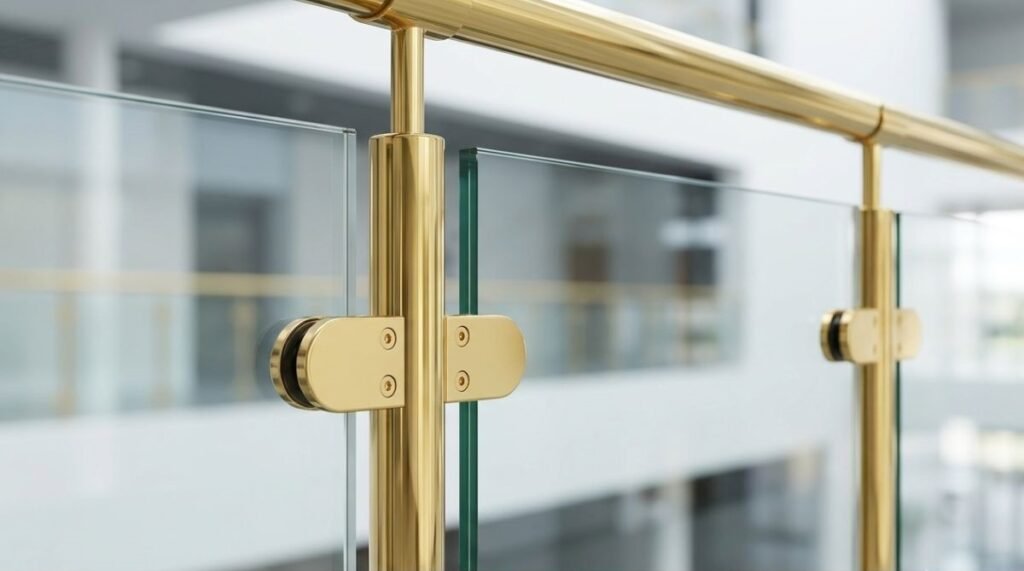
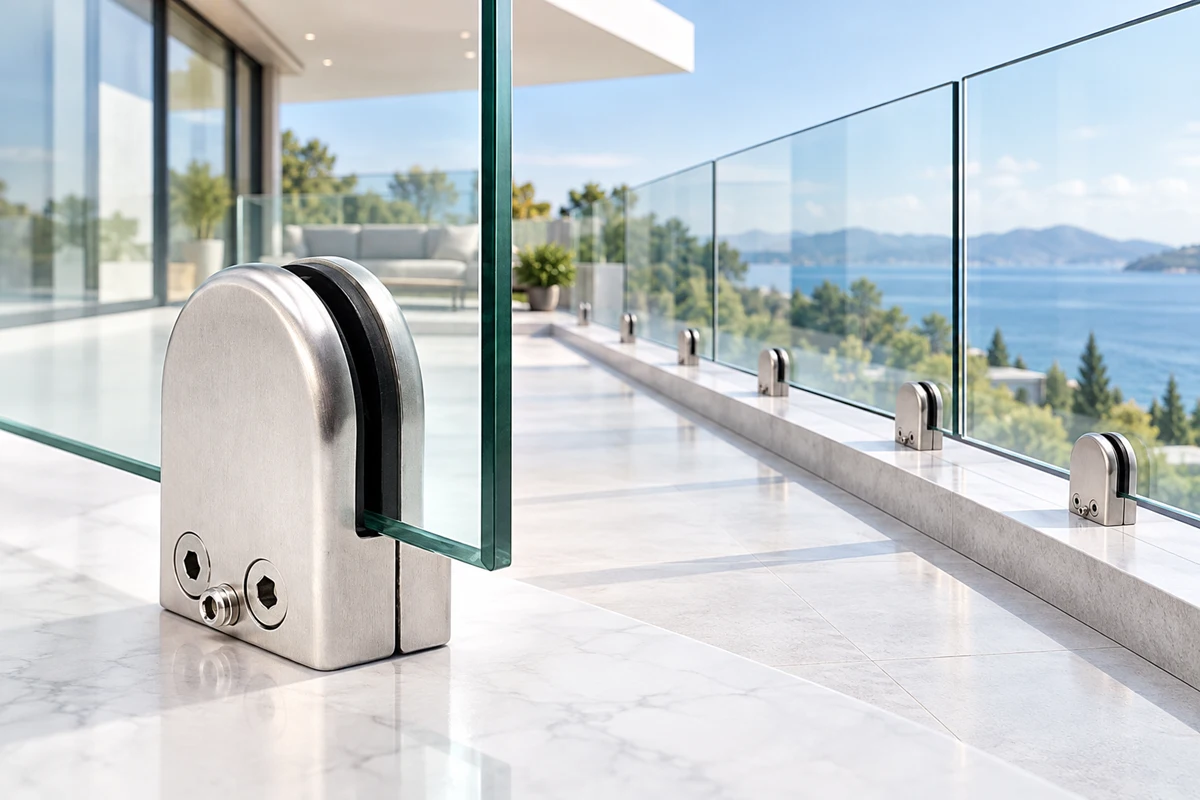
Glass clamps are small metal fittings that hold glass panels to posts, walls, or floors. They grip the glass with rubber gaskets inside. As a result, the panel stays secure without drilling large holes through the glass.
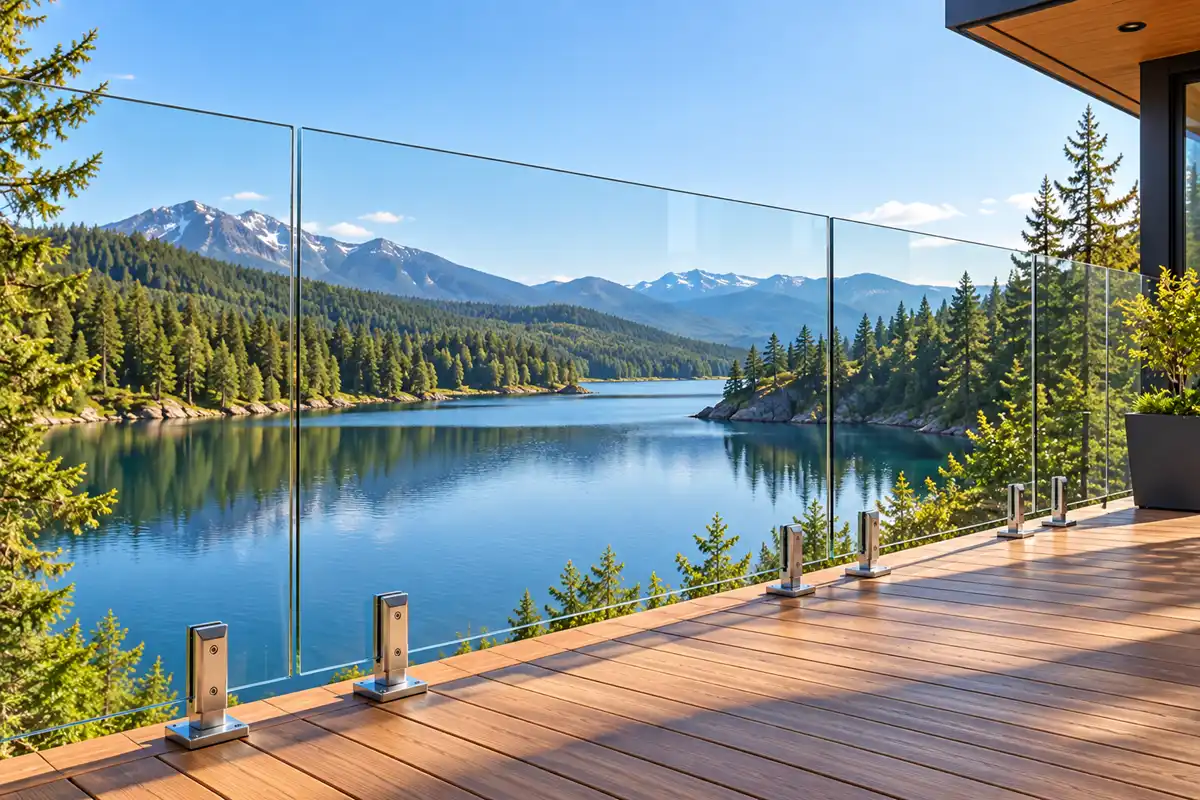
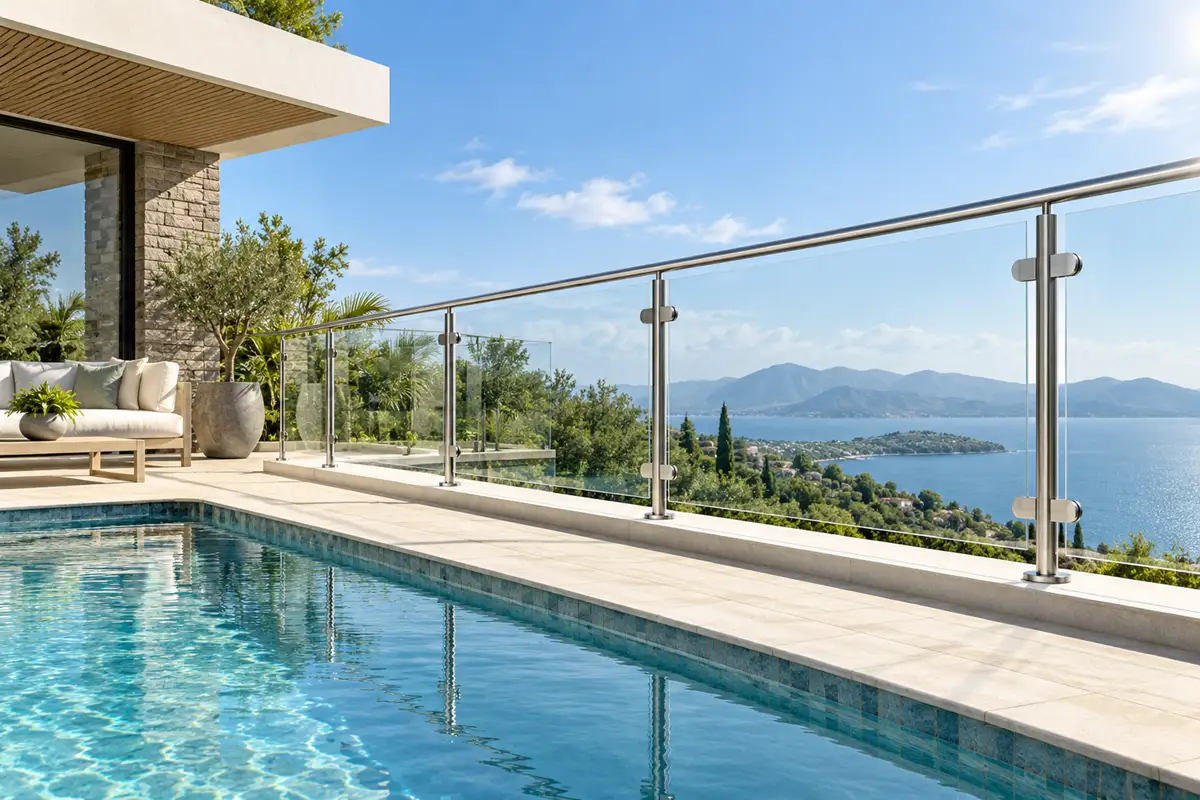
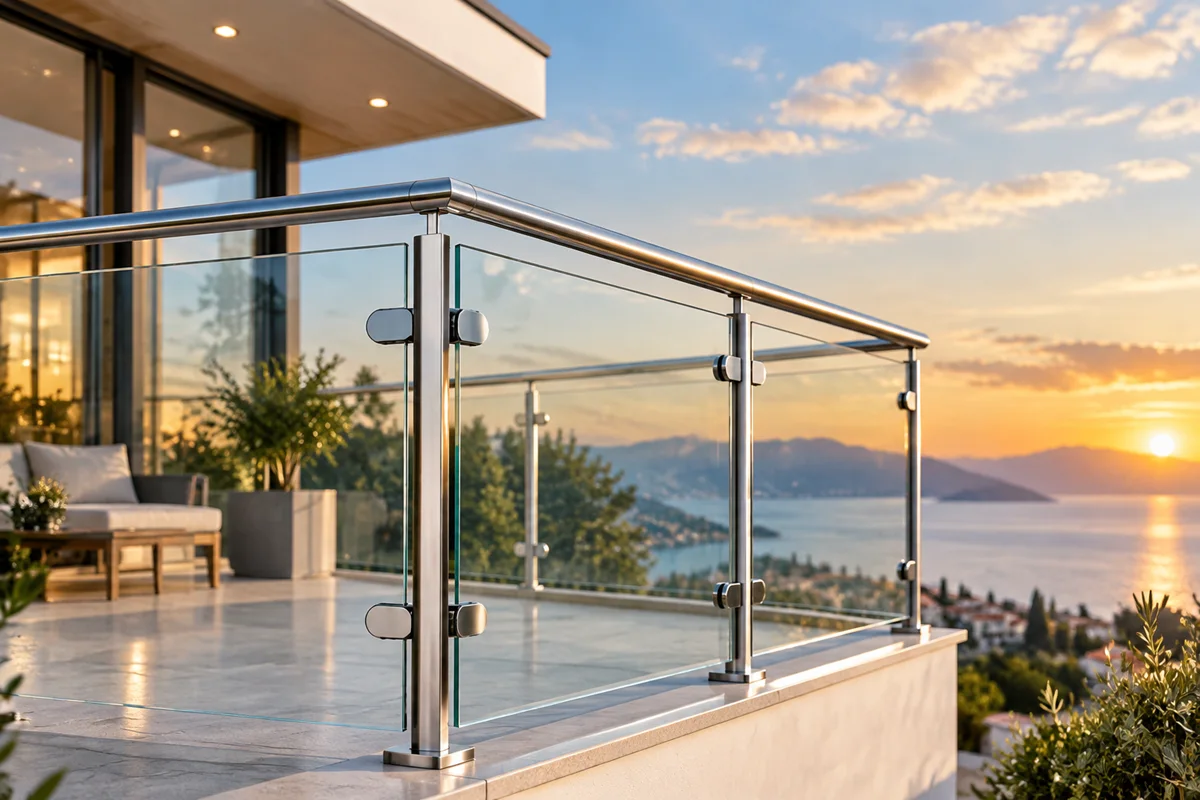
You will find them on balconies, stairs, decks, pool fences, and shop fronts. They come in many shapes, such as:
- Post-to-glass clamps (flat or round back)
- Wall-to-glass clamps
- Glass-to-glass clamps (90° or 180°)
- D-shape, square, and rectangular clamps
If you want a full breakdown of shapes, read our guide on types of glass clamps for railings.
Most quality clamps are made from austenitic stainless steel. The two grades you will see most are 304 and 316. Therefore, the grade you pick matters as much as the clamp shape.
304 vs 316 Stainless Steel: The Core Difference
Both grades belong to the same stainless steel family. Both contain chromium and nickel. But 316 has one extra element that changes everything: molybdenum.
What Is 304 Stainless Steel?
304 is the most common stainless steel in the world. It contains about 18% chromium and 8% nickel. Because of this, it is often called “18/8” steel.
It resists rust well in dry, clean air. It is also easy to polish and form. So it works well for indoor railings and mild outdoor areas. You can read more on SAE 304 stainless steel.
What Is 316 Stainless Steel?
316 contains about 16–18% chromium, 10–14% nickel, and 2–3% molybdenum. That molybdenum makes the surface much stronger against salt and chlorine.
For this reason, people call 316 “marine grade” stainless steel. It is the standard choice near the sea, around pools, and in industrial air. See more on SAE 316L stainless steel.
Quick Comparison Table
| Feature | 304 Glass Clamps | 316 Glass Clamps |
|---|---|---|
| Chromium | ~18% | ~16–18% |
| Nickel | ~8% | ~10–14% |
| Molybdenum | None | ~2–3% |
| Salt resistance | Moderate | High |
| Chlorine resistance | Low to moderate | High |
| Common name | 18/8 | Marine grade |
| Best for | Indoor, dry outdoor | Coastal, pools, humid areas |
| Relative cost | Lower | Higher (often 20–40% more) |
| Look when new | Bright, polished | Bright, polished |
Why Corrosion Resistance Matters for Glass Clamps
A glass clamp is small. However, it sits in the worst possible spot. Water collects around the gasket. Dirt builds up in tight corners. Moreover, the clamp is often at hand height, where people touch it daily.
When the wrong grade is used, you may see:
- Tea staining — brown spots on the surface
- Pitting — tiny holes that grow over time
- Crevice corrosion — rust hidden under the gasket or behind the clamp
- Rust streaks on glass, tiles, or decking below
Tea staining is mostly a cosmetic issue at first. But for a luxury villa or hotel, it looks like poor work. As a result, the contractor usually gets the complaint, not the supplier.
The Role of Molybdenum
Salt and chlorine attack the thin protective film on stainless steel. Molybdenum helps that film repair itself faster. Therefore, 316 resists small pits much better than 304.
Engineers measure this with a value called PREN (Pitting Resistance Equivalent Number). 304 usually scores around 18–20. 316 usually scores around 23–25. A higher number means better protection in salty or chlorinated air.
Where to Use 304 Stainless Steel Glass Clamps
304 is not a “cheap” grade. It is simply the right grade for the right place. In fact, it performs very well when the environment is kind.
Good Uses for 304
- Indoor staircases in homes, offices, and malls
- Interior mezzanines and balconies
- Covered outdoor areas far from the sea
- Dry, low-pollution inland cities
- Budget projects with regular cleaning plans
When 304 Is a Risk
- Within a few kilometres of the coast
- Around swimming pools and spas
- Near roads treated with de-icing salt
- In industrial zones with chemical fumes
- In hot, humid climates with frequent rain
So if your site ticks any box on the second list, 304 may fail sooner than your client expects.
Where to Use 316 Stainless Steel Glass Clamp
316 is the safer choice when the environment is harsh or unknown. It also suits projects where long warranties are promised.
Best Uses for 316
- Beachfront homes, resorts, and hotels
- Balconies in coastal apartment towers
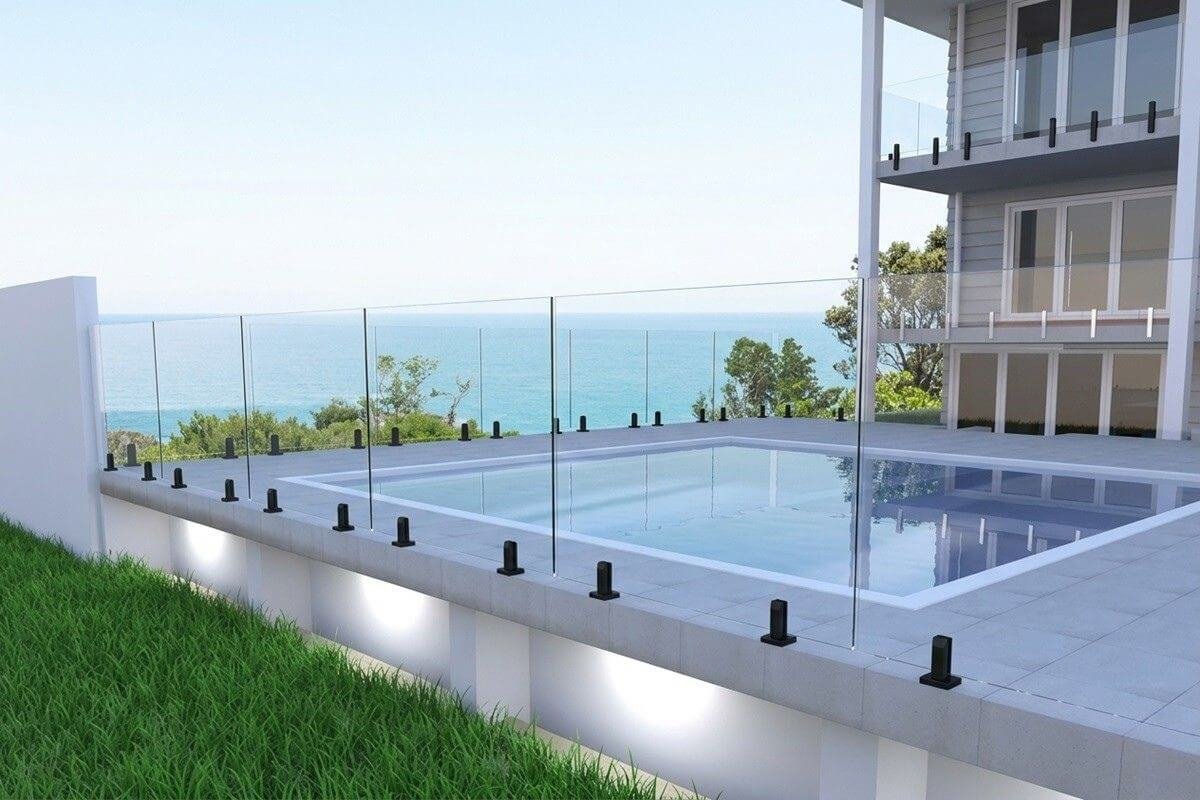
- Pool fences and spa enclosures
- Marinas, piers, and waterfront walkways
- Humid tropical climates
- Public projects with long design life
For pool projects, also see our glass pool fence spigots guide. Spigots and clamps should always match in grade. Otherwise, the weaker part will stain first.
304 or 316 Glass Clamps for Bathroom Use?
This is a common question from interior designers. The answer depends on the bathroom.
For a normal home bathroom with good airflow, 304 usually performs well. However, some cases call for 316:
- Steam rooms and wet saunas
- Hotel bathrooms cleaned daily with strong chemicals
- Coastal properties where sea air enters the room
- Rooms with poor ventilation
Many bathroom cleaners contain chlorine or acids. These can attack 304 over time. So for commercial bathrooms, 316 is often worth the small extra cost.
How Glass Clamps Are Made: Why Grade Is Only Half the Story
Grade matters. But the way the clamp is made matters too. Two 316 clamps can perform very differently.
1. Casting or Machining
Most glass clamps are made by precision casting or CNC machining. Good casting gives a dense body with few hidden pores. Poor casting leaves tiny holes where corrosion can start.
2. Polishing
Next, the clamp is polished to a satin or mirror finish. A smoother surface holds less dirt and salt. Therefore, a mirror polish often lasts longer near the sea than a rough satin finish.
3. Passivation or Electropolishing
After polishing, quality makers clean the surface with acid treatment. This removes free iron and restores the protective layer. Electropolishing goes one step further and smooths the surface at a micro level.
4. Gaskets and Fasteners
Inside each clamp are rubber gaskets, usually EPDM or silicone. They protect the glass and absorb small movement. Also, screws and bolts should match the clamp grade. A 316 clamp with 304 screws will still rust at the screws.
5. Coatings and Colours
Black and bronze clamps use PVD or powder coating over stainless steel. The coating adds colour and extra protection. See our black glass clamp stainless steel standoff as an example.
You can watch parts of our production process on the UNIKIM YouTube channel.
Cost Comparison: Is 316 Worth the Extra Money?
316 glass clamps usually cost about 20–40% more than 304 clamps. The gap comes from higher nickel content and added molybdenum. Also, raw material prices change with the global metal market.
However, look at the full project cost. Clamps are a small share of a glass railing budget. Glass, labour, and posts cost much more.
Now think about what failure costs:
- Site visits to clean or replace stained parts
- Labour to remove and refit glass
- Damage to your brand and client trust
- Lost repeat business
So for coastal or pool work, 316 is usually the cheaper choice over time. For indoor projects, 304 gives excellent value without waste.
How to Check You Are Getting Real 316
Sadly, some suppliers sell 304 parts as 316. The two grades look the same to the eye. Here is how to protect your order.
Ask for a mill test certificate. A proper material certificate (such as EN 10204 3.1) lists the chemical makeup of the steel.
Request a PMI or XRF test. These handheld tests show if molybdenum is present in seconds. Many third-party inspectors offer them.
Don’t trust the magnet test. Both grades are mostly non-magnetic. Also, cold working can make either grade slightly magnetic. So a magnet cannot tell them apart.
Check the price. If a “316” clamp costs the same as 304, ask questions.
Test a sample. A salt spray test on samples helps compare suppliers before a large order.
At UNIKIM, we can share material documents with bulk orders. You can also view our factory profile on Made-in-China.
Buying Guide: How to Choose the Right Grade
Use these simple steps before you place an order.
Step 1: Check the Site Location
Is the project near the sea, a pool, or an industrial zone? If yes, choose 316.
Step 2: Check Indoor or Outdoor
Indoor and dry? 304 is usually enough. Outdoor and exposed? Lean toward 316.
Step 3: Consider the Cleaning Plan
Stainless steel needs cleaning, even 316. Rain washes open surfaces, but covered areas collect salt. So if cleaning will be rare, choose 316.
Step 4: Match All Hardware
Clamps, posts, handrails, screws, and caps should share the same grade. Mixed grades cause the weaker parts to stain first. Browse our full range of glass clamps and connectors and glass standoffs.
Step 5: Confirm Glass Thickness
Clamps are sized for set glass thickness, often 8–12 mm or laminated glass. Wrong sizing affects safety more than grade does. Our guide on how to choose glass railing clamps covers this in detail.
Step 6: Avoid Installation Mistakes
Even the best 316 clamp can fail if installed poorly. For example, steel dust from nearby cutting can cause rust spots. Read our list of railing hardware installation mistakes before work starts.
Why Choose UNIKIM for Stainless Steel Glass Clamps
UNIKIM is a factory-direct maker of glass and cable railing hardware. We supply distributors, importers, and contractors in many countries.
Here is what our buyers value most:
- Both 304 and 316 options for every budget and site
- Many clamp styles, including flat back, round back, D-shape, and square
- Finishes such as satin, mirror polish, and black coating
- Matching hardware, including adjustable glass railing standoffs, end caps, and posts
- OEM and custom options for your brand
- Factory pricing for bulk and repeat orders
We also make full frameless glass railing systems. So you can source clamps, standoffs, and posts from one glass railing systems supplier. As a result, you save time and keep quality consistent.
FAQ
1. What is the main difference between 304 vs 316 stainless steel glass clamps?
The main difference is molybdenum. 316 glass clamps contain about 2–3% molybdenum, while 304 has none. This gives 316 much better resistance to salt and chlorine. So 316 lasts longer near the sea and around pools.
2. Which stainless steel glass clamp is better for coastal areas?
316 is the better choice for coastal areas. When comparing 304 vs 316 stainless steel glass clamps near the sea, 304 often shows tea staining within a short time. 316 resists salt air much better, especially with regular cleaning.
3. Can I use 304 glass clamps for outdoor railings?
Yes, but only in dry, inland areas away from pools and pollution. For most exposed outdoor projects, buyers weighing 304 vs 316 stainless steel glass clamps choose 316 for peace of mind.
4. Do 316 glass clamps ever rust?
316 can still stain if it is never cleaned or is placed in harsh conditions. However, it resists rust far better than 304. Regular rinsing with fresh water keeps 316 clamps looking new for years.
5. How can I tell if my glass clamps are real 316?
Ask your supplier for a material test certificate. You can also use a PMI or XRF test to detect molybdenum. A magnet test cannot reliably separate 304 from 316.
Summary
Choosing the right grade protects your project, your budget, and your reputation. 304 glass clamps work well indoors and in dry, mild outdoor areas. They offer strong value where corrosion risk is low.
316 glass clamps are the smart choice for coastal homes, pools, humid climates, and long-life public projects. The extra cost is small compared to repair and replacement later.
Also remember that grade is only part of quality. Casting, polishing, passivation, and matching fasteners all matter.
UNIKIM supplies both grades with full matching hardware, factory pricing, and export experience. When you compare 304 vs 316 stainless steel glass clamps for your next order, our team can help you pick the right fit. Contact UNIKIM today for samples, quotes, or technical advice.