Modern commercial buildings are designed to impress. The entrance is the first impression, and nothing conveys sophistication better than a sleek glass canopy supported by durable hardware. Glass canopy hardware not only enhances aesthetics but also ensures safety, stability, and long-term performance. From stainless steel fittings to tension rod systems, the right choice of hardware can transform a building’s façade into a statement of architectural excellence.
For businesses, investing in premium canopy systems is more than design—it’s about durability, compliance with safety standards, and creating welcoming spaces. In this guide, we’ll explore the best glass canopy hardware for commercial building entrances, compare materials, highlight installation methods, and provide expert recommendations.
What Is Glass Canopy Hardware?
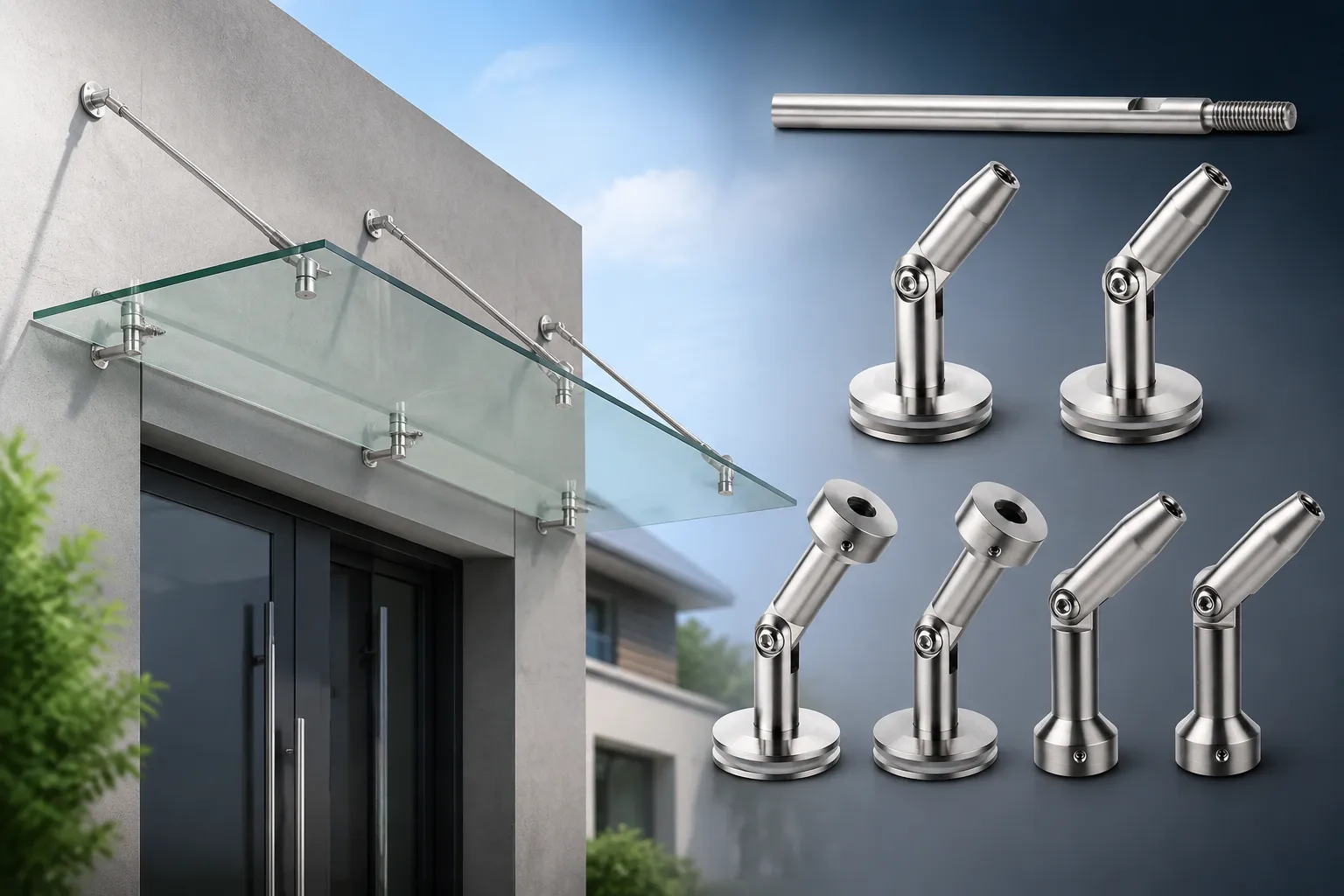
Glass canopy hardware refers to the mechanical fittings and support systems used to install overhead glass canopies in commercial and residential buildings. These components ensure that the canopy remains stable, safe, and visually appealing. Unlike traditional roofing, glass canopies rely on specialized hardware to hold tempered or laminated glass securely in place while resisting wind, rain, and thermal expansion.
Key Components:
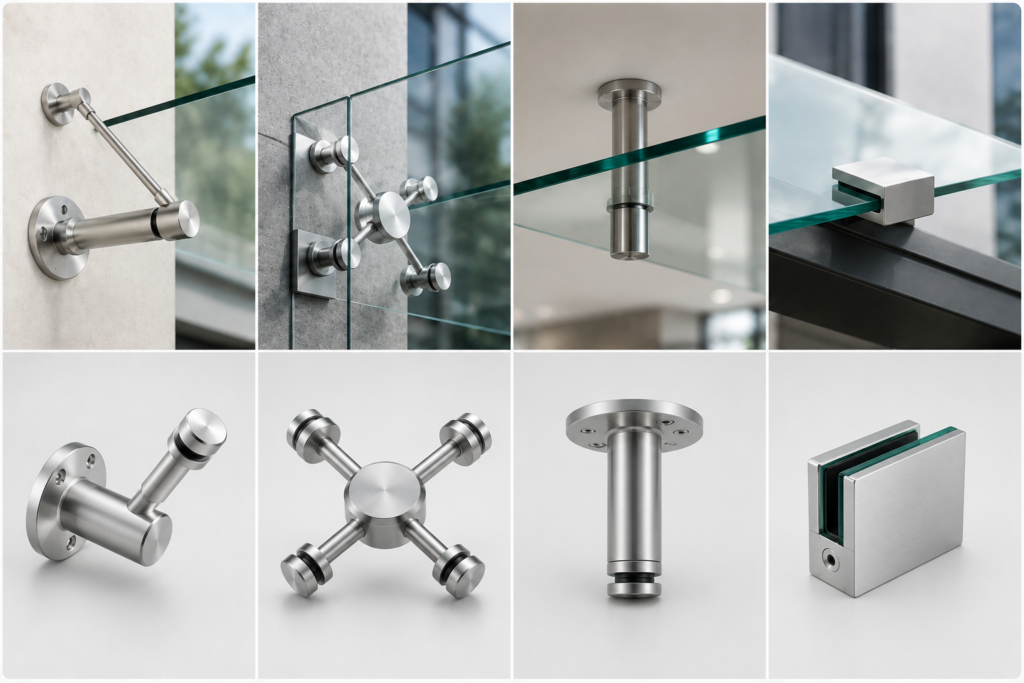
- Spider Fittings: Stainless steel connectors that join glass panels at multiple points, allowing frameless designs.
- Tension Rods/Struts: Anchored rods that transfer loads back to the building structure, often used in cantilevered canopy systems.
- Wall Brackets & Support Arms: Provide direct attachment to walls, ensuring stability while maintaining a minimal visual footprint.
- Glass Clamps & Fixings: Secure glass edges and prevent slippage, often with rubber inserts to protect the glass surface.
Why It Matters:
High-quality glass canopy hardware is critical because it transfers structural loads, prevents glass breakage, and ensures compliance with international safety standards such as ANSI Z97.1 and ASTM C1048. Poorly designed fittings can lead to canopy failure, posing risks to pedestrians and damaging property.
For a detailed overview of typical canopy components, see the Glass Canopy Visual Reference Guide. You can also explore premium stainless steel fittings at Unikim’s Glass Canopy Fittings, which specialize in SS304 and SS316 systems for long-term durability.
Types of Glass Canopy Hardware
Spider Fittings
Spider fittings are multi-arm connectors that hold glass panels at specific points. They allow frameless designs, making entrances look modern and minimalistic.
Stainless Steel Clamps
Clamps secure glass edges without drilling, reducing stress on panels. Popular types include D-shaped clamps, square clamps, and glass-to-glass clamps. Stainless steel grades SS304 and SS316 are most common, with SS316 offering superior corrosion resistance in coastal environments.
Tension Rod Systems
Tension rods distribute canopy loads through cables or rods anchored to the building. They are ideal for suspended or cantilevered designs.
Mounting Brackets
Brackets attach glass panels directly to walls or beams. They are essential for stability in wall-mounted installations.
Material Comparison: SS304 vs SS316
| Material | Corrosion Resistance | Best Use Case |
|---|---|---|
| SS304 Stainless Steel | Good resistance, suitable for most urban environments | Standard commercial buildings |
| SS316 Stainless Steel | Superior resistance, especially against saltwater and chemicals | Coastal cities, industrial zones |
For a deeper dive, see SS304 vs SS316 Glass Clamps.
Benefits of Using Glass Canopy Hardware
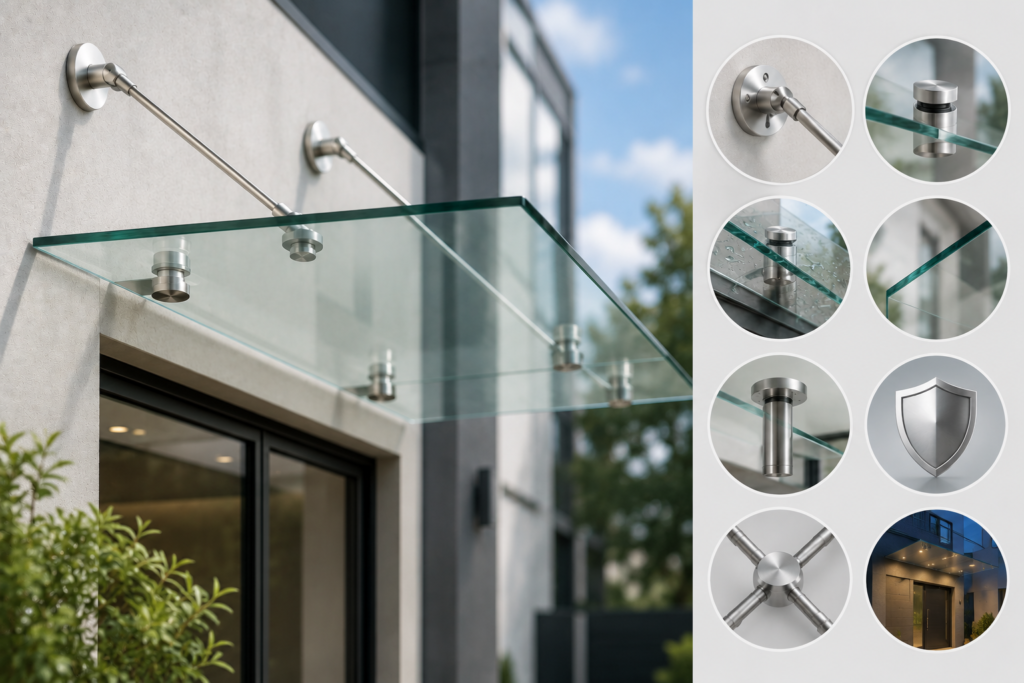
The use of glass canopy hardware in modern architecture offers a blend of functionality and aesthetics that makes it a preferred choice for commercial building entrances. One of the most significant benefits is durability. Stainless steel fittings, especially SS316, provide long-term resistance against corrosion, making them ideal for both urban and coastal environments. This ensures that the canopy remains structurally sound even under harsh weather conditions.
Another advantage is safety. Properly engineered hardware distributes loads evenly, preventing stress fractures in glass panels. Certified systems comply with international standards such as ANSI Z97.1 and EN 12600, ensuring pedestrian safety in high-traffic areas.
From a design perspective, glass canopy hardware enhances aesthetic appeal. Frameless installations using spider fittings or tension rods create a sleek, modern look that elevates the building’s façade. Additionally, canopies provide weather protection, shielding entrances from rain and sunlight while maintaining transparency and openness.
Finally, these systems are highly versatile. They can be customized for hotels, malls, offices, and public buildings, offering both functional and decorative value. Explore premium options at Unikim’s Stainless Steel Glass Canopy Systems or learn more about how to choose the right canopy system.
Choosing the Right Glass Canopy System
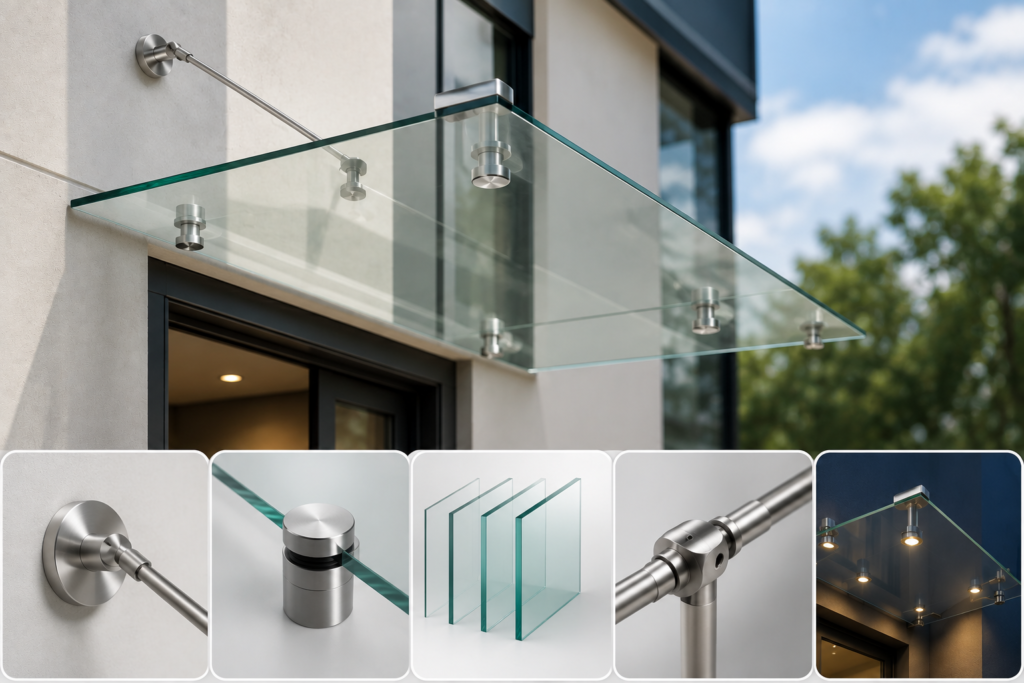
Selecting the right glass canopy system is crucial for both aesthetics and safety in commercial architecture. The choice depends on factors such as building location, environmental conditions, and design preferences. For example, suspended canopy systems using tension rods are ideal for modern office entrances, while wall-mounted systems provide stability for retail stores and hotels. Stainless steel grades SS304 and SS316 are the most common materials, with SS316 offering superior corrosion resistance in coastal environments.
High-quality canopy hardware ensures compliance with international safety standards and enhances durability. For guidance, explore How to Choose Glass Canopy System for Buildings and premium fittings at Unikim’s Glass Canopy Fittings. Industry leaders like Unikim Railings also emphasize certified stainless steel systems for long-term performance.
Installation Methods
There are three main installation methods for glass canopy hardware, each suited to different architectural needs. Suspended canopies use tension rods or cables anchored to the building, offering a floating, modern look. Wall-mounted systems attach directly to vertical surfaces with brackets, providing strong support for smaller entrances. Cantilevered canopies extend outward from the structure, creating a frameless, elegant appearance. Each method requires specific fittings, available at Unikim’s Glass Canopy Fittings.
Case Study: Commercial Entrances
A hotel in Dhaka installed a stainless steel glass canopy system using SS316 fittings. The result was a corrosion-resistant, elegant entrance that withstands monsoon rains. This showcases why investing in premium hardware pays off in both aesthetics and durability.
Explore Stainless Steel Glass Canopy Systems.
External Industry Insights
According to Saint-Gobain Glass Hardware, stainless steel fittings are the global standard for commercial projects due to their strength and longevity. Similarly, manufacturers like Albang emphasize the importance of certified hardware for safety compliance.
Summary
glass canopy hardware is the foundation of modern architectural entrances, combining safety, durability, and elegance. High-quality systems, especially those made from SS316 stainless steel, ensure long-term resistance to corrosion and compliance with international safety standards. Whether using spider fittings, tension rods, or wall-mounted brackets, the right choice enhances both functionality and aesthetics. For homeowners and businesses, investing in certified hardware guarantees reliability and visual appeal.
To explore premium solutions, visit Unikim Home, browse the Glass Canopy Products, and connect directly through the Contact Us page. These resources provide expert guidance and access to durable canopy systems tailored for commercial and residential projects.
FAQ Section
Q: What is the best material for glass canopy hardware?
A: The best material is SS316 stainless steel, as it offers superior corrosion resistance for commercial entrances.
Q:How long does glass canopy hardware last?
A: With proper maintenance, glass canopy hardware can last 20–30 years.
Q:Can glass canopy hardware be customized?
A: Yes, fittings can be tailored for size, finish, and design. See custom canopy fittings.
Q:Is glass canopy hardware safe for high-traffic buildings?
A: Absolutely. Certified hardware meets international safety standards, making it ideal for malls, hotels, and offices.
Q:What’s the difference between SS304 and SS316?
A: SS304 is cost-effective, while SS316 resists saltwater corrosion, making it better for coastal areas.