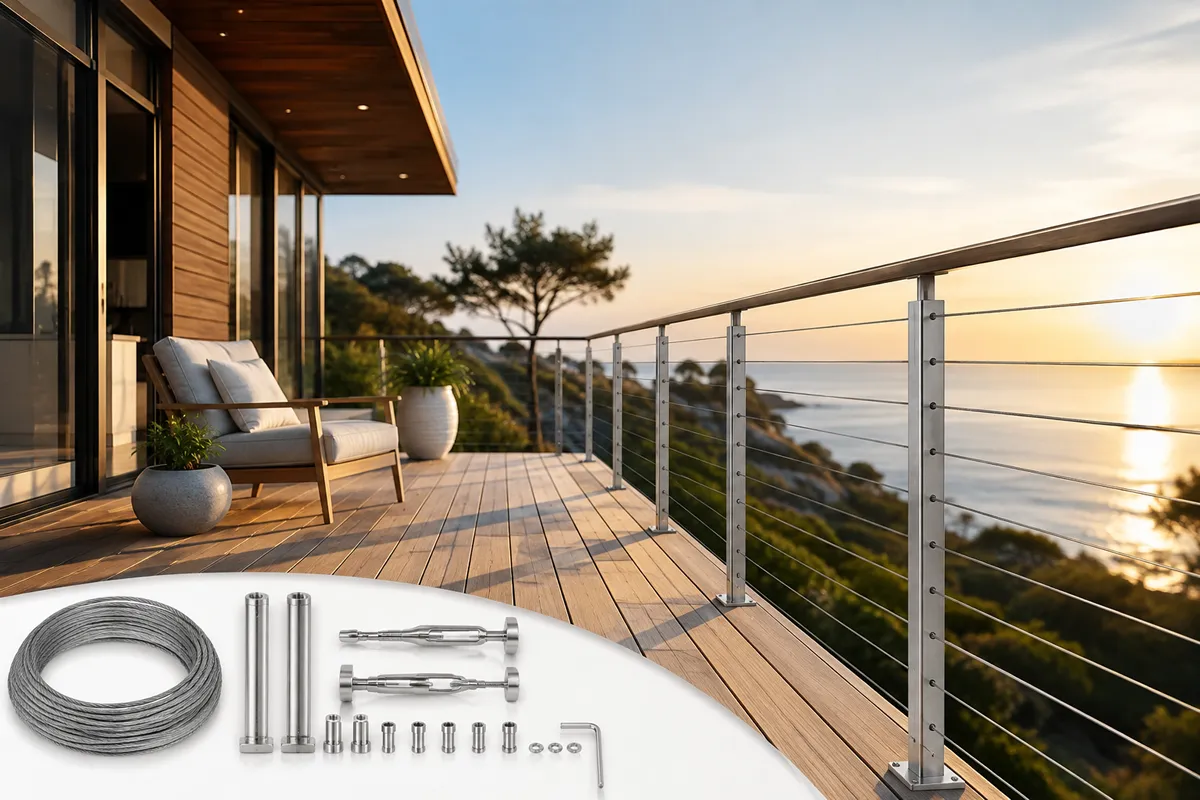
Deck construction has changed. Homeowners no longer want the same boxy wood balusters their parents installed in the 1990s. They want clean lines, unobstructed views, and a modern look that adds real value to their property. That shift in client expectations is exactly why more contractors are turning to a Stainless Steel Cable Railing Kit for their deck builds instead of traditional railing systems.
If you’re a contractor still weighing whether to make the switch or a supplier trying to understand why demand for these kits keeps climbing this article breaks down the real, practical reasons behind the trend.
What Is a Stainless Steel Cable Railing Kit?
A Stainless Steel Cable Railing Kit is a pre-engineered railing system built around horizontal (or occasionally vertical) stainless steel cables, tensioned between posts. Instead of solid balusters or panels, the cables create a nearly invisible barrier that meets safety code while preserving sightlines whether that’s a mountain view, a backyard pool, or a city skyline.
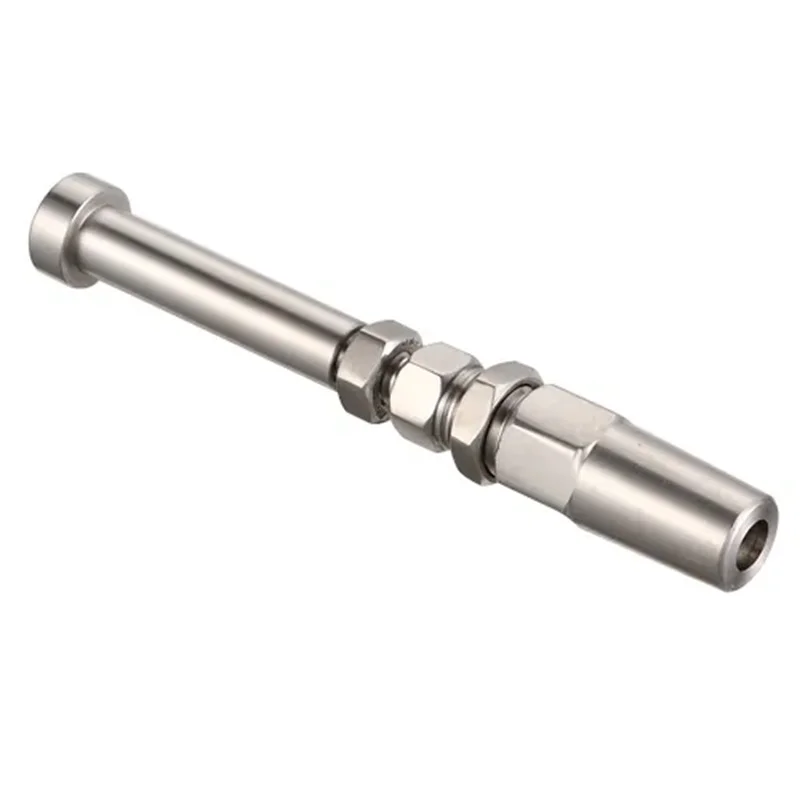
A typical kit includes:
- Stainless steel cable (usually T316 marine-grade)
- Turnbuckles or tensioners
- Fittings, swage studs, and hardware
- Posts or post sleeves (in some kits)
- Installation brackets
Because these components arrive pre-cut, pre-measured, or easily field-adjustable, contractors can install a full system without fabricating custom parts on-site. That single fact is the foundation for almost every advantage discussed below.
Why Contractors Choose a Stainless Steel Cable Railing Kit Over Traditional Railing
1. Faster Installation Means More Jobs Completed
Time is money on a job site, and a Stainless Steel Cable Railing Kit is designed for speed. Traditional wood or wrought iron railing requires measuring, cutting, drilling, and finishing each baluster individually. A cable railing kit, by contrast, comes with standardized hardware and cable lengths that can be tensioned in a fraction of the time.
For contractors juggling multiple deck projects in a season, cutting install time by even a day per job adds up quickly across a year of bookings. That efficiency is one of the biggest reasons crews now default to a Stainless Steel Cable Railing Kit for standard deck jobs rather than building railing from scratch.
2. Lower Long-Term Callbacks and Warranty Claims
Nothing eats into a contractor’s margin like a callback. Wood railing rots, warps, and requires refinishing. Wrought iron rusts unless properly coated and maintained. A Stainless Steel Cable Railing Kit, particularly one built with T316 marine-grade stainless steel, resists corrosion even in coastal, humid, or freeze-thaw climates.
Fewer callbacks mean:
- Better client reviews and referrals
- Less time spent on unpaid warranty repairs
- A stronger reputation for durable, low-maintenance builds
Contractors who’ve been burned by cheap materials in the past tend to specify stainless steel cable systems specifically because they hold up — and because their name is attached to the finished product for years after the check clears.
3. A Stainless Steel Cable Railing Kit Adds Real Resale Value
Cable railing has become a recognizable upgrade in real estate listings, especially for decks, balconies, and staircases. Buyers associate it with modern, high-end construction. Contractors who install a Stainless Steel Cable Railing Kit can market the upgrade directly to clients as a value-add — something that helps homeowners justify the cost of the project and helps contractors close higher-ticket jobs.
This is particularly true in markets with strong views: waterfront properties, hillside builds, and homes near parks or golf courses. A cable system lets homeowners keep their view intact, which is a selling point that solid railing simply can’t match.
4. Code Compliance Without the Guesswork
Building codes for guardrails (particularly the 4-inch sphere rule in most U.S. jurisdictions) can be tricky to meet with cable spacing, since cables can deflect under pressure. Reputable kits are engineered and tested to meet International Residential Code (IRC) requirements when installed according to spec, which takes the guesswork out of compliance for contractors.
This is a major reason many builders prefer sourcing from an established Stainless Steel Cable Railing Kit Supplier rather than assembling a system from generic parts. A trusted supplier provides engineering documentation, tension specs, and code-compliant spacing guidance — protecting the contractor if an inspector or insurance adjuster ever asks questions.
Cable Railing Systems vs. Traditional Railing: A Quick Comparison
| Feature | Cable Railing Systems | Wood Balusters | Wrought Iron |
|---|---|---|---|
| Installation speed | Fast | Slow | Moderate |
| Maintenance | Minimal | High (staining/sealing) | Moderate (rust prevention) |
| View obstruction | Minimal | High | Moderate |
| Corrosion resistance | Excellent (stainless steel) | N/A | Poor without coating |
| Perceived home value | High | Moderate | Moderate |
| Code compliance complexity | Low (with engineered kits) | Low | Moderate |
This comparison is exactly why so many contractors now present cable railing as the default recommendation, not just an upsell option.
Cable Railing Fence Kits: Expanding Beyond the Deck
While deck railing gets most of the attention, contractors are increasingly using Cable Railing Fence Kits for property perimeters, pool enclosures, and garden boundaries. The same advantages that make cable railing appealing on a deck — unobstructed views, low maintenance, corrosion resistance — apply just as well to fencing applications.
For contractors, this means one product line can serve multiple project types: decks, balconies, stair railings, pool fencing, and property line fencing. Being able to offer a consistent system across several service categories simplifies quoting, reduces the number of suppliers a contractor has to manage, and builds a reputation as a specialist in modern railing and fencing solutions.
How to Choose a Stainless Steel Cable Railing Kit Supplier
Selecting a reliable Stainless Steel Cable Railing Kit Supplier is an important decision for contractors and purchasing teams. A supplier should be evaluated based on product quality, manufacturing capabilities, customization options, order capacity, technical support, and delivery reliability.
Product Quality
Ask about the stainless steel grade, cable specifications, hardware materials, surface finish, and quality-control procedures.A reliable supplier should be able to provide clear technical specifications for its products.
Customization Capabilities
Deck projects can vary significantly in design and dimensions. A supplier capable of supporting customized requirements can provide greater flexibility for contractors.Customization may include different cable lengths, fittings, post configurations, finishes, or packaging options, depending on the supplier’s capabilities.
Bulk Supply
For contractors, distributors, and construction companies managing multiple projects, consistent supply is essential. Before placing a large order, discuss production capacity, minimum order quantities, lead times, and recurring supply arrangements with the supplier. A supplier capable of supporting both initial and repeat orders can become a valuable long-term business partner.
Technical Support
Good technical support can make the purchasing process easier. An experienced supplier should be able to answer questions about product specifications, compatibility, installation requirements, and suitable configurations. For commercial projects, this support can help contractors avoid costly ordering mistakes.
What Contractors Look for in a Stainless Steel Cable Railing Kit Supplier
Not all kits — or suppliers — are created equal. Contractors who’ve scaled their cable railing work tend to vet suppliers on a few key criteria:
Material grade. T316 stainless steel is the standard for outdoor and coastal applications because of its superior resistance to chloride and saltwater corrosion compared to T304.
Complete, well-documented kits. The best Stainless Steel Cable Railing Kit Supplier options provide clear installation instructions, engineering specs, and code compliance documentation — not just loose hardware.
Consistent inventory and lead times. Contractors can’t afford project delays waiting on backordered fittings. Reliable suppliers keep core components in stock.
Customization options. Post spacing, cable diameter, fitting finish (brushed vs. polished), and post material (wood, metal, composite) all need to be adjustable to match different project specs.
Support for volume pricing. Contractors handling multiple builds per season benefit from suppliers who offer tiered pricing, trade accounts, or bulk discounts.
If you’re a supplier reading this: these are the exact points contractors compare before choosing where to source their next order. Positioning your business around material quality, documentation, and reliable fulfillment is what turns a one-time buyer into a repeat trade account.
Common Objections
“Cable railing is too expensive.” Material costs are often comparable to quality wrought iron once labor savings are factored in. Faster installation offsets a higher per-unit material cost.
“Cables sag over time.” This is true only with low-quality kits or improper tensioning. Properly engineered Stainless Steel Cable Railing Kit systems, installed with correct post spacing and re-tensioned during routine maintenance, hold their line for years.
“It’s not code compliant everywhere.” Local codes vary, but reputable kits are engineered to meet IRC standards, and most suppliers provide documentation contractors can hand directly to inspectors.
Final Summary
The reasons contractors keep choosing a Stainless Steel Cable Railing Kit come down to practical business fundamentals: faster installs, fewer callbacks, stronger client satisfaction, and a finished product that adds visible value to a home. Paired with the flexibility of Cable Railing Fence Kits for broader applications, cable railing systems have become a core offering for contractors who want to stay competitive in a market that increasingly expects modern, low-maintenance design.
For contractors evaluating a switch, and for suppliers looking to serve this growing segment, the opportunity is clear: cable railing isn’t a passing trend — it’s becoming the standard. Partnering with the right Stainless Steel Cable Railing Kit Supplier, one that offers quality materials, clear documentation, and dependable stock, is what separates a smooth project from a stressful one.
If your business installs decks, balconies, staircases, or fencing, now is the time to evaluate how a stainless steel cable railing system fits into your service lineup — before your competitors get there first.
FAQs
What is a Stainless Steel Cable Railing Kit?
A Stainless Steel Cable Railing Kit is a set of components used to create a cable-based railing system for decks, balconies, stairs, terraces, and other applications. Depending on the supplier, kits may include stainless steel cables, fittings, tensioners, terminals, and mounting hardware.
Why do contractors prefer Stainless Steel Cable Railing Kits for deck projects?
Contractors prefer Stainless Steel Cable Railing Kits because they offer a modern appearance, durability, corrosion resistance, and design flexibility. They can also provide an open view while creating a secure railing barrier when properly designed and installed.
Is a Stainless Steel Cable Railing Kit suitable for outdoor decks?
Yes. Stainless Steel Cable Railing Kits are commonly used for outdoor decks because stainless steel offers good resistance to weather and corrosion. The appropriate stainless steel grade should be selected based on the project’s environment and exposure conditions.
What type of stainless steel is best for cable railing?
316 stainless steel is often considered for demanding outdoor or coastal environments because it offers improved resistance to certain corrosive conditions. For other applications, different stainless steel grades may provide an appropriate balance of performance and cost.