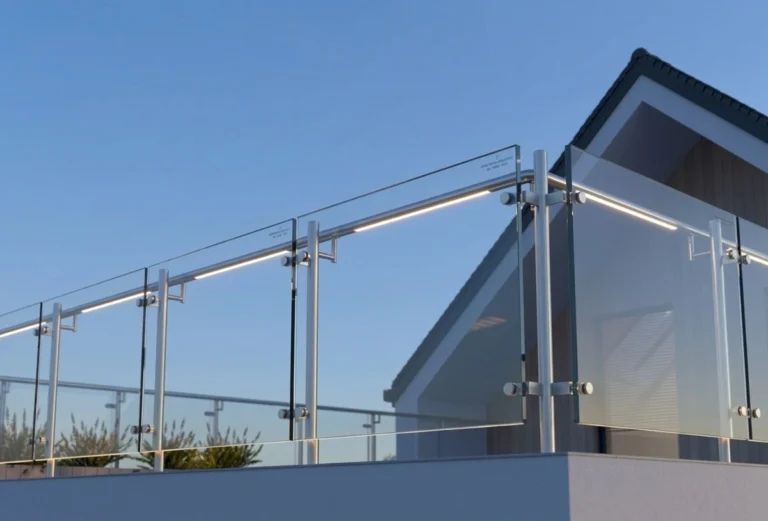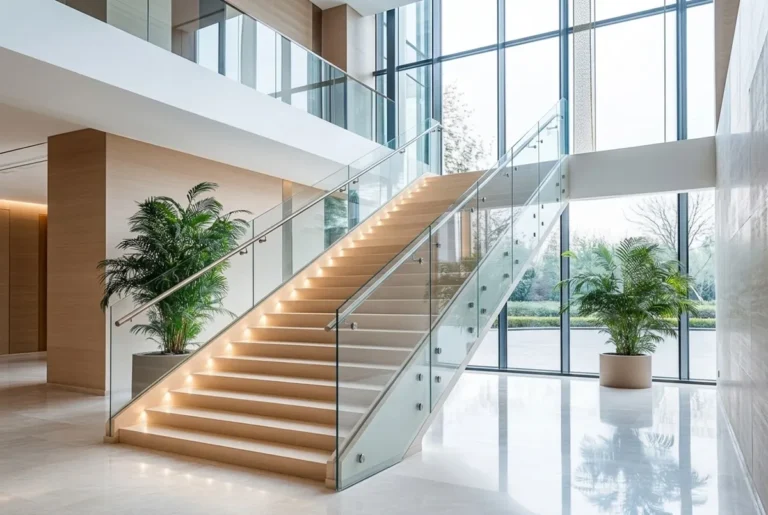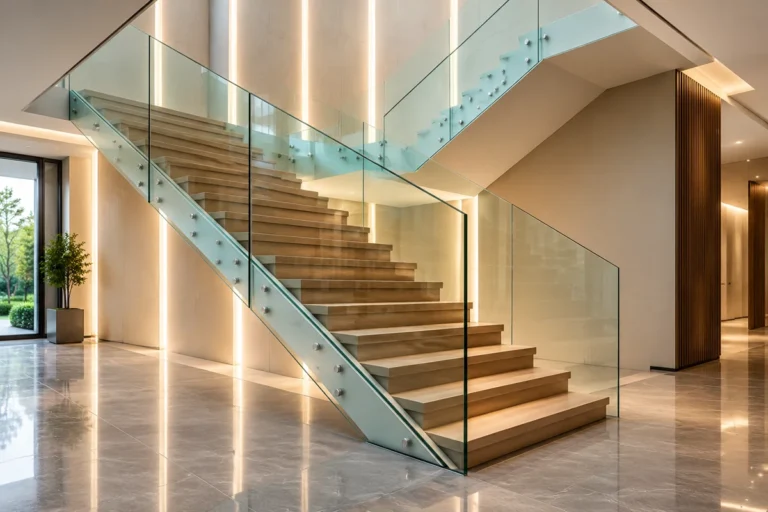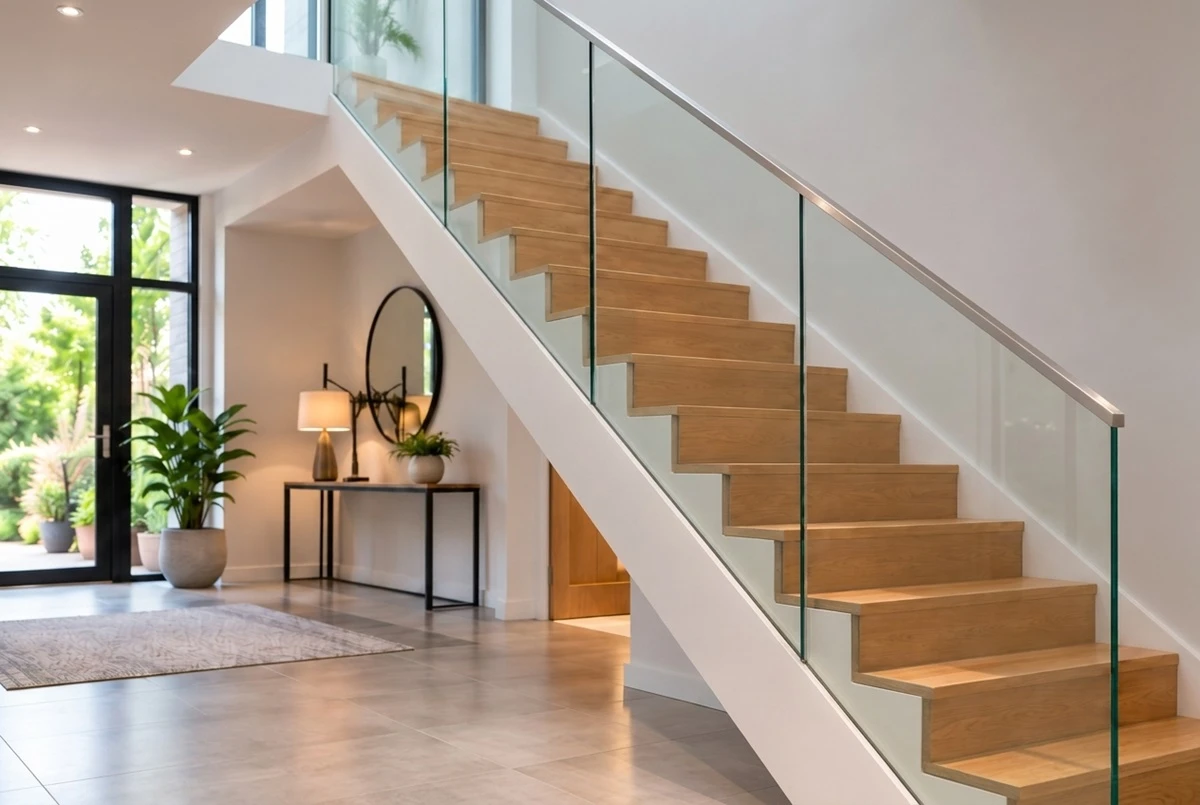
In a high-end home, every detail is on show. The staircase, the gallery landing and the terrace edge are often the first things guests notice. A luxury glass railing keeps those spaces open and bright, while the hardware quietly adds a layer of craftsmanship.
At UNIKIM, we have manufactured glass railing hardware in Ningbo since 2003, and we supply many premium residential projects through our distributors. This guide shares 12 design ideas that architects and designers use again and again. It also explains the materials, finishes and details that separate a luxury result from a standard one.
What Makes a Luxury Glass Railing Different?
Most glass railings use the same basic parts. The difference in a luxury project lies in precision and restraint. Designers hide or minimize the fixings, choose exceptionally clear glass and keep every line straight and level.
Finish also matters. A premium home uses one consistent finish on every fitting, from the stair to the pool fence. Meanwhile, the fabricator polishes the glass edges, and installers keep joints tight and even. Together, these details make the railing feel like part of the architecture rather than an add-on.
Scale matters too. Larger panels mean fewer joints, and fewer joints make the glass read as one calm surface. For that reason, many luxury homes use tall, wide laminated panels, even though they need heavier fittings and careful handling on site. The extra effort shows every time someone walks up the stairs.
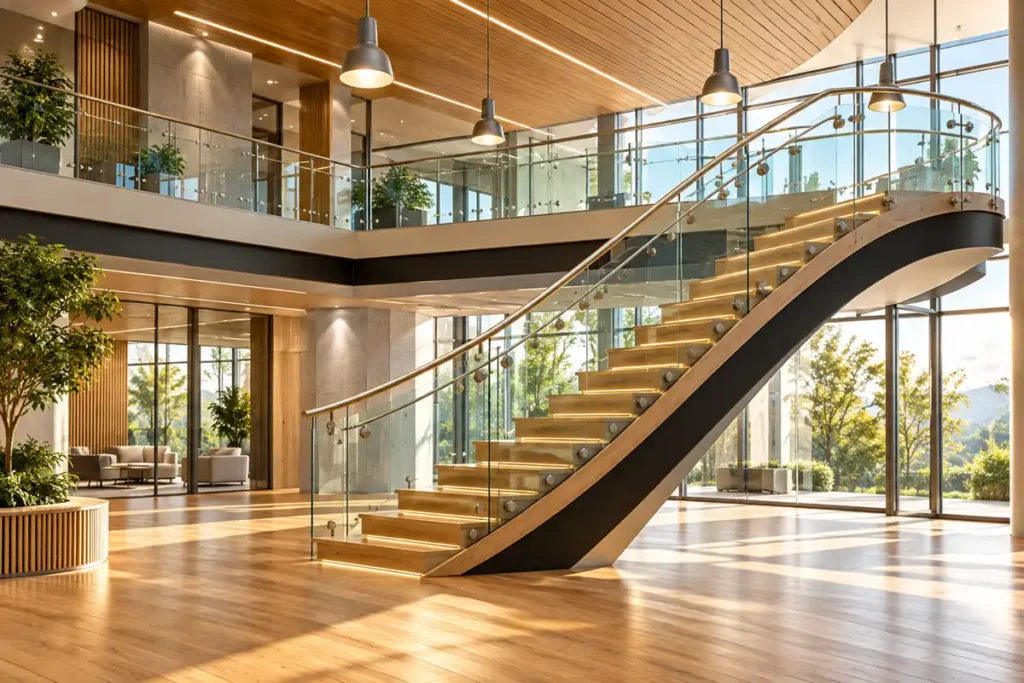
12 Luxury Glass Railing Design Ideas Architects Use
1. Floating glass with side-mounted standoffs
Standoffs fix the glass to the face of the stair or slab, so nothing sits on the floor. The glass appears to float beside the stair, and every tread keeps its full width. It is the signature look of many modern villas. Our glass standoff range includes round and square designs for this detail.
2. Recessed base shoe for glass that rises from the floor
A base shoe set into the floor slab hides the channel completely. The glass then rises straight out of the stone or timber, with no visible hardware at all. This detail needs early planning with the structural engineer and flooring contractor. However, the result is one of the cleanest looks available. A continuous aluminum base shoe makes it possible.
3. Ultra-clear low-iron glass
Standard glass has a slight green tint, which shows clearly on the edges of thick laminated panels. Low-iron glass removes most of that tint. As a result, the panel looks almost invisible, and white or light stone floors stay true in color. For a luxury glass railing, it is one of the most noticeable upgrades.
4. Matte black hardware against light stone
Black fittings frame the glass like a picture and echo black window frames. They look especially striking against white marble, pale limestone or light oak. For example, matte black stainless steel standoffs add a bold architectural line without blocking the view.
5. Mirror-polished stainless steel
Mirror polish gives fittings a jewelry-like shine. It suits classic luxury interiors, hotels and high-end apartments. Because it shows fingerprints more easily, it works best where cleaning is regular. Read more in our guide to mirror-polished glass railing systems for luxury spaces.
6. Warm PVD finishes such as gold and bronze
PVD coatings add gold, champagne or bronze tones to stainless steel. They are popular in hospitality-style interiors, where warm metal pairs with wood and natural stone. PVD is harder than paint, so it stands up well to daily use. Keep the same tone on handrail brackets, clamps and end caps. In addition, ask for the finish on a real fitting, not a flat swatch, because curves change how metal reflects light.
7. Topless glass on pool terraces
Where codes allow it, laminated glass without a top rail creates an uninterrupted view across the pool to the landscape. This “infinity” look is a favorite for hillside and coastal homes. Use 316 or 2205 spigots near water, such as stainless steel pool fencing spigots, to resist chlorine and salt.
8. Glass stairs with lit treads
LED strips under each tread or inside a base shoe turn a glass staircase into a light feature at night. The glass catches and spreads the light, which adds drama without extra fittings. Plan cable routes and access early, because retrofitting lighting later is difficult.
9. Curved glass for sweeping stairs
Bent laminated glass follows curved and spiral stairs in one smooth line. It is one of the most complex and costly options, since the factory makes every panel to a template. Even so, few details say “luxury” as clearly as a perfectly curved glass balustrade.
10. A slim cap rail for comfort and continuity
A narrow slotted cap rail sits on top of the glass and gives a comfortable place to rest a hand. It also ties the panels into one continuous line. For a premium look, choose a slim profile, such as a matte black glass handrail cap rail, in the same finish as the other fittings.
11. Frosted or patterned glass for privacy
Bedroom balconies and bathroom mezzanines often need privacy. Frosted, fluted or patterned laminated glass hides views from outside while still letting light through. Designers often combine clear upper panels with a frosted lower band for balance.
12. One system from inside to outside
High-end homes feel calm when details repeat. Using the same glass system and finish on the stair, the gallery landing, the terrace and the pool fence ties the whole home together. It also simplifies maintenance, because spare parts and cleaning products stay the same.
Where to Use Glass in a High-End Home
A luxury glass railing works best where it opens up a view or connects spaces. The grand staircase is the obvious place, because it is often the centerpiece of the entrance hall. Frameless glass keeps sightlines clear from the front door to the upper floor.
Gallery landings and double-height living rooms are next. Here, glass lets light from high windows reach the rooms below. On terraces and roof decks, glass protects the edge without blocking the landscape, which is often the reason the home was built there.
Pools are another natural fit. A glass pool fence meets safety rules while keeping the water in view from the house. Inside, glass also works well on mezzanine offices, home cinemas and even wine rooms, where a clear panel shows off the collection.
Caring for Premium Finishes
High-end finishes stay beautiful with simple, regular care. Clean glass with a mild glass cleaner and a soft microfiber cloth. For stainless steel, use mild soapy water, rinse with fresh water and dry it to avoid water marks.
Avoid abrasive pads and harsh chemicals, especially on mirror polish and PVD coatings. Near pools and the sea, clean more often, because chlorine and salt cause most staining. In addition, ask your supplier for spare end caps and gaskets, so small parts always match.
Common Mistakes on Luxury Projects
The most common mistake is choosing the finish from a screen image. Black, bronze and mirror finishes look very different in real light, so always approve a physical sample. Another mistake is mixing hardware from several suppliers, which leads to slightly different tones across the home.
Some projects also plan the recessed base shoe too late, after the floor build-up is fixed. Finally, standard clear glass on a white stone floor can look green at the edges. Deciding on low-iron glass early avoids that disappointment.
Materials for a Luxury Glass Railing
Premium design only works with premium materials. The table below summarizes the choices we see most in high-end projects.
| Element | Standard choice | Luxury choice | Why it matters |
|---|---|---|---|
| Glass | Clear tempered | Low-iron laminated | Clearer, safer, no green edge |
| Glass edges | Arrised or seamed | Flat polished | Clean, visible edges |
| Steel grade | 304 | 316 or 2205 | No staining outdoors or near pools |
| Finish | Satin | Mirror, matte black or PVD | Matches the interior design |
| Fixing | Posts and clamps | Standoffs or recessed shoe | Minimal visible hardware |
Safety and Code Points in High-End Homes
Luxury design still has to pass inspection. In the US, homes follow the International Residential Code (IRC). You generally need guards where the drop is more than 30 inches, and they must be at least 36 inches high. Openings must stop a 4-inch sphere, and all glass must be safety glazing.
Topless glass, curved panels and large spans need extra care. In practice, many designers choose laminated glass for every luxury glass railing, because it stays in place if a panel breaks. Always involve an engineer on high balconies and long spans.
Cost of a Luxury Glass Railing
Glass railings typically cost $150 to $600 per linear foot installed, according to HomeGuide’s glass railing cost guide. Luxury projects usually sit at the top of that range. Recessed base shoe, curved glass, low-iron glass and special finishes can push the price higher still.
However, not every detail needs to be the most expensive option. For example, you can use standoffs on the main stair and simpler clamps on a service stair. Similarly, low-iron glass matters most where people see the panel edges up close.
How to Brief Your Supplier
A clear brief saves time and protects the design. Share photos of the look you want and the finish samples you prefer. Then list every area of the home that needs glass, so the supplier can propose one consistent system.
Also ask for physical finish samples before ordering. Screens rarely show the real tone of black, bronze or mirror polish. Finally, confirm the glass thicknesses each fitting accepts, because luxury designs often use thicker laminated glass. It also helps to share the project timeline, so the supplier can plan custom finishes in time.
Why Choose UNIKIM for Luxury Projects
UNIKIM has manufactured glass railing hardware in Ningbo since 2003. We produce standoffs, spigots, clamps, base shoe, cap rails and handrail fittings in AISI 304, 316 and 2205 stainless steel. Finishes include satin, mirror and matte black, all made to match across the system.
We supply distributors and OEM brands that serve architects and luxury builders. Explore our matte black handrails for luxury projects, or visit our UNIKIM Made-in-China showroom.
FAQ About Luxury Glass Railings
Are glass railings popular in high-end homes?
Yes. Glass railings are one of the most requested features in high-end homes, because they keep views open and make spaces feel larger. Architects use them on stairs, balconies, terraces and pools. A luxury glass railing also adds perceived value when the owner sells the home.
What makes a glass railing look expensive?
Hidden or minimal fixings, ultra-clear glass, precise alignment and a consistent premium finish. Details such as polished glass edges, recessed base shoe and matching hardware throughout the home make the biggest difference. Those details turn a standard railing into a luxury glass railing.
Which finish is best for luxury glass railings?
It depends on the interior. Mirror-polished stainless steel suits classic luxury, matte black suits modern architecture and PVD gold or bronze suits warm, hospitality-style interiors. Choose one finish and use it across every luxury glass railing in the home.
Is low-iron glass worth it for railings?
For high-end projects, often yes. Standard glass has a green tint that shows on thick laminated edges. Low-iron glass is much clearer, so the panel looks almost invisible. It costs more, but it is one of the most visible upgrades for a luxury glass railing.
How much does a luxury glass railing cost?
Glass railings typically cost $150 to $600 per linear foot installed, and luxury projects usually sit at the top of that range or above. Recessed base shoe, curved glass, low-iron glass and special finishes all add cost to a luxury glass railing.
Summary
Luxury glass railings rely on hidden fixings, exceptionally clear glass and one consistent premium finish. The 12 ideas above, from floating standoffs to recessed base shoe, show how architects turn a safety item into a design feature.
Plan the details early, choose the right steel grade and ask for real finish samples. If you are specifying a luxury glass railing for a high-end home, contact UNIKIM for hardware advice and a quotation.